
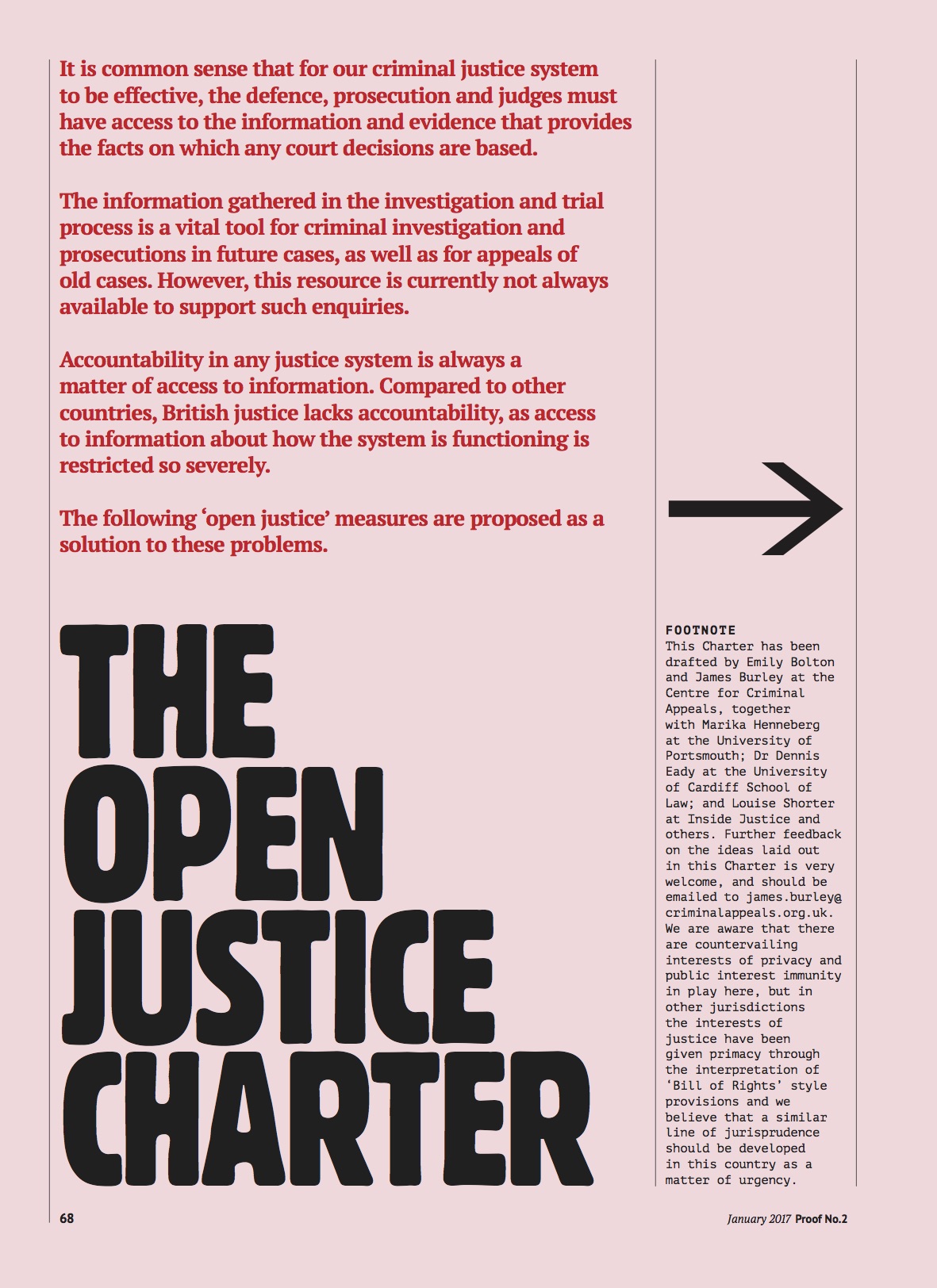
A controversial policy of destroying recordings of trials after seven years is to be scrapped, according to the journalist and academic Dr Brian Thornton writing in the Conversation today. It is a belated and surprising success for the Open Justice Charter campaign (see here).
The Ministry of Justice has confirmed that trial records will now be kept for at least as long as the prison sentence – and possibly indefinitely. ‘This updated policy safeguards continued access to court records for the purpose of appeals, reviews or any other legal proceedings that may arise during the entire period of the sentence,’ an MoJ spokesperson said. ‘Retaining records for the full length of the sentence preserves judicial integrity, and protects the rights of all parties concerned.’
‘This is a sensible result – and a surprising and belated victory for our campaign,’ Jon Robins, editor of the Justice Gap and co-organiser of the Open Justice Charter, told Dr Thornton. ‘We pointed out more than a decade ago that there was no possible justification for such a draconian destruction policy, ever since our courts were dragged into the digital era and began recording proceedings – other than closing off the prospect of challenges from those claiming to be wrongly convicted. The unnecessary loss of court documents – especially, court transcripts and the audio recordings of court proceedings – has often proved an insurmountable barrier in the investigation of miscarriage of justice cases.’
 The Conversation article highlights the case of Omar Benguit which has featured on the Justice Gap and in Jon Robins’ book Guilty Until Proven Innocent (Biteback, 2018). Only last week Dorset Police were accused of ‘framing’ Benguit and manufacturing the evidence that has kept him in prison for 23 years for the murder of a South Korean student. https://www.thejusticegap.com/omar-benguit-dorset-police-accused-of-burying-alibi/ . There were no transcripts of his three trials apart from the 40 pages of the judge’s sentencing remarks. In 2016, some 35 lawyers, academics and campaigners wrote to the Justice Secretary, then Michael Gove as part of the Open Justice Charter campaign ( as reported in the Independent on Sunday) arguing that that ‘once destroyed, the important verbatim record of what was said in court is lost for ever’ including the trial judge’s summing up, which campaigners say is usually crucial to a review of the case. ‘This leaves a situation where, commonly, only the stale and fragmented mess of documents from case files, often limited to police interviews, statements and reports given prior to trial, are available to those working on criminal appeals.’ The letter cited the Benguit case.
At the campaign launch, Emily Bolton, who founded the legal charity APPEAL, called the destruction of court records as ‘a complete roadblock to investigating miscarriages of justice’. ‘What is the British system afraid of? It’s a public trial, and there should be an accessible record of it,’ she said.
The guidance for the court document retention regime is contained in the crown court’s Record Retention and Disposition Schedule. It currently states that the recordings of crown court trials should be ‘kept for seven years and then destroyed’.
‘The MoJ confirmed to me that this policy has now been scrapped,’ write Dr Thornton. ‘It stated that “effective from October 9 2023 onwards”, staff had been instructed to apply the following retention periods for crown court audio recordings:
- One year for not-guilty verdicts;
- Seven years for non-custodial sentences;
- At least seven years or the sentence length for custodial sentences (whichever is longer);
- And 99 years for life imprisonment.’
The MoJ said it will officially publish this updated guidance in the new RRDS later this year.