


The Criminal Cases Review Commission (CCRC) is ‘not a failing organisation’, according to the findings of an investigation by the HM Crown Prosecution Service inspectorate which called for ‘urgent’ reform but concluded its decision-making was ‘ultimately sound’. The report which is published today reviewed its handling of 60 cases and made 34 recommendations which have been accepted in their entirety by the watchdog body.
 The findings of the review will be a relief to the beleaguered organisation which has been consistently under fire and the subject of a series of critical reviews – the All-Party Parliamentary Group’s Westminster Commission report in 2021, the 2024 Henley review set up in the wake of its serial failings in the Andrew Malkinson case and the House of Commons’ justice committee last year which led to the resignations of both the chair and chief executive.
‘A commitment to doing the right thing and leaving no stone unturned is tangible when engaging with staff across the organisation,’ chief inspector Anthony Rogers said. Such a commitment was, according to Rogers, ‘a double-edged sword’. ‘In too many cases, this causes a lack of focus, opening unnecessary investigator avenues that lead to drift, delays and wasted resources for the commission and others,’ it said.
However there is deep scepticism from CCRC’s critics about an inspection which looked at 60 cases, the preponderance of which were straightforward – just six cases were assessed which involved multiple issues and potentially up to 30 days’ work and the review specifically excluded complex cases (i.e., more than 30 days).
The interim chair Dame Vera Baird approached the CPS inspector in August 2025 to conduct the review. As the CCRC is not one of the inspectorate’s statutory bodies, the cash-strapped watchdog has had to foot the £75,000 bill – originally, the inspector was asked to look at 18 cases but it took the view that a review of 60 would ‘better support the inspection’s objectives’.
‘This inspection completely fails to consider complex appeal cases and fails to address complaints that have been raised for years,’ commented APPEAL’s co-director Emma Torr. ‘The idea the CCRC have left “no stone unturned” is not the experience of appeal lawyers or the Henley review.’
Dr Dennis Eady, who runs Cardiff University’s Innocence Project, quoted the report’s introduction which asserts that the CCRC ‘needs to decide whether the current approach to doing the right thing, leaving no stone unturned, is proportionate, effective and affordable’.
‘This is the kind of “managerial” thinking that has epitomised the failings of the CCRC and which the new chair was rightly and refreshingly keen to change,’ he said. ‘It is hard to think of a more inappropriate suggestion when it comes to investigating miscarriages of justice – should the authors of the report ever be wrongly convicted I doubt they would be suggesting that “leaving no stone unturned” might not be the right thing to do. We must not encourage the managing of justice out of existence; we should stop doing that.’
‘The failure of the CPS to filter out evidentially weak cases is a primary cause of miscarriages of justice. Giving the CPS the job of inspecting the CCRC is like asking those polluting our rivers to check up on an agency responsible for maintaining good water quality.’
Dr Dennis Eady
‘I applaud many of the recommendations of this review but I am concerned that it was inadequately funded and its remit and timescale has made it unable to properly get to grips with the underlying complexity of the problems that the CCRC faces given the significant increase in the number of applications and backlog of cases,’ commented Glyn Maddocks KC, director of the Future Justice Project. ‘There is no doubt that the CCRC has been in crisis for years and there was a sense of huge relief when Dame Vera Baird was appointed interim chair last year – she has done a great job raising morale at the commission and turning the organisation around. It’s extremely helpful that she has an understanding of the criminal justice system that no previous chair has possessed. But to cure an ailing organisation we need to get the prognosis right.’
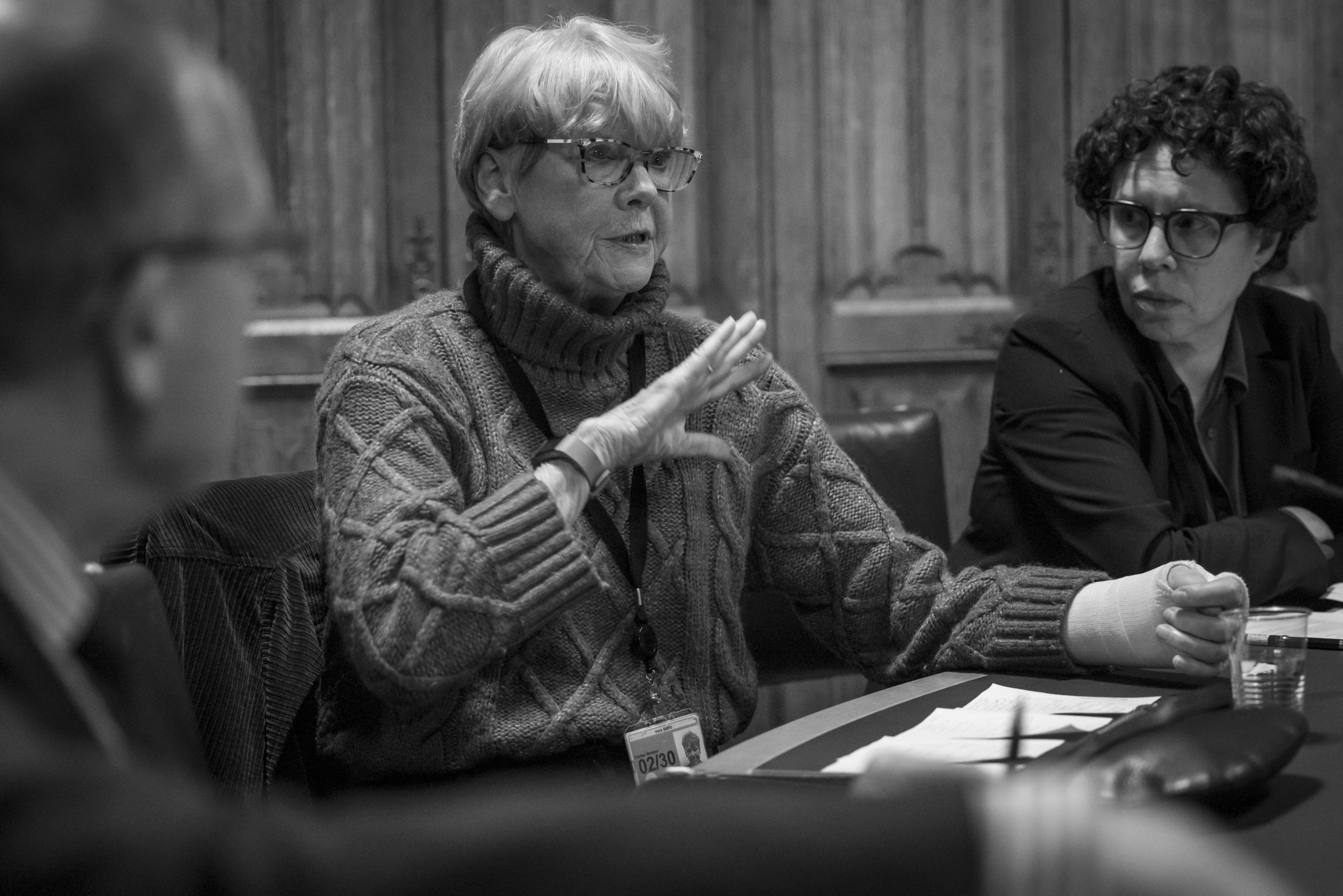 Dame Vera said that it was ‘clear that HMCPSI scrutinised every aspect of our process; they make six recommendations for the next twelve months and 34 overall. I thank them particularly for the clear focus on casework quality assurance.’ She pointed out that the CCRC has referred 45 cases to the appeal courts ‘almost as high a figure as it has achieved before’. ‘All casework will be better planned and independently scrutinised from now on,’ she added.
In a press briefing supporting the report’s launch, Anthony Rogers called its recommendations a ‘road map for addressing the weaknesses’ at the CCRC in relation to case work. ‘There are other aspects of CCRC business which we have not inspected and I know Dame Vera is working on those with others,’ he said.
‘While we found that the case review managers ultimately made the right recommendations in the 60 cases we assessed in this inspection, the route by which they reached those recommendations was often convoluted,’ the report said. ‘The organisation lacks the qualitative casework assurance measures at all levels to drive consistent and sustained improve improvements in casework quality.’
‘In some cases, [decisions] could have been made in a more efficient and timely way,’ Rogers said. ‘There were weaknesses in case management, quality assurance, and oversight in case planning and case development. We saw some good work in some of the cases we examined, but our overall findings point to cases needing better supervision, quality care strategies need to be set out early. There needs to be better focus of investigation on the right things, and they need to address inefficiency and delay.’
Rogers was asked to comment on ‘radical changes’ made to the way the CCRC operates in recent years – notably, the the move away from full-time salary commissioners to a fee-based model and a remote working policy – which ‘fuelled concerns about a cultural change at the commission for the worst’. In particular, it was put to him that if he had done an inpsection 10 years ago then he would have seen a different organization with, for example, ‘a huge degree of commissioner involvement’ which was ‘completely absent now’.
Rogers said that his report was ‘a snapshot’ of a moment in time. He also added: ‘Commissioners were out of our scope because they are independent, like the judiciary… . We mentioned nothing about the decisions of commissioners, but also I don’t know what the organization looked like 10 years ago, so I can’t really say.’ The report said that there was ‘confusion over the role of commissioners’ and even a question mark over ‘whether the commissioners’ role should include quality assurance’.
Rogers accepted that there was an issue around remote working (which the Justice Committee’s chair Andy Slaughter was scathing about, see here): ‘But did it impact what we saw in our cases? We can’t say it did.’
He was also asked for his views on the CCRC ‘parking’ complex cases as evidenced by the exponential growth of long-running cases in the last five years – as reported on the JG here. For the first time, the number of long running cases (two years and over) topped 100. ‘Using the two-year point is not the right point of actually making a decision to look at a case,’ he said. ‘What you should be using are risk-based models and better quality assurance than using a two year point,’ he said; before adding: ‘I don’t think there’s any evidence from what we’ve seen about the CCRC parking cases.’
A reason for confidence
The inspector pointed to his six priority recommendations. ‘Early and better case strategy will bring focus, avoid unnecessary lines of inquiry, and reduce case delay,’ he said. ‘Group leaders should have clear responsibility for overseeing case quality, challenging unnecessary work, monitoring case progress working with their case review managers to mentor and support, which will lead to an overall improvement. We think in quality of casework, there needs to be a change to focusing on quality assessment and assurance away from timeliness and process checking. This is why we recommend that the CCRC move away from process monitoring to looking at quality, and there needs to be more effective early legal engagement, which will help with the focus and direction in early quality case reviews.’
Rogers said there was ‘a reason for confidence’ that the CCRC would make the necessary changes. ‘We encountered staff who wanted to do the right thing and were totally committed to the cause,’ he said. ‘The organisational purpose was tangible when we engaged with all levels of staff across CCRC.’ He said he was ‘absolutely assured by the senior team and my interactions with them that they are committed to implementing the recommendations and the desire of that senior team to drive improvement.’ He called Dame Vera’s approach to the inspectorate ‘an outward demonstration of this desire’. ‘So actually we are very confident that our report will help CCRC improve and put them on the right track to improving some of the issues that Dame Vera has found when she came in to be chair of CCRC.’
Support the Justice Gap, buy PROOF magazine