
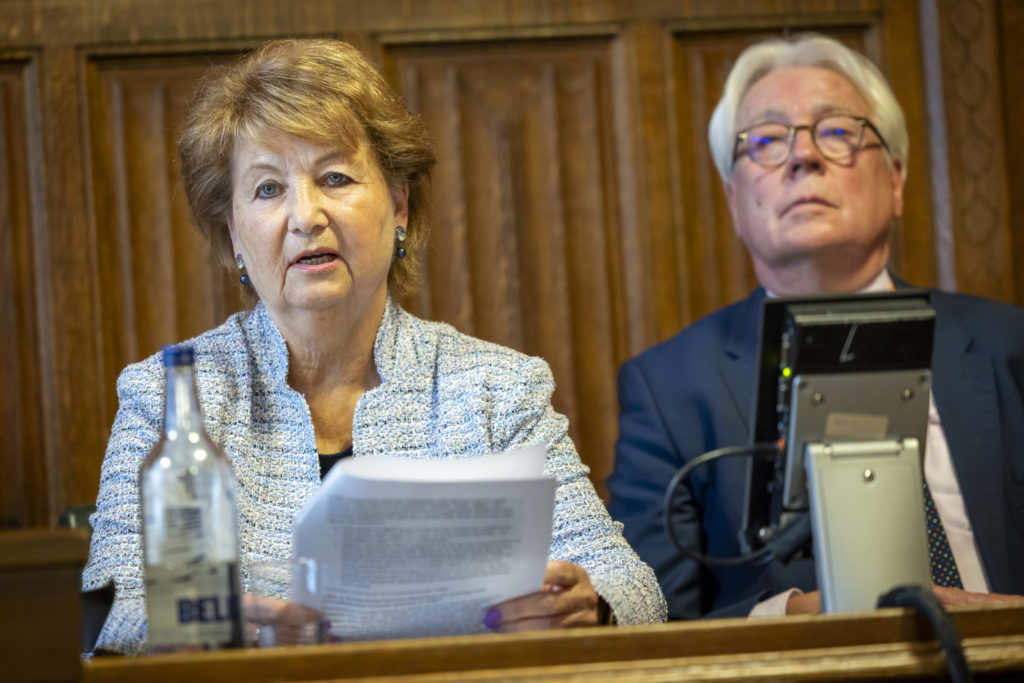

Professor Angela Gallop has written to the policing minister warning of ‘a major misstep’ in its plans to place for forensic science even further under police control and ignoring the findings of two separate parliamentary investigations published in the last 12 months highlighting the vital importance of independence of provision in the sector.
In a letter to Sarah Jones, MP, the co-chair of the Westminster Commission on Forensic Science writes: ‘The police have far too much else to do and they are not scientists. With the best will in the world, such a move will simply condemn the public to many more miscarriages of justice and further loss of confidence not only in the justice system, but in government itself.’
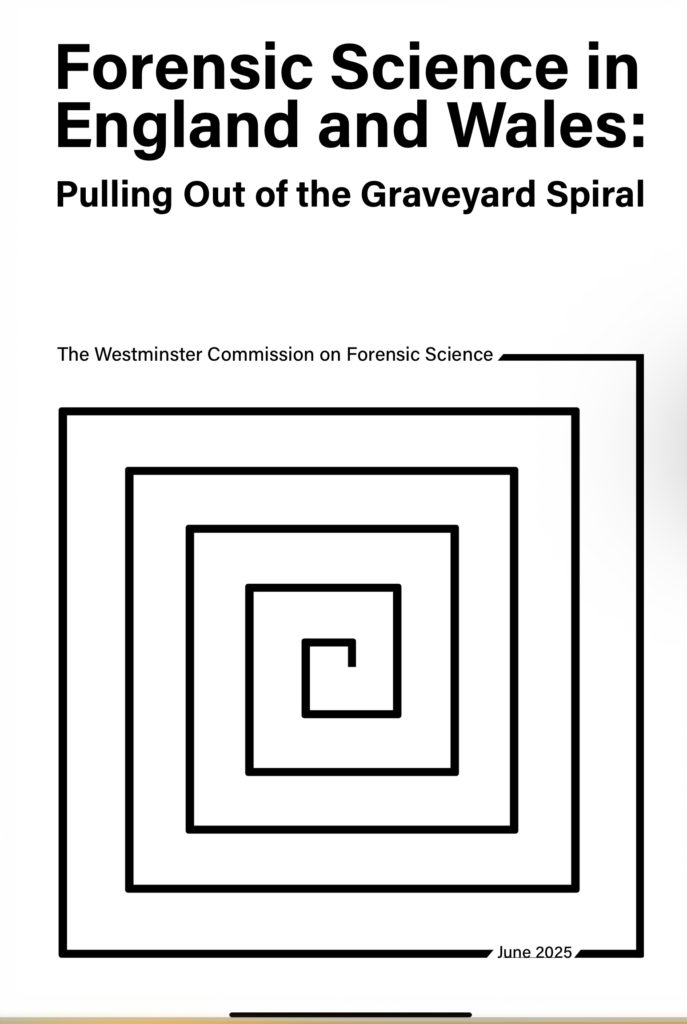 The government’s policing white paper published earlier in the year proposed a new police-run national forensics service to ‘ultimately benefit victims and the criminal justice system’ despite the Westminster Commission’s 2025 report which called for an immediate halt in the expansion of police in-house forensic provision.
The plan is for a National Policing Service which ‘will deliver a new national forensics service’. ‘Efficiencies will be realised by buying technology and equipment nationally, delivering savings that will be reinvested in the frontline. The NPS will provide a platform for developing new technologies and deploying them more quickly across the country. It will deli ver a national workforce strategy to ensure we are developing the right mix of officers and staff to meet future needs.’
The two-and-a-half year investigation by the Westminster Commission, co-chaired by Baroness Sue Black and commissioned by the All Party Parliamentary Group on Miscarriages of Justice, concluded that the sector had ‘entered undeniable descent into a graveyard spiral’ leading to poor police investigations, increasing unsolved crimes and more wrongful convictions. This report was followed by an investigation by the House of Lords’ science and technology committee with its similarly damning report published in February. Peers said ‘creeping neglect’ of the sector amounted to a ‘shocking abdication of responsibility’. ‘Forensic investigation needs to be independent and to be seen to be independent. But while under the influence of the police, there is always a risk of unconscious bias skewing results,’ the peers argued.
Details about the plans for the forensic sector in the white paper are scant and focussed on cost-cutting. ‘We estimate that there are 4,000 police forensic practitioners and policing spends approximately £550 million per year on forensics,’ it says. ‘However, the current, fragmented system where each of the 43 forces decide how to deliver and fund forensics individually means efficiencies of scale are lost, administrative costs are higher than they need be and it is slower than it should be to identify and drive adoption of promising new techniques.’
As a response the government plans to ’consolidate decision making authority for the delivery of police forensics’ under the new national police service and ‘establish the legal mandate for a national lead to deliver all forensics as a service to policing and better support victims and build confidence across the criminal justice system’.
In a letter shared with the Justice Gap, Prof Angela Gallop warns that the Home Office ‘just takes the easy route and places forensic science… firmly within policing and the prosecution’. She argues that the quality of forensics science has been completely undermined as a result of years of government neglect. Forensic science is ‘so much more than just tests and technology’. She continues: ‘It has already been dumbed-down almost beyond recognition. It is now extremely difficult to source high level holistic forensic science expertise within England and Wales – which is ridiculous.’
The Westminster Commission didn’t set out a favoured model for the provision of forensic services. In her letter, Prof Gallop argues for ‘re-invigorating the remnants of what had been the beginnings of a very successful market in forensic science’. ‘But this time making it much easier for the Home Office to manage by eg. setting prices for the work – with proper input from suppliers of course, and then splitting the work between suppliers who have the right accreditation – rather like DNA services in Germany,’ she writes.
She argues that the Home Office should be able to ‘work collaboratively with suppliers and flex supply up and down as required and without any damaging shocks to either side’. She also called for a university with academic credentials in forensic science to ‘form the basis of a much needed National Forensic Science Institute’ as recommended in both the Westminster and House of Lords reports to protect the niche areas of forensic science, foster R&D and train scientists and service users.
Support the Justice Gap, buy PROOF