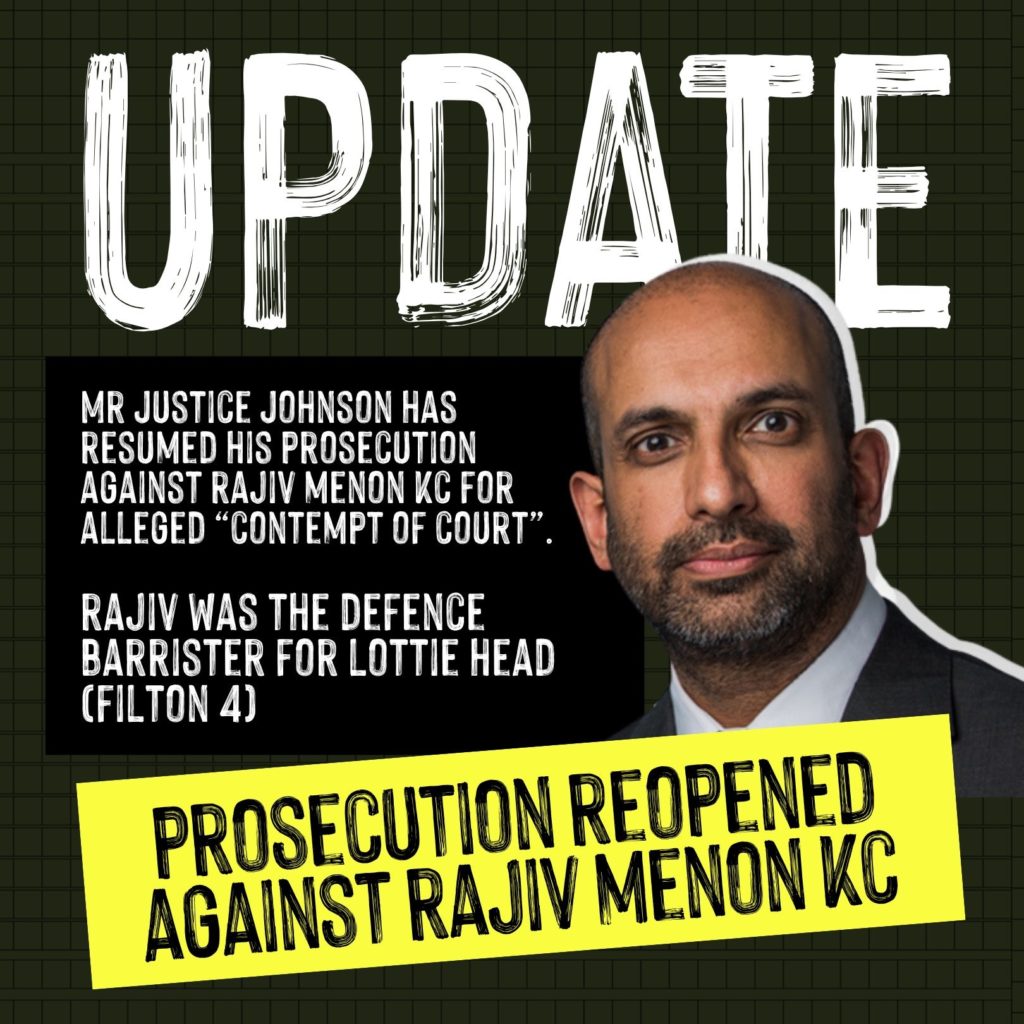


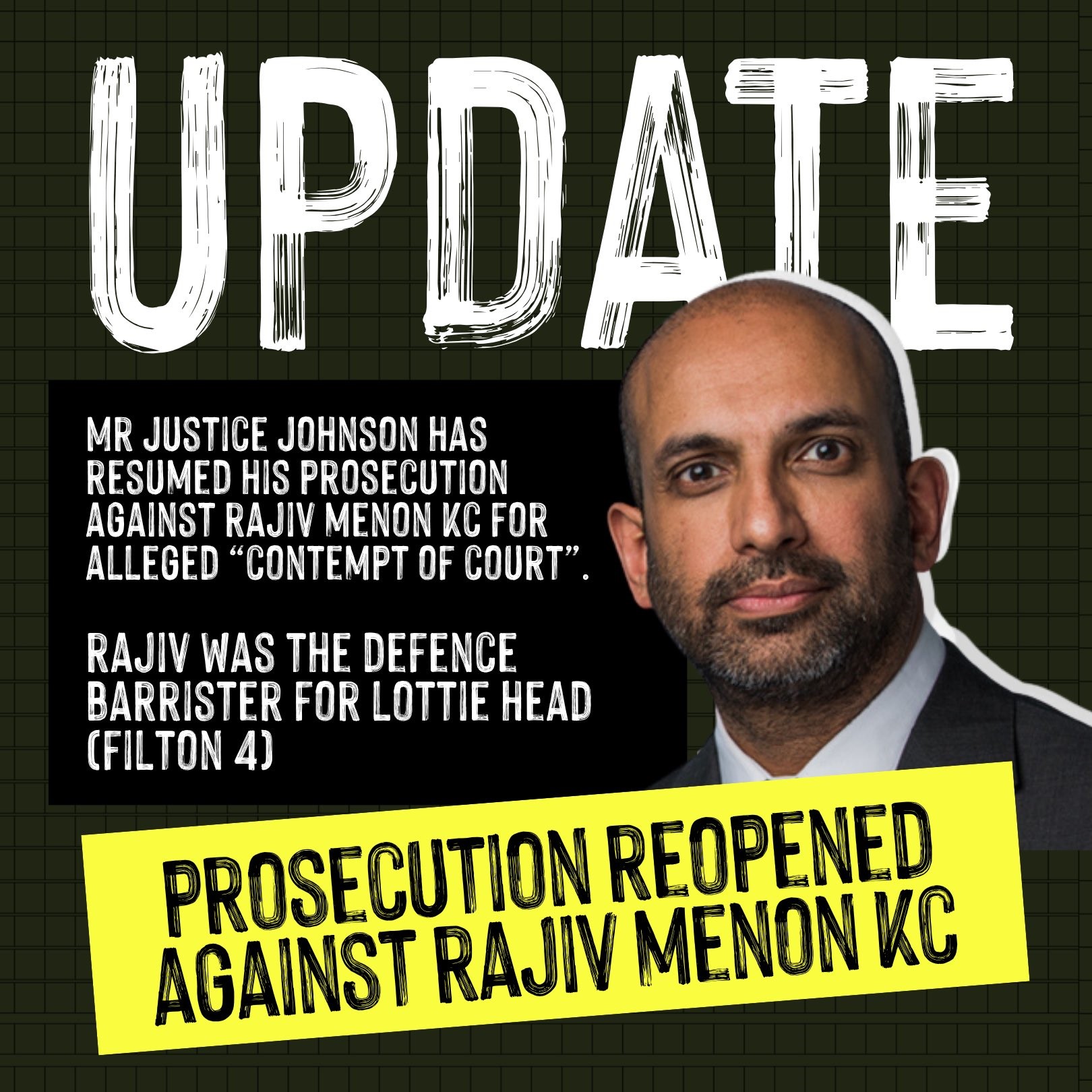
A leading human rights barrister is again facing possible contempt proceedings over claims that he referred jurors to their power to acquit according to conscience.
On 22nd June, Mr Justice Johnson referred allegations against Rajiv Menon KC to a Presiding Judge, who will decide whether contempt proceedings should be instituted.
Johnson stressed that no finding of contempt had been made, stating: ‘nothing in this judgment decides that Mr Menon has acted in contempt of court’, although ‘the balance of the public interest falls strongly in favour of the institution of contempt proceedings’.
The Court of Appeal previously set aside the contempt proceedings against Menon in May, ruling that the Administrative Court and Divisional Court had no jurisdiction to consider the contempt allegation.
The ruling left the matter back with Mr Justice Johnson, who was then required to decide what further step, if any, should be taken.
The case arises from Menon’s closing speech on behalf of Charlotte Head, one of six Palestine Action activists tried over a 2024 protest at an Elbit Systems UK site in Filton, Bristol.
During the speech, Menon allegedly made comments about jury equity, the principle that jurors may acquit according to conscience. Johnson had previously ruled that counsel were not permitted to invite jurors to disregard his rulings of law, apply jury equity, or indeed be told about it.
Garden Court Chambers, where Menon practises, said it stood in ‘full support’ of the senior silk. It described the contempt proceedings as ‘unprecedented’ and said they ‘undermine and diminish’ the criminal justice system.
‘The administration of justice depends upon an independent Bar willing and able to act in the best interests of their clients, fearlessly and with integrity’, the chambers stated.
Campaign group, Defend our Juries, said in response to the news: ‘Rajiv was the defence barrister for Lottie Head (Filton 4), and is believed to be the first barrister in British legal history to be pursued over the contents of their closing speech… Jurors have an absolute right to acquit a defendant according to their conscience, irrespective of the directions of a judge. In other words, if a jury decides that a person who stands accused of a crime made the morally conscious choice, the jury may find them “not-guilty”.’