



Statistician Richard Gill wrote an article for The Justice Gap in 2014 with the above headline. That was four years after the exoneration of nurse Lucia de Berk and soon after he became involved in the case of nurse Ben Geen- – see here. Prof Gill has since become the ‘go-to’ statistician in so-called ‘serial killer nurse’ cases. In the latest issue of PROOF magazine Prof Gill, together with Dr Svilena Dimitrova, revisits this article in light of the conviction of Lucy Letby.
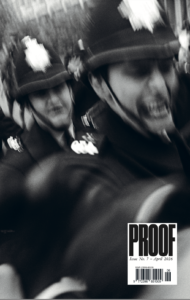
PROOF #7: Out now
It’s more than a decade since I provided a darkly ironic route map for becoming an innocent but convicted serial killer which consisted of six steps. So in light of what I regard to be the shocking wrongful conviction of Lucy Letby, I will revisit those steps.
1. Become a nurse
But make sure you are not a run- of-the-mill nurse. You need to stand out from the crowd in one way or another – for instance, by being an unashamedly out gay man (Colin Norris – see the Justice Gap here), a depressed foreigner (Victorino Chua), ambitious for a career in the army medical corps (Ben Geen). For Lucy Letby it seems to have been nothing beyond being a more than usual dedicated and conscientious nurse.
Filling in incident report forms whenever she saw things which she felt were wrong (and by God there was a lot to report). She worked long hours and much overtime, eager for experience and for the money, having just bought a house close to the hospital. She had no history whatso- ever of needing psychotherapy or psychiatric help, unlike Chua or Lucia de Berk. She was close to a warm, loving family and had many good friends both at work and from her past life.
Letby was meticulous about reporting concerns, regularly filing incident forms whenever she observed poor practice, and there was no shortage of issues to report at the Countess of Ches-ter Hospital (COCH). Was she too conscientious? Did she, as a young nurse, have the audac- ity to challenge the consultants over the poor care she observed, especially after returning from advanced training in a tertiary unit where she had witnessed higher standards of neona- tal care? Perhaps it was some combination of these and other unknown factors. But whatever the case, she stood out.
- You can read the unedited article in PROOF magazine, issue 7 – out now. Buy HERE.
- The issue also features Steve Phelps on the media and the ‘framing of Lucy Letby’ – monster or innocent miscarriage of justice?
2. Wait for a death cluster
As those who understand epidemiology or statistics would know, a spike in deaths on a neonatal ward attached to a maternity unit as big as the one at the COCH occurs once or twice a year in a country the size of the UK. Some of the spikes may be due to chance, but in reality most tend to actually have clear explana- tions. At the Countess of Chester, more critically ill babies were being born in the hospital and going into the neonatal intensive care unit. The nurses noticed, and talked about it, but did not know the reason.
This was driven not only by capacity issues at nearby hospitals – for example because a nearby unit had shut down – but also by the well documented gradual deskilling of the nursing staff, as well as the minimal presence of adequately neonatally skilled consultants.
3. The trigger
The initial trigger seems to have been three deaths and one ‘unexplained collapse’ in June 2015 in just two weeks. The unit normally experienced two or three deaths a year, so three close together before the year was half-way over was shocking to everyone.
Junior doctors and Lucy’s nursing colleagues and Lucy herself noticed that she seemed to have had the bad luck of being there every time (more or less); the junior doctors were referring to her as ‘nurse death’ and a lead neonatal consultant by the name of Dr Stephen Brearey picked this up. Probably already in panic mode, he seems to have seized on the idea that maybe the hospital was harbouring another Bev Allitt.
Conscientiously he started matching nurses’ rosters to ‘bad events’ and is supposed to have exclaimed ‘Not nice Lucy’ when he first saw how often she had been there (though another nurse scored even worse than Lucy to begin with). Over the course of a year, his suspicions grew and gradually infected all his fellow paediatricians. He talked about his ‘drawer of doom’ in which he had compiled the evidence against Lucy. Though it seems he never showed exactly what was in it to any of his colleagues or later, to hospital management.
The final trigger, for the consultants at least, was the birth of the triplet, babies O, P and R and death of two of them, in June 2016.

From PROOF Magazine, issue 7
4. The trawling expedition
Here we see quite a big difference between the Letby case and the cases of Lucia de Berk, Ben Geen, and Daniela Poggiali. In those three cases there was exactly one death (or collapse) which really did appear surprising and inexplicable, at least, to some doctors. It later became a kind of ‘index case’ or main case for a prosecution; it led to immediate action by hospital management and to the calling in of police.
In the Letby case over the course of a year rumours continued to spread amongst the consultants and resident doctors. Meanwhile, to protect the unit’s reputation, the consultants, whose care had repeatedly fallen far short of acceptable standards (as has been widely reported over the past two years) marked their own homework with regards to their involvement in these cases and concluded that nothing they had done or not done had been wrong. Dr Brearey ensured that some of the babies’ care was externally reviewed by a Dr Bill Yoxall.
Dr Yoxall, a neonatal consultant from the local to COCH tertiary neonatal unit, happened to have been the consultant supervising Dr Brearey’s daughter as a resident doctor. Every case remained officially classified as ‘unexpected’ and ‘unexplained’ and was definitively ruled out as the result of substandard care – an approach that, if applied to a murder investigation, would seem entirely appropriate. Right?
Never mind that Letby had been diligent about logging every patient safety incident related to the deaths and collapses that the very consultants may have been responsible for, or the fact that another nurse had initially been present at more adverse events than Letby had. Once suspicions took hold, anything and anyone who did not confirm the consultants’ narrative was conveniently ignored (a couple of the other consultants did challenge such claims).
Inconvenient facts were simply written out of the story. Despite them allegedly worrying that Letby was capable of murdering babies, they never called the police. Their focus was entirely on removing Letby – the nurse who kept highlighting suboptimal care via filing incident reports from their unit. Letby eventually got fed up and filed a grievance against the consultants for their conduct against her. Management launched an investigation.This included external neonatal reviews, post-mortem reviews, and an independent review by the Royal College of Paediatrics and Child Health.
Those inquiries highlighted multiple systemic failings within the unit but found no issues with Letby herself (the reviewers were asked to and did comment about Letby specifically). Management, therefore, reached the same conclusion that every expert with access to the evidence has since reached: there was no proof of murders, but there was significant evidence of substandard care within the unit. On that basis, Letby’s grievance was upheld and plans were made for Letby to return to work.
Unaware of how far the atmosphere of hostility towards her had escalated, after Letby’s grievance was upheld, she then sent an email to all her colleagues announcing her imminent return and suggesting she would be open about what she had endured. And that was the trigger. Dr Ravi Jayaram was to recall an incident he had previously never reported, during which he almost caught Letby doing nothing virtually red-handed. He somehow managed to suc- cessfully ‘pique’ the police’s interest with this story. The police immediately did what any competent police force would do when investigating crimes – allow potential suspects to forward them the evidence.
So the COCH medics pre-se- lected some relevant cases where they thought Letby had murdered or attempted to murder babies and these were promptly forwarded for review by soon- to-be ‘star expert witness’ Dr Dewi Evans, a self-nominated long retired paediatrician who had last looked after babies some decades ago (not a problem for him to opine though as he says babies are ‘simple things’). Dr Evans was indeed a ‘professional witness’ (not an ‘expert’ in his own words) who found evidence of malfeasance within 10 minutes of chatting to the police whilst flicking through baby O’s notes over a cuppa. This resulted in the launching of the now infamous, award-winning Operation Hummingbird, which never even remotely con- sidered the possibility that the increase in deaths on the Neo- natal unit at COCH were caused by or significantly contributed to by medical negligence.
5. Ensure the media ramps up public hysteria
This is a very important step because a perfectly executed miscarriage of justice must involve widespread public hysteria.
Practical steps for doing this were almost perfectly patented by Cheshire Police – a force that excelled at some things, even if investigating actual crimes wasn’t one of them. One could start by publicly digging up the suspect’s garden (and indeed private life) and plaster her name and pic- ture across every paper. They should then move on by timing an embargoed press briefing to land at the exact moment it will do the most damage. They could hold secret NDA-signed briefings with hand-picked, police-friendly court reporters who will obediently parrot the prepared lines fed to them by the police. They should make sure every article written about the suspect recycles the well- known-to-be-effective emotive historical ‘witch-trial’ phrases to pre-frame guilt.
Naturally, this exercise should be fully funded by tax-payers, but the police must close ranks whenever anyone asks awkward questions about their media dealings, dismissing FOI requests as ‘vexatious’ and mishandling formal complaints. One must ensure obstruction of anyone who attempts to hold them accountable at every step. If these questions refuse to go away, one might consider bringing up additional charges against the miscarriage of justice victim. Other tactics to silence the exposers could include arresting other parties related to the case for imaginary crimes – in this case, for example, the managers, for simply doing their jobs properly.
If such measures are taken, one must ensure that all steps are taken to ensure that it once again turns into a full blown media spectacle.

HMP Bronzefield where Lucy Letby is serving 15 whole life sentences
6. How to manufacture a miscarriage of justice in a courtroom
Part 1: The Judge
They must have the experience to facilitate a miscarriage of justice (MoJ). Having a Moj friendly judge ensures that when warnings about the conduct and suitability of star witnesses accumulate, they are treated as mere distractions, while key documents that complicate the ‘burn the witch’ narrative, such as Lucy’s upheld grievance or the Royal College of Paediatrics and Child Health report on systemic failures at COCH should be actively barred.
This judge would also block a request for sensible trial reordering that would help jurors follow complex cases. They would allow non-majority verdicts to stand. They would ensure that the heavily relied-on testimony of a key expert in two of the original convictions – in this case Professor Hindmarsh – remains central, even though before the original verdicts were delivered, Prof Hindmarsh was subject to regulatory restrictions by the General Medical Council preventing him from practising unsupervised – would that even matter to the jury?
A MoJ-friendly judge would certainly ignore the serious concerns raised by another judge regarding the star witness’ competence and integrity. Once a few convictions are secured, a MoJ-friendly judge should also instruct the jury that they may convict the MoJ victim of any other alleged crimes based solely on belief – no need to establish how, when, or why, or even whether she actually committed them.
Arguably most importantly in a medical case, a MoJ-friendly judge would allow the people whose actions triggered the police investigation to testify as experts on the care they themselves provided, with no challenge from a qualified expert.
Part 2 – The Prosecution
They must always begin by presenting flawed statistics to a jury of lay people. Ideally, they should use a table originally put together by one of the convicted’s chief accusers.
They should also appoint experts whose expertise is optional. They could promote a ‘star witness’ with no relevant experience, ideally one who has ‘never lost a case’ (except the one time he regrets when he worked for the defence) and then rubber-stamp that testimony with a friendly peer review from another clinician similarly distant from frontline neonatal work. They should get all other non-neonatal experts to deliver opinions based on accepting the non- expert experts’ ‘gobbledygook’ as matters of fact grounded in science and expertise.
It would be prudent for the prosecution to present the doctors responsible for the babies’ care as unquestioned experts rather than potential suspects. By doing so, the narrative can be carefully re-written through key distortions of patient care. First, the babies’ clinical backgrounds must be avoided altogether – obstetric reviews, especially, should absolutely be ignored as it would be very inconvenient for them to bring to light poor obstetric care that contributed to a baby’s poor condition (lest we forget we are focusing on serial killer hunting here).
Next, every episode of deterioration should be framed as ‘unexpected’ and ‘unexplained’, with no acknowledgment that such surprises only occur when those in charge are asleep at the wheel.
Finally, the failures of the babies’ resuscitation must be portrayed as completely inexplicable rather than the predictable outcome of clearly inadequate expertise – this once again gets ensured by treating the doctors responsible as experts judging their own excellence. A MoJ-friendly prosecution lawyer should also ensure that all other (than medical) evidence used is presented as if it is a very big deal – such as the incriminating post-it notes (a normal part of therapy), the googling of what happened to your patients’ families and the brought-home handover sheets (if these two are evidence of guilt you have no idea how many murderous healthcare professionals there are out there).
Part 3 – The Defence
They have the easiest job.
All they have to do is make sure none of the gobbledygook by the prosecution is challenged by the relevant experts.
That’s it. Do nothing. Simple!
Interestingly, in the Letby case, Ben Myers KC worked remarkably hard at doing nothing, choosing instead to joust with medical experts in front of the jury, seemingly forgetting that a lawyer debating doctors on medicine is rather like a pigeon giving swimming lessons to a dolphin.
And congratulations! Your miscarriage of justice is now fully baked, ready for the inevitable chorus of ‘she is evil’ and ‘how on earth did they allow for this to happen?’.
7. The consolidation
To truly bring the plan to its full settled effect, the ideal next step is to appoint an inquiry tasked with examining how murders that never actually occurred were ‘allowed’ to happen.
This inquiry, together with the ongoing Criminal Cases Review Commission application, can then serve as a combined convenient shield for all regulators – the GMC, CQC, IOPC, coroners etc – ensuring that no one scrutinises the actions of doctors, police and the CPS, because that would be inappropriate when it comes to a matter which is officially ‘under review’.
Meanwhile, the hope is that public attention will dissipate, because, as Lord Denning once suggested, the pillars of British justice deem it acceptable for innocent people to be convicted on occasion (even if the true wrongdoers go untouched) in order to preserve faith in the almighty system – and in this case, of course, in addition, to protect the national treasure that is the NHS.
Blame first, fix never.
If you have arrived here looking for instructions on staging a wrongful conviction or a manual for scapegoating an innocent person, we hope we have helped you by outlining the necessary steps that must be undertaken for a miscarriage of justice to be guaranteed in a medical case.
Employers seeking tips on silencing whistleblowers might also wish to consult the Hospital Doctors’ Union website, which hosts the guide Speaking Up on Safety – Understanding the Employers’ Playbook. This manual outlines the steps one must take in order to successfully ‘manage out’ an inconvenient employee of the type who refuses to stay silent about patient safety concerns.
In Dr Dimitrova’s 10 year experience of personally sup- porting whistleblowers through- out a variety of specialties and trusts, managing out employees is typically done through bully- ing staff into resigning, ensuring dismissals under vague labels similar to ‘irreconcilable differ- ences,’ or referring them to the GMC and/or employment tri- bunals. Resorting to attempting to convict them of crimes is rare. Achieving a criminal conviction is rarer still. Managing to orches- trate a wrongful conviction for 14 murders or attempted mur- ders and create the ‘most prolific serial killer of babies’ out of thin air is exceptional. It is also worth noting that the individual who finally ‘piqued’ the police’s interest happens to be someone who had spent years pursuing fame and fortune as a TV doctor. Those of us who understand statistics, however, know that coincidences, much like spikes, can and do occur by chance. Sometimes. The Post Office scandal, the Birmingham Six, Andrew Malkinson, Sally Clark, Lucy Letby – the list is long. These are all case studies illustrating the same favourite national pas- time – blame first, fix never. In modern Britain, mistakes aren’t anomalies to be corrected and learned from – they continue to instead remain comfortable tra- ditions to be reissued with every new scandal.