
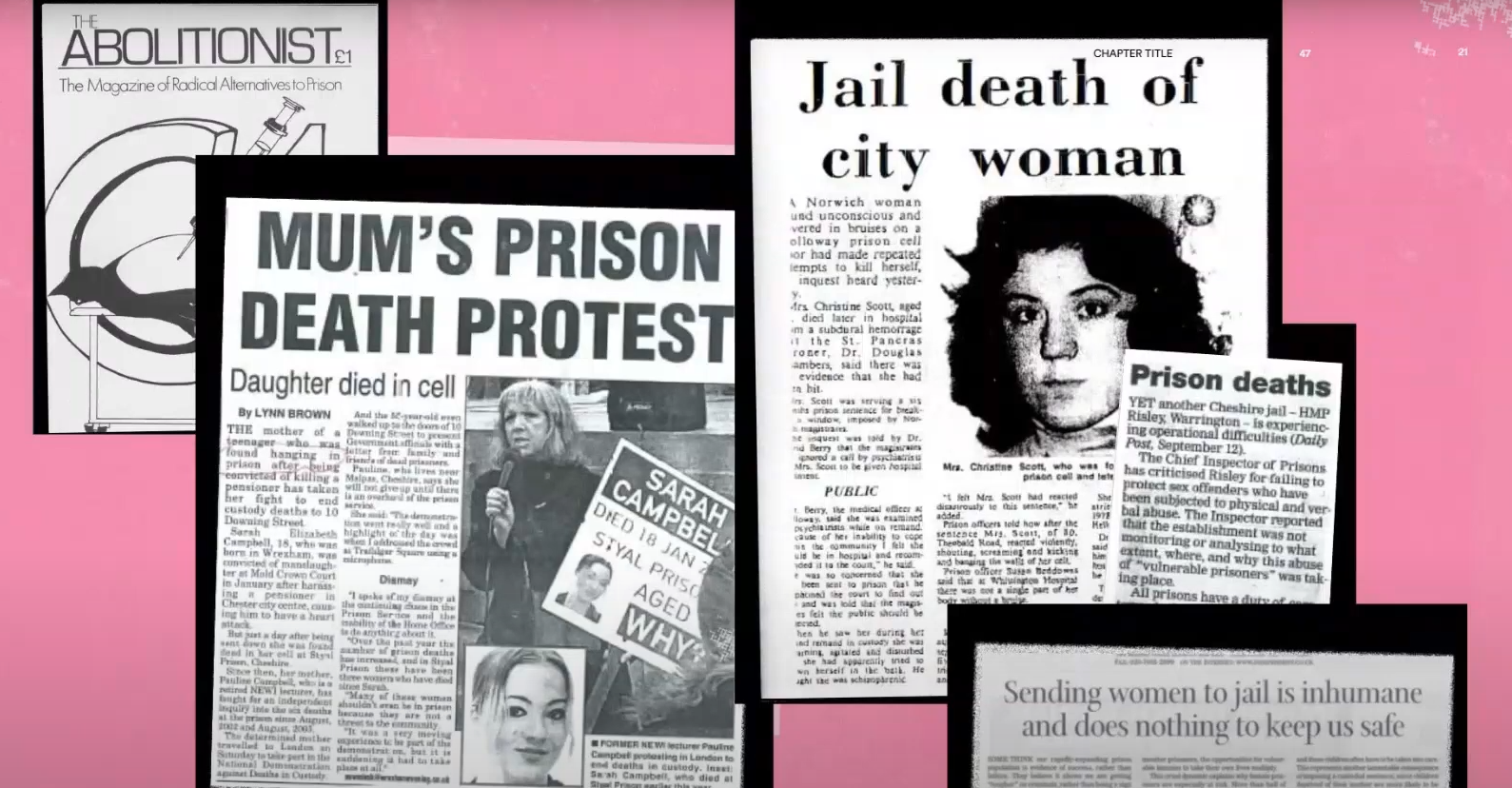
Women’s prisons are so dangerous they are actually ‘incapable’ of adequate reform according to new research which examines recent deaths in the women’s estate.
Between 2014 – 2024, 109 people have died in women’s prisons according to Ministry of Justice data, a statistic that charity INQUEST says ‘lays bare’ the ‘failures of consecutive governments to safeguard the lives of some of the most marginalised people in society.’
INQUEST’s latest report into the harms faced by women in prison reveals deaths have consistently been caused by prison staff ignoring risks and failing to believe that prisoners are experiencing crisis. They highlight instances of women experiencing severe mental health needs telling staff they planned to take their own life only to be ignored, and later found dead. People in prison are ten times more likely to take their own life than those in the community.
When Kay Melhuish entered prison for the first time her family wrote to staff explaining the risks she faced as a result of her ADHD, autism, complex post-traumatic stress disorder and noise sensitivity. She had also previously attempted to take her own life. Struggling with the noise and the indignity of prison, a few weeks into her sentence Kay was found hiding under a table in a quiet room. Six staff restrained her for 13 minutes, during which time she said she was going to self-harm in her cell. After being left alone in her cell, she was alter found ligatured. The inquest into her death found it was ‘incomprehensible’ that officers had not met her basic needs.
The report also found that despite the requirement for emergency call bells in every cell, in the women’s estate these are routinely ignored, or not responded to within the recommended five minute window. Aisha Cleary was was born and died in a prison cell in 2019. Her mother, Rianna Cleary went into labour at 8:07pm and used the emergency call bell. Officers took no action, and she used it again at 8:32pm. This time the bell was not even answered. She gave birth alone in her cell, losing considerable amounts of blood and passing out overnight. She awoke in the early morning to her baby on the bed and not breathing. Paramedics were finally called and declared that Aisha had died, 12 hours after Rianna first asked for medical help, and was denied any.
INQUEST say the circumstances surrounding the deaths of women featured in this report ‘cast serious doubt’ over the decision to imprison women in the first place. A 2007 report recommended the government close down all women’s prisons and no longer subject women to custodial sentences, such were the failings in prisons at this time, and considering the predominantly short sentences that women serve. Instead successive governments have enacted piecemeal reforms, while failing to tackle the wider issues of over-criminalisation and inequality.
Director of INQUEST, Deborah Coles, said: ‘The criminal justice system disproportionately polices, prosecutes and imprisons marginalised people by criminalising poverty, homelessness, mental ill heath, and drug dependency. While one arm of the state punishes, the other offers meagre support when it comes to housing, mental ill health and gender-based violence. Why is a prison place always available, but not accommodation, mental health care or space in a refuge?’
She said the stories of those who have died prove that prisons ‘are not and never will be solutions to social ills’, adding that the only certainty is that more deaths will follow unless the government ‘radically changes direction.’