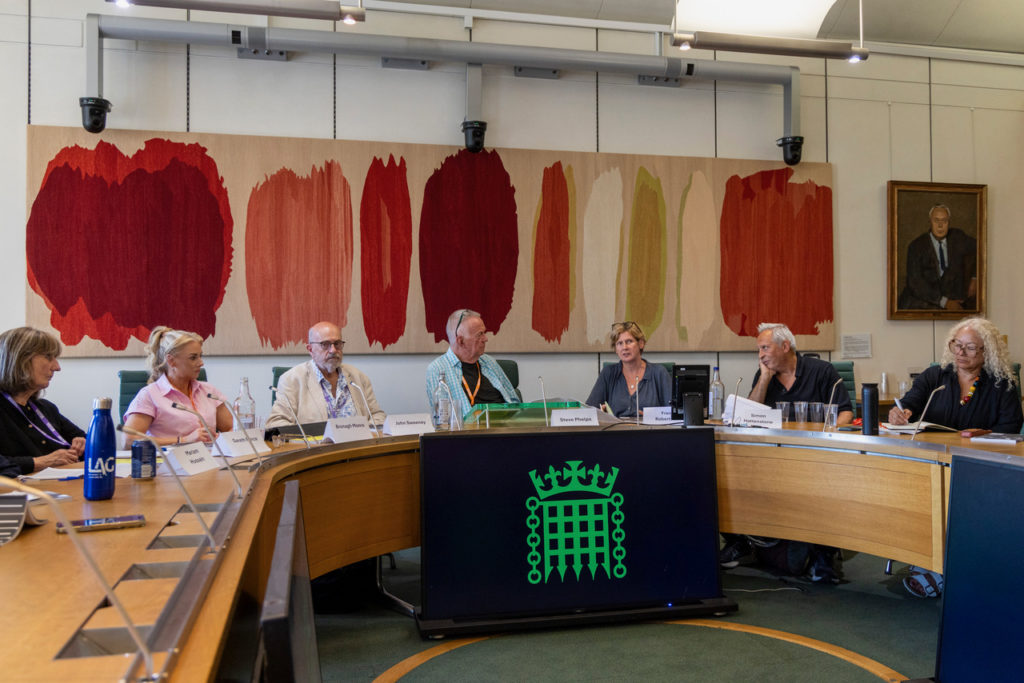

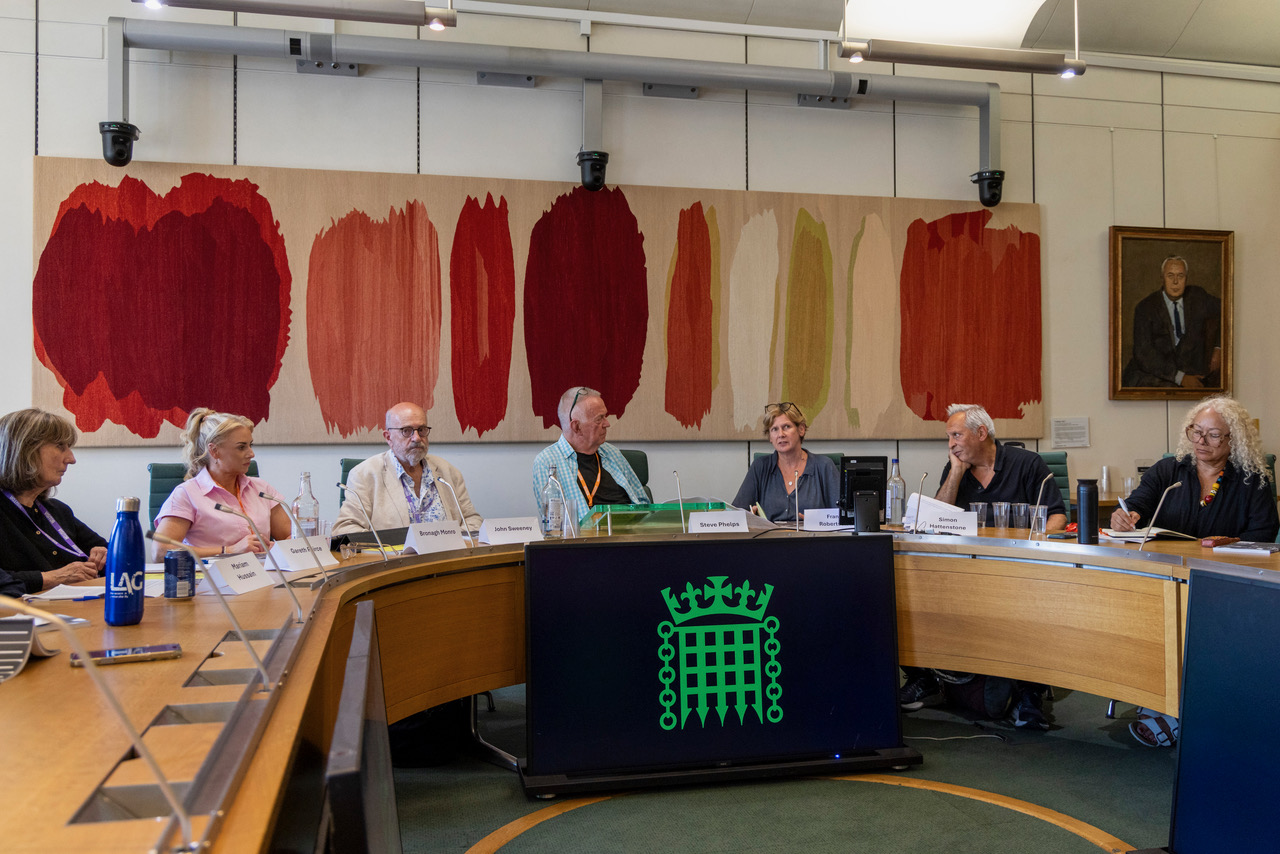
The ‘spirit of Stalin’ was stalking the Ministry of Justice, a leading investigative journalist told MPs and campaigners over concerns about bans blocking prisoners maintaining innocence from talking to the media. Former BBC Panorama journalist John Sweeney was addressing a specially convened meeting of the All-Party Parliamentary Group on Miscarriages of Justice exploring the role of the media in the investigation of wrongful convictions.
Journalists spoke out about recent moves to prevent Jeremy Bamber talking to the press – a ban described on the Justice Gap as ‘patently ridiculous and disingenuous’. Sweeney, who recently made a podcast series exposing the flaws in the conviction of Lucy Letby, referenced his own work reporting on Putin‘s Russia in his book The killer in the Kremlin. ‘It feels like the spirit of Stalin is in the Ministry of Justice,’ he said. ‘When somebody, whatever they have done, has been in prison for 40 years and they want to talk to a journalist, what’s wrong with that in a free and open society?’
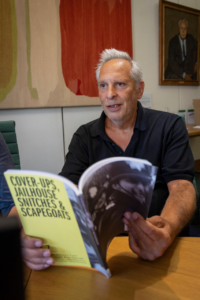 The Guardian’s Simon Hattenstone reported that Bamber, who has protested his innocence of the murder of five members of his family for 41 years, was banned from communicating with the media in the wake of new coverage questioning the safety of his conviction by his own paper as well as the New Yorker. Hattenstone reported that the prison and MoJ ‘got really – technical term – fucked off’. ‘So their punishment was to stop him writing to journalists, which was primarily me, and then even worse, they stopped him writing and calling his team,’ he said. ‘It’s a kind of torture.’
- Simon Hattenstone and John Sweeney were on a panel with the documentary-maker Fran Robertson and BBC Panorama’s Bronagh Munro chaired by the former BBC Rough Justice and Channel 4 Trial & Error producer Stephen Phelps
- The event marked the launch of the latest issue of the Justice Gap’s PROOF magazine: Coverups, jailhouse snitches and scapegoats. Simon Hattenstone, Fran Robertson and Stephen Phelps wrote for PROOF
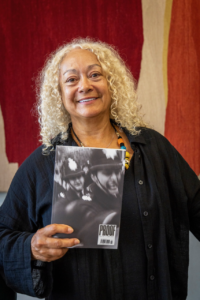 ‘The justice system never fixes itself – the history of our courts shows that behind the exposure of every major injustice has been a journalist,’ said the APPG’s chair Kim Johnson MP at the start of the meeting. But, she argued: ‘The media isn’t what it once was – good investigative journalism is resource-intensive and costs the kind of money that newspapers and broadcasters no longer have.’
Kim Johnson argued that it was ‘vital that the media re-engage with this topic’. ‘It is also vital that we have true open justice – that our justice system is properly accountable so that journalists can access court transcripts, and so prison governors cannot arbitrarily prevent prisoners maintaining their innocence from talking to the press – as happened in Simon’s reporting of the Jeremy Bamber case.’
The MP said that the APPG was hoping to launch a Westminster Commission on the media and miscarriages of justice.
Bronagh Munro talked about her work investigating the conviction of Omar Benguit – a case which has featured extensively on the Justice Gap. As reported, Dorset Police have been accused of ‘framing’ Benguit and, according to a BBC Panorama investigation broadcast earlier this year, 15 witnesses relied upon to support the prosecution case have now told the Munro that the police pressured them to embellish statements or lie in court.
‘The biggest problem we had is that the family to this day still don’t have a set of case papers of their own because they’ve been lost,’ the journalist said. Munro reported that she was still fighting for the documents. ‘From 2021, I submitted a FOI (freedom of information request) to the CPS, and they admitted that they had 24 boxes of Omar Benguit’s case papers.’ However when their pro bono legal team arrived at the CPS office to examine the case papers, they were presented with just four files. ‘There was nothing there that we haven’t already seen,’ she added.
Problems with the paperwork in the Benguit case were cited in the 2017 Open Justice Charter initiative – the hope is that a new Westminster Commission will continue pushing for its recommendations for a more open and accountable justice system.
Last chance saloon
Bronagh Munro talked about the pressure on both journalists and families working on miscarriage of justice cases. Benguit’s campaign has been led by his sister, Amie who regularly attends APPG meetings. The journalist said that she had worked with Amie for 10 years ‘and that takes its toll’. ‘As much as it has been to the benefit of Omar, I fear it has sometimes been to the detriment of the family,’ she said. ‘I always say that when families come to us, investigative journalists, we are almost like the last chance saloon, because usually the legal teams have gone through the case, the appeals have happened, and the conviction is there. They have run out of money, they’ve run out of opportunity for anybody else to hear them and so they’re almost forced into approaching us.’
 Steve Phelps asked Munro whether she might have to tell a family ‘”Look, I don’t think I can do any more on this”, or were you always sure that you could take it further?’
‘You’re never sure you can take it further,’ the journalist replied. ‘Once you’ve given that commitment to a family to do something for them or to work with them, nothing fuels you more than the look in their eyes… . I feel my responsibility at times is to the family who put their trust in me. Disappointing them just isn’t an option.’
Fran Robertson has made a number of films about miscarriages of justice on, variously, joint enterprise, the Manchester 10 as well as the BBC documentary on Andrew Malkinson The Wrong Man: 17 years behind bars. Her article for PROOF magzine is about IPPs and the Joe Outlaw case.
 Robertson told the meeting how she started filming Malkinson on the day that he was released from prison. She didn’t have a commission at the time. She related trying to convince the BBC that his case was an important miscarriage of justice 18 months into filming. ‘They didn’t want to take the film because he was a convicted rapist,’ she said.
Roberston’s production company, Two Step Films, only got the BBC commission when Malkinson was exonerated and by then ‘we had hundreds of hours of of footage’. ‘When you’re trying to talk to commissioners and you want to talk about the reasons behind some of the stories, there’s just a kind of glazing over,’ she said. ‘You just know that they’re not interested.’
Simon Hattenstone talked about investigating both the Jeremy Bamber and Kevin Nunn cases with his late colleague Eric Allison. Hattenstone paid tribute to the world’s first prison correspondent and his good friend in the latest issue of PROOF magazine.
Hattenstone recalled how Eric Allison often used to speak to Jeremy Bamber on the phone. Allison was so convinced of Bamber’s innocence and imminent release that he taped their conversations – as a result the prison stopped phone calls. He said because of the oppressive restrictions on talking to prisoners, journalists were forced to ‘cheat’. ‘In 30 years, I’ve never had an official prison visit, so you have to cheat,’ he said; adding a ‘a mini cheat’ is getting a visiting order. He said that the prison service and the Ministry of Justice automatically challenge media requests on the basis that journalist don’t really need to interview somebody face-to-face. ‘You need to meet someone to really understand someone,’ Hattenstone insisted. ‘I could think they’re innocent and then go and see them, and actually change my mind. So it could work in their interest. You have to look into people’s eyes. You have to see how they react when you ask difficult questions as well as easier questions.’
The journalist argued that the Bamber ban was unlawful because of the House of Lords’ ruling in Ex parte Simms in 1999. In that case the late investigative journalist Bob Woffinden successfully challenged a Home Office ban on him visiting two prisoners, Ian Simms and Michael O’Brien (of the Cardiff Newsagent Three). The veteran human rights lawyer Gareth Peirce, also on the panel, gave evidence to the law lords in that challenge. ‘I’m appalled to hear that it’s back to the dark ages,’ she commented.
Simon Hattenstone talked about stories that were appealing to editors or ‘sexy’ (‘an awful word’) like Bamber and ‘non sexy’ like Kevin Nunn. ‘Kevin is not a big personality,’ he said, ‘he’s a very, very nice man struggling in jail.’ He reported how after he and Allison wrote an article about his case, Nunn was transferred to a higher category prison – ‘a prison that he’d been in before that he hated’. The journalist continued: ‘They punished him for trying to publicize his injustice, and they made it difficult for journalists because obviously we feel really shit when that happens and we think, can we do that again if it’s going to fuck up their life. So it was horrifying. He’s still in that jail now.’
On the day that Lucy Letby was convicted, the investigative journalist John Sweeney tweeted his belief in her innocence. In his first job for the BBC, he had reported on Sally Clark who was convicted in 1999 after the deaths of her two infant children only to be freed in 2003. She was ‘convicted on a statistic’, according to Sweeney who believes Letby was similarly convicted on flawed statistical evidence. In Clark’s case, the paediatrician Sir Roy Meadows had claimed the chances of two children dying naturally in such circumstances with 73 million to one – a bogus statistic that was later disproved by the Royal Statistical Society.
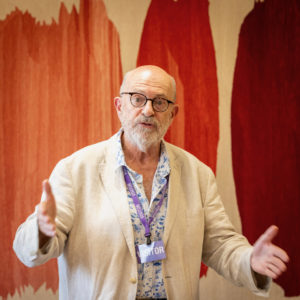 Sweeney recorded that there was an unpleasant online backlash against him following his controversial Letby tweet and his publisher demanded that he take it down. The journalist. was in Ukraine at the time. ‘I said: “I’m in fucking Kyiv, and I’ve got my flak jacket just by me. I’m not taking it down,’ he said. ‘If you disagree with me, come and get me. I won the argument.’
The journalist left the BBC in 2019. ‘So although I’m standing up for Lucy Lettby, I don’t have the machinery to tell the story properly,’ he continued. His answer was to go on to make a podcast series called: Was there ever a crime? The trials of Lucy Letby. He, together with producer Edward Abel Smith, worked on the podcast for free but they had to pay a lawyer £1,000 to check each episode. They set up a crowdfunder which raised £6,000. ‘We did eight episodes, and therefore we lost £2000,’ he said. He added it that he was still accused of ‘grifting’.
The journalist pointed out that the first episode was called ‘A Hospital Full of Shit’. ‘What’s recently come out is there’s another hospital, Nottingham, like Chester, where there was a serious problem of killer bacteria in the neonatal ward,’ he said. ‘Killer bacteria can kill grown adults. It can certainly kill sick premature babies.’
Sweeney was critical of the lack of courage on the part of commissioning editors at all the big broadcasters – his nickname for his former management at the BBC is ‘the jellyfish’. ‘They want to do a miscarriage of justice – so long as the person is absolutely innocent… . So there is a problem right now because the BBC is spending a lot of money on content which strikes me as being as interesting and as rich in journalism as Semolina fucking pudding. It’s not good enough.’
‘Justice systems make mistakes – but what we’re dealing with here is a failure of journalism to tell these stories properly,’ he said.
‘I believe that what we’re looking at is a catastrophic failure in the National Health Service, and that is identified over and over again, but it was kind of convenient for the doctors there and the system to blame a witch rather than the reality of a failed NHS unit. But all of these stories speak to a failure for us to correct the mistakes in our justice system, and we’ve got to fix this.’
John Sweeney
Steve Phelps asked whether the willingness by multiple media outlets including the Sun, Daily Telegraph and Guardian to challenge the safety of the conviction of Lucy Letby – as well as the interest in the New Yorker which has run long-form investigations on both Letby and Bamber (13,000 words by Rachel Aviv and 17,000 words by Heidi Blake) was a ‘harbinger of good for the future’.
Simon Hattenstone said: ‘The fact that the New Yorker has done such brilliant journalism and done it at such length and dedicated such resources has made the serious side of British journalism a tiny bit jealous and a tiny bit ashamed. I hope it’s made us ashamed.’
‘We can sometimes think that there was a golden age when newspapers were these amazing engines of investigative journalism,’ commented David Conn, investigations correspondent at the Guardian. ‘I’m not sure whether actually that was ever the case, and we may be actually in a good age now.’
‘I would like to think that there is still a major commitment in the media to exposing, uncovering and highlighting injustice in all its forms, and that there are many journalists who have that at the core of what they want to do.’
The journalist, who has been reporting on the Letby case for the paper, pointed out that although the New Yorker magazine might have published its article first, the Guardian published a major article by Felicity Lawrence once reporting restrictions were lifted which she had been working on for many months.
Conn pointed out the ‘all parts of the media’ are now taking a critical look at the Letby case: ‘the Mail, The Sun, us, The Telegraph, Sunday Times, everybody… . I do feel like there is something positive in that.’
Dr Robert Kaye, lead lawyer on the Law Commission’s review of criminal appeals, quoted a recent interview with the chair of the Criminal Cases Review Commission, Dame Vera Baird insisting that the watchdog did not respond to media campaigns. ‘Even if you take the view of the CCRC that it’s hermetically sealed off from the outside world,’ he said. ‘The reality is that journalists have an ability to get some information… and setting the general tone that might make people more accepting and inquisitive that they may be miscarriages of justice.’
‘A constellation of catastrophe’
Gareth Peirce, who was on the panel to speak about the Birmingham Four case, called the CCRC ‘a state-funded repair shop that doesn’t know how to use the tools to repair’. The case of the four Muslim men who claim to have been fitted up on false terrorism charges by undercover police officers featured in the previous issue of PROOF magazine.
Gareth Peirce together with Mariam Hussain, sister of Khobaib Hussain were invited to give an update on the case. This summer marks the 10 year anniversary of their imprisonment and the application has been with the CCRC for over two years.
Peirce described the submissions as ‘extraordinary. The content is like a thriller’. ‘Why don’t I send it to the New Yorker instead? Truly, it would have more opportunity of getting a human reaction, even if it’s a rejection, than two years of nothing from the CCRC.’
‘This whole edifice we’re in is isn’t on rock solid foundations,’ she said. She described the adversarial justice system as a structure on faltering foundations – juries, barristers and judges. She highlighted the government’s plans to cut trial by jury; the unprecedented contempt action against the barrister Rajiv Menon KC, who happens to be Khobaib Hussain’s barrister; and what she regarded as the the absence of the kind of ‘scathing scrutiny’ of judges that happens in the US. ‘I regard this as a catastrophic time and not a time for optimism,’ she said. ‘It seems to me it’s an emergency. So when we talk about what media does or doesn’t report on, it’s this constellation of catastrophe.’
Peirce described ‘a journalist you can trust’ as ‘worth their weight in gold’. But she added: ‘What is punishing and exhausting is going out with your wares and there being no intelligence or comprehension.’
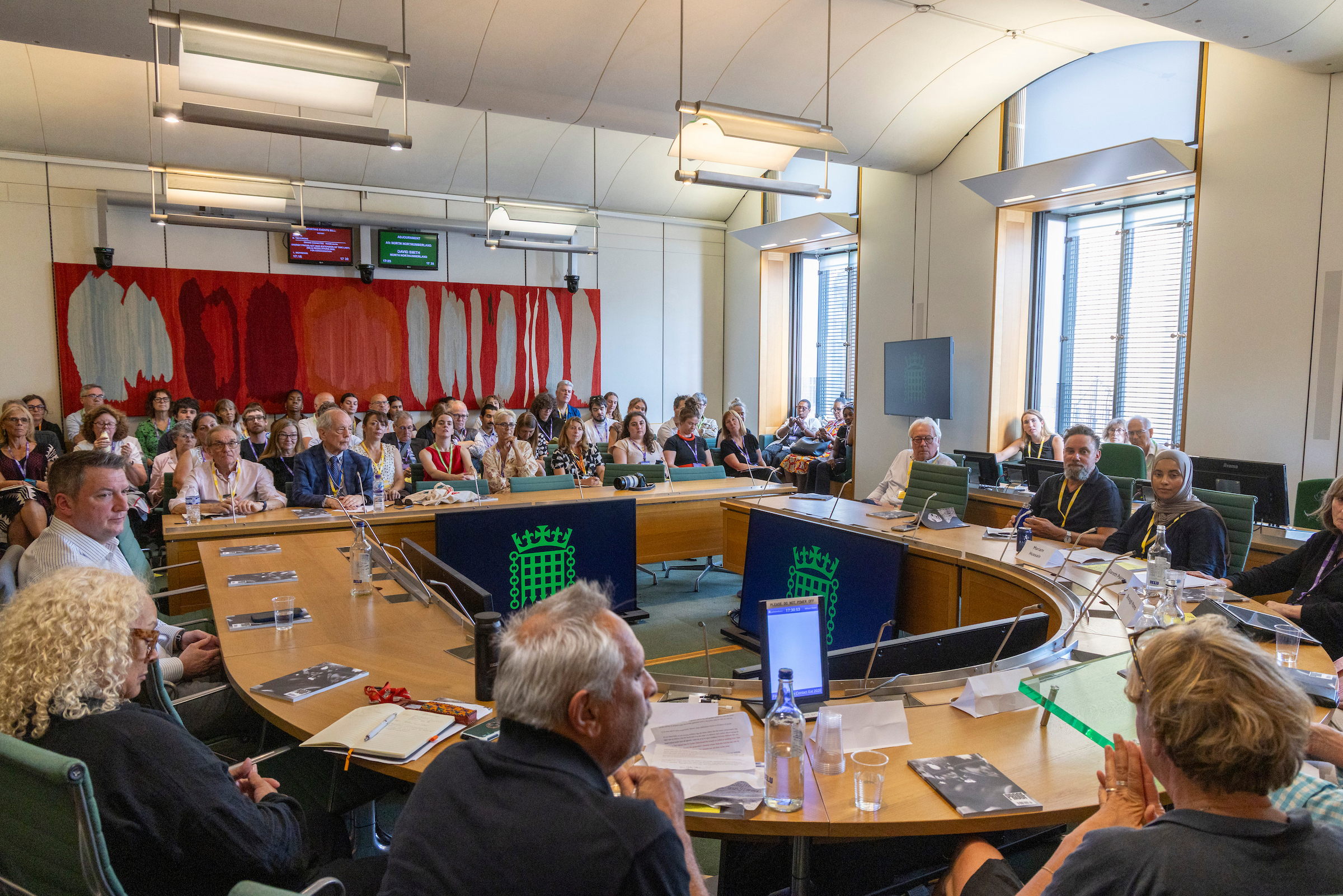 A number of PROOF contributors were in the audience. Kate Wilson, of Police Spies Out of Our Lives, attended the launch direct from the undercover policing inquiry where, as she reported, there were no journalists. The only time the inquiry was covered was because of cases that were deemed ‘sexy’ and ‘often very literally stories about sex’ – in other words, the undercover officers who deceived multiple women into sexual relationships.
‘There are dozens and dozens of miscarriages of justice that are being uncovered through that inquiry,’ Wilson said.
‘My question for the journalists in this room: is how do we get coverage of that? It’s a systematic undermining democratic systems and subverting our political systems and violations of human rights. And it just feels like it really ought to be big news and it’s not.’
Kate Wilson
Peter McNamara, a journalist at Private Eye who wrote for PROOF about the undercover policing inquiry, asked – as a journalist with ‘three years in the industry’ – what advice the panel would give to young journalists trying to break complex stories? Simon Hattenstone responded by saying that ‘you have to be so fucking annoying’ that eventually the editor gives in and gives you space. ‘There’s a fine line between being annoying and getting sacked,’ he added.
The journalist also spoke about the value of ‘cumulative journalism’. As a young journalist, he said, go in wanting to write 17,000 words but be prepared to start with a story of 270 words. ’You keep going because it’s your passion,’ he said. ‘You’ve got to care. And as soon as you’re working with someone who’s like family or it’s their life, you start caring.’
Dr Svilena Dimitrova, a consultant neonatologist who specialises in medical legal miscarriages of justice, wrote for PROOF about the Lucy Letby case with the statistician Professor Richard Gill, reflected on the huge amount of time ‘examining the person at the centre of a miscarriage of justice yet comparatively little examining those who created it’ – a point she later expanded on on X.
Over the past year, I have become progressively less interested in individual miscarriages of justice themselves and far more interested in the psychology that underpins them. Whether we are talking about miscarriages of justice, institutional failures, whistleblower retaliation…
— Dr Svilena Dimitrova (@NeoDoc11) July 18, 2026
Support the Justice Gap, buy PROOF