


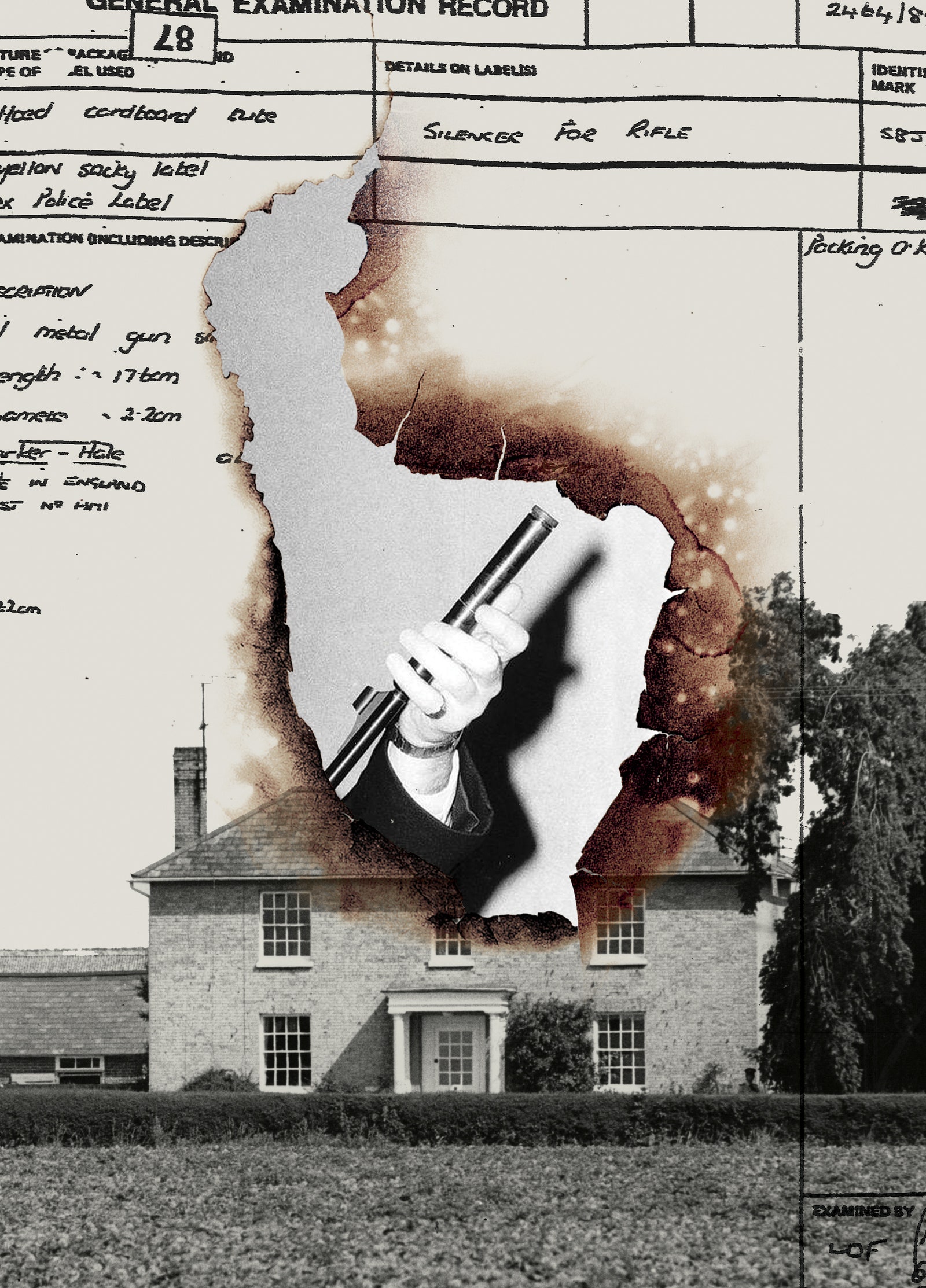
The ban on Jeremy Bamber talking to the media has been criticised as ‘patently ridiculous and disingenuous’ and will be challenged by his legal team. As reported by Simon Hattenstone in the Guardian, Bamber, who has always protested his innocence for murdering five members of his family, has been banned from communicating with the media. This follows after a series of revelations about the case – notably, Heidi Blake for the New Yorker (a 17,000 word investigation plus a podcast) and Simon Hattenstone – highlighting serious concerns about the safety of conviction (see here).
 The Guardian reported that, without giving a specific explanation for their decision, the prison service cited ‘the need to protect victims from serious distress and maintain confidence in the justice system’ as the reason for the ban. Bamber’s solicitor Mark Newby told the Justice Gap that such a prohibition is illegal. ‘The right of a prisoner who maintains his innocence to speak to journalists about a possible miscarriage of justice has been settled law since the House of Lords’ decision in Ex parte Simms on July 8, 1999, and is protected by Article 10 of the European Convention,’ he commented. ‘Any restriction on a prisoner’s communications must be necessary, proportionate and tailored to the individual case; the prison servicee’s own policy expressly permits media contact where the interests of justice require it. A blanket ban of the kind imposed by HMP Wakefield meets none of those requirements. In a case in which fresh material is actively being examined, the prison’s role is to facilitate scrutiny of the conviction, not to suppress it. The restriction is unlawful, and will be challenged.’
Back in 2023, Mark Alexander – a prisoner claiming to be wrongly convicted of the murder of his father – successfully challenged a ban preventing him talking to the media about his case – as reported on the Justice Gap. He had been refused permission by the governor of HMP Coldingley, Surrey to be interviewed by telephone by an investigative journalist making a podcast. Mr Justice Baker, giving judgment in the High Court, ruled that the refusal of a telephone interview was ‘a misdirected and irrational decision’ and directed the governor to consider a fresh application.
Simon Hattenstone told the Justice Gap that it was ‘outrageous that somebody proclaiming their innocence is banned from talking to the press’. ‘And even more outrageous when it’s somebody who’s been proclaiming their innocence for 41 years. It seems more than a coincidence that this has happened at a time when more and more evidence is emerging to undermine the safety of his conviction.’
‘I emailed him a letter a few weeks ago that included a photo of a beautiful blossom tree in full bloom across the road from my house. I heard from the campaign team that the photo was given to him but not the letter, and he wasn’t even allowed to reply to say he liked the photo!’
Simon Hattenstone
Dr Dennis Eady, who runs Cardiff University’s innocence project and is a long time supporter of Bamber, also cited the Simms judgment as establishing the right of prisoners to communicate with journalists. ‘But the prison service have always been as difficult as possible about this, usually claiming it needs permission from the Ministry of Justice,’ he said. ‘The current action against Jeremy is just another example of the system trying to manage the truth out of existence.’ He describes the rationale as cited in the Guardian as ‘patently ridiculous and disingenuous’. ‘The victims are dead and as far as anyone knows beyond being distressed by publicity, but more importantly and more sinisterly it suggests that confidence in the criminal justice system relies on covering up the truth,’ he said. ‘This has been and remains the unconscionable policy of the system and the reason why an innocent man has remained in prison for 40 years in defiance of the evidence. However the cat is out of the bag, the story is out there, and anyone prepared to listen to the evidence rather that the prejudice knows that the coverup does not maintain confidence in the justice system – it destroys it.’
A spokesperson for the Jeremy Bamber Innocence Campaign said that the ‘illegal ban’ demonstrates ‘yet again, the criminal justice system’s reflex reaction when faced with a potential miscarriage of justice’. ‘Rather than allowing a public debate on any new evidence, as most reasonable people would expect, the system’s instinct is to try and silence the potential victim of that wrongful conviction to prevent this,’ they commented. ‘The prison’s action in preventing the media reporting on, or investigating, the case any further is not what the law demands, and is contrary to the principle of natural justice. No-one is above the law, not even HMP Wakefield, and they should remove this unlawful ban immediately.’
Mere entertainment
In Ex parte Simms, the late investigative journalist Bob Woffinden went on to score a notable victory in the battle between the media and the courts in the House of Lords in 1999 when he successfully challenged a Home Office ban on journalists visiting prisoners and writing about their cases. The case concerned two prisoners, Ian Simms and Michael O’Brien (of the Cardiff Newsagent Three) both serving life sentences for murder, who sought leave to appeal against their convictions which was denied by the Court of Appeal. The governors of the prisons would only permit these interviews if the journalists agreed not to publish any part of them, following the Home Secretary’s policy.
In the landmark judgment, Woffinden provided the court with details of more than 60 cases over the previous decade where journalists played ‘a substantial role in identifying miscarriages of justice which led to the quashing of the convictions’. The case marked a sea-change on the part of the judiciary in their attitude towards investigative journalists. Lord Steyn acknowledged that many miscarriages have been identified ‘only through painstaking investigations by journalists’. Previously, the courts had come to regard investigative journalism as at best an irritant – the Lord Chief Justice Lane dismissed the pioneering investigative work of the BBC’s Rough Justice as ‘mere entertainment’.
The court was particularly persuaded by evidence given by the veteran human rights lawyer Gareth Peirce, who pointed out that nine out of 10 cases before the then new CCRC did not have a lawyer. ’The cases with the best opportunity remain those which have arrived at the Commission fully researched and investigated with new evidence compellingly presented. Resources available to the press, in particular (but not exclusively) the large budgets available to television programmes, are clearly the most significant chance of discovering new evidence, particularly where expensive expert research requires commissioning. As important, however, is the potential interest of smaller, local newspapers and journals, which can provoke interest in the relevant area and prompt fresh evidence.’
Support the Justice Gap, buy PROOF