


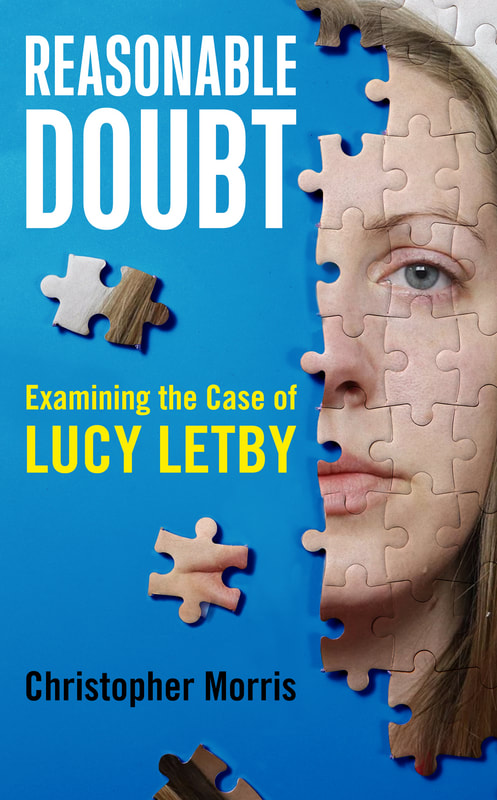
The author of a new book arguing that Lucy Letby is a victim of a miscarriage of justice believes that her wrongful conviction could be overturned in two years. Speaking at the launch of Reasonable Doubt: Examining the case of Lucy Letby (Cinto, 2026), the writer Christopher Morris was asked by the Daily Mail journalist and fellow supporter of former neonatal nurse, Peter Hitchens ‘how long would it take’ for justice to be done.
‘This conviction doesn’t have a leg to stand,’ he replied. ‘There are people of the highest calibre in very large numbers saying that – and there is no one of any credibility coming from the other side.’ Morris said he hoped the case could be ‘resolved within two years’.
 Over the last three years, Christopher Morris claims to have interviewed more than 60 experts from the worlds of neonatology, paediatrics, nursing and statistics about the controversial conviction of the former nurse on his own YouTube channel and for his podcast. His book has been publicly supported by high profile champions of Letby including Sir David Davies, professor John Ashton CBE, and the Private Eye journalist Dr Phil Hammond. The investigative journalist John Sweeney interviewed Morris at the launch event last week. Sweeney told the audience that the case was ‘a monstrous injustice’.
Morris argues that at the heart of the conviction of Lucy Letby is ‘a story that… makes absolutely no sense’. ‘There is no plausible motive or feasible psychological explanation for Letby’s supposed acts,’ he writes. ‘No one has ever seen her doing anything wrong.’ He argues that anecdotal evidence used in court was ‘phenomenally weak’; and the statistical case on which the prosecution built was ‘fundamentally flawed’.
‘The court case was brimful of eyewitness accounts that was specious and bereft of material or evidential value. The prosecution has erected, not merely one hypothesis, but an array of hypothetical events that are completely improbable and then spun them into an overarching narrative intended to explain the way their lack of evidential support. Often the prosecution even used evidence that is known to be incorrect.’
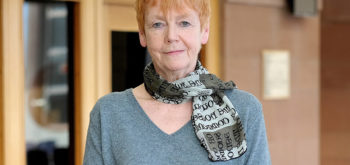
Christopher Morris
Morris contends that medical underpinning prosecution arguments have now been so undermined that any of the cases on which the former nurse was convicted would now fail to reach a court on their own merit.
 A ‘rational’ Court of Appeal?
When asked what would have to happen for Lucy Letby to be released in two years, the author took an optimistic view of the likely speed of the criminal appeals system. ‘The first thing is that the Criminal Cases Review Commission needs to refer the case to Court of Appeal as quickly as possible. There is no conceivable reason why they shouldn’t do that, and I can see no reason why they shouldn’t do it quickly.’
‘Once it has reached the Court of Appeal, this case should be expedited rapidly due to the unbelievable trauma that this woman has been through over the last 10 years,’ he continued. ‘Her life has been absolutely destroyed by a failing system, and it is absolutely incumbent on the system to now put that right as quickly as possible.’
Morris argued that momentum had been building through journalistic and public pressure. ‘I’ve written this book because I think that what has happened is abysmal, appalling, and embarrassing. And it’s up to the criminal justice system to put that right.’
Fourteen of the world’s leading neonatologists and medical experts were involved in a report highly critical of the NHS and which found no evidence of murder in the babies deaths, as reported on the Justice Gap (here). That initiative was chaired by Dr Shoo Lee, whose 1989 paper was incorrectly relied upon by the prosecution expert Dewi Evans. According to Morris, there were now 33 experts who had spoken out about their concerns. ‘It’s staggering. I truly believe this is the greatest concentration of expertise that ever appeared in an appeal.’
Cleuci de Oliveira, the journalist who first approached the New Yorker about the story which ultimately led to Rachel Aviv’s 13,000 word investigation, asked what surprised him most about his own research. ‘I used to think if you could put someone away for murder you would need actual evidence to do that,’ he said. ‘It was very surprising to me that such a flimsy case could put someone away forever not even just a life sentence, but no prospect of parole officially.’
The second most surprising discovery was, as he tentatively put it, the ‘conduct of someone’. John Sweeney, chairing the session, interpreted that as a reference to the prosecution expert, Dr Dewi Evans who the journalist had interviewed for his own podcast. ‘It’s fair to say he turned up and faced the bowling,’ Sweeney reported. ‘It’s also fair to say that some of the things he said struck me as being extremely arrogant, and some of it was just plain wrong.’
The journalist continued ‘If Lucy’s conviction is based upon the evidence of this man when there is now a whole series of the world’s best neonatologists saying it’s nonsense, I would have thought any rational Court of Appeal would look at this and say we cannot rely upon the evidence.’
The audience that the launch was well attended by experts from numerous disciplines concerned about the safety of the conviction. One retired obstetrician and chief executive of a women and infants hospital said he had been ‘appalled’ to discover that the babies at the Countess of Chester were delivered in ‘a smallish hospital’. ‘High-risk babies delivered in the wrong environment looked after by paediatricians who didn’t, in the main, have specialist training in the neonatology,’ he said.
‘I’m also old enough to remember the Birmingham Six and the Guilford Four and the photographs that appeared in the newspapers afterwards – they all looked like IRA bombers and Lucy Letby looked like Myra Hindley when I saw her on the front of the tabloids in Dublin.’
A retired obstetrician
He was concerned about the recent review led by senior midwife Donna Ockenden which found leaders at Nottingham University Hospitals NHS Trust knew there were serious issues in its maternity department going back to ‘at least 2010’ but failed to take action. ‘Do you think that the dysfunction that we see reported in the Ockenden report somehow increases the momentum to say that Lucy Letby is actually a victim of a dysfunctional system in the maternity and neonatal services in the NHS?’ he asked.
‘Everything we’ve heard about Nottingham, everything we’ve heard about all the previous maternity crises is mirrored in this case,’ agreed Morris. A retired obstetrician noted ‘incredible similarities’ between the deficiencies found by Ockenden and ‘what you have uncovered were going on at the Countess of Chester’. ‘The terrifying concern that I’m left with is that this could very easily happen again,’ he said.
‘Undoubtedly yes,’ Morris agreed. ‘These are systemic problems. It’s clear there were systemic problems with the Countess of Chester. You only need to look at them… . They weren’t doing the most basic things that they needed to do, and the fear, obviously, is that this hospital isn’t as bad as we think it is, and that actually it’s more broadly representative of other hospitals. Given that there is this incredible, chilling overlap between Nottingham and Chester, where it’s almost spooky, isn’t it?’
A retired surgeon said that he ‘always felt’ that the statistical evidence (for example, the now infamous shift rota seemingly highlighting Letby’s presence when a baby died) advanced by the prosecution was ‘non-existent’. He asked the statistician Professor Jane Hutton for her views as to whether the Criminal Cases Review Commission would be provided with an analysis of a sensible statistical view of the problem. Prof Hutton had warned Cheshire Police that its approach on the stats was wrong in relation to Letby. But according to the MP David Davis, speaking in Parliament, the CPS instructed the police to drop Hutton.
Prof Hutton flagged a publication by the Department of Health and the Healthcare Quality Improvement Partnership on how to deal with statistical outliers published in 2011. ‘There is no doubt there are more deaths than you might have expected,’ th academic said. ‘How do you investigate that? And it’s absolutely clear that they should have engaged a statistician.’
In defence of ‘the noise’
In September 2024, Lady Justice Thirlwall opened the inquiry into the deaths at the Countess of Chester Hospital with criticism of the ‘huge outpouring of comment from a variety of quarters on the validity of the convictions’. ‘So far as I’m aware, it has come entirely from people who were not at a trial,’ she said. ‘All of this noise has caused enormous additional distress to the parents who have already suffered far too much.’
Christopher Morris defends himself, and others, who have spoken out on behalf of Letby in the face of criticism from the legal establishment. He quotes Thomas Bingham, widely recognised as the greatest English judge since the second world war, from his book The Rule of Law saying that judges ‘are not, of course, the only guardians of the rule of law, perhaps not even the most important. Parliamentary and public opinion, informed by the media, should be alert to detect and scrutinise any infringement’. Morris adds: ‘[No] one should apologise for highlighting the plight of Lucy Letby nor the debacle that has led to it.’
He finishes the book by talking about the psychological devastation of the wrongly convicted, including an interview with Michael O’Brien who spent 11 years in prison for the murder of a Cardiff newsagent.
‘This is not purely about justice. It is not merely about a young woman inexorably becoming a middle-aged woman, life dripping steadily away in the harshest conditions imaginable, while having done nothing wrong. It is fundamentally about patient safety. It is about whether NHS institutions will be held to account. It is about whether the police are considered too big to fail, and whether their most serious mistakes could be properly scrutinise. And it is about the ability of the criminal justice system to reflect on its own failings when it would be more convenient to blame a scapegoat. There is one unequivocal truth at the heart of this book and it is one that cannot and must not be ignored, if even the merest scrap of public faith in the criminal justice system is to be retained. The conviction of Lucy Letby is chronically unsafe. It cannot be allowed to stand.’
Support the Justice Gap, buy PROOF