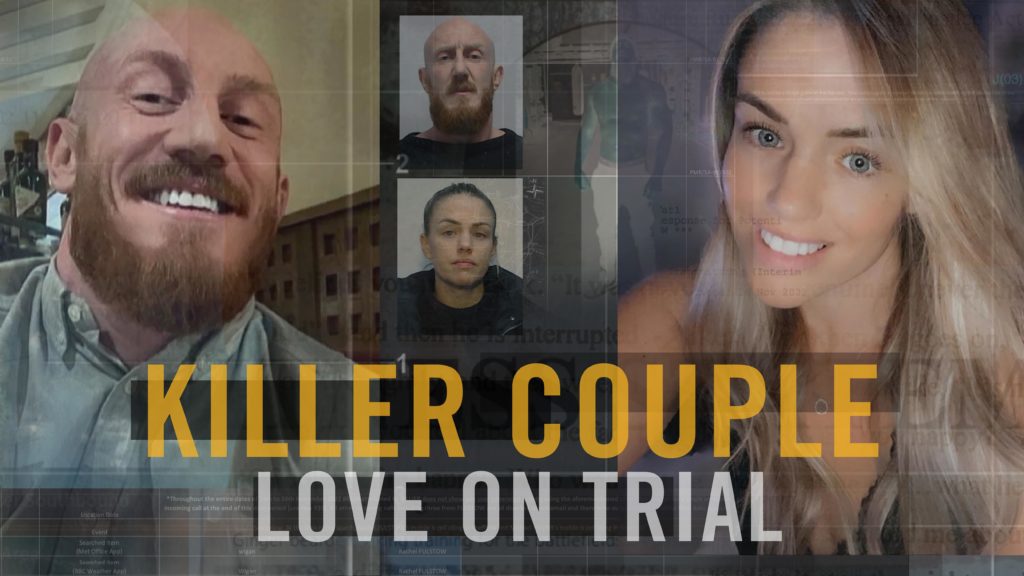

The newly released BBC documentary Killer Couple: Love on Trial has remained up top of trending programmes on iPlayer. Are these clicks about the viewers’ interest in questions of justice, or simply another opportunity for the viewer to judge a ‘true crime’ case? Can the latter motivation lead the viewer to ask a deeper set of questions about justice in cases of joint enterprise? Dr Becky Clarke, senior lecturer at Manchester Metropolitan University, writes.
The programme centres on the conviction of Rachel Fulstow, sentenced to a 30-year prison term in August of 2023. It is also about how joint enterprise laws are driving the use of life sentences for women in England and Wales.
My motivation for being involved in the programme was the opportunity to push the conversation about joint enterprise beyond the echo chamber it can sometimes feel stuck in, to engage a wider audience in this question of (in)justice, and to ask whether it is right that our laws of complicity, like joint enterprise, hold secondary parties liable for violence enacted by others.
The bigger picture
I’ve researched JE for over a decade in my academic role at Manchester Metropolitan University, as well as through advocacy and interventionist work with affected communities and within criminal legal institutions. Published in 2020, our study ‘Stories of Injustice’ examined the use of JE with girls and women. We found at least 109 women who had been convicted under JE in the preceding 15 or so years. 90% had been convicted of murder or manslaughter. In most cases, like in Rachel’s, it was recognised by everyone in the courtroom that the woman had NOT engaged in any violence.
Our task was to try to understand how and why women were convicted in these cases. It won’t surprise readers of The Justice Gap that many factors were at play, some institutional (for example, police decision-making, prosecution strategies, lack of adequate defence and judge’s directions) and others societal.
It’s a story as old as time. Eve’s responsibility for Adam’s transgression. Women were painted by prosecutors as the facilitators of violence, held responsible for the violence of men, with several key hallmarks in the prosecution narrative echoing across the cases.
Women only represent a small proportion of JE prosecutions, less than 10%. The long-awaited official data first published by the Crown Prosecution Service last autumn suggests around 30 women a year are charged with murder or attempted murder in such cases.
If it’s such a small number of women, why is this important? When placed in context these murder / manslaughter convictions are alarming. The Office for National Statistics (ONS) homicide data reports that around 30 women a year are convicted of the offence of homicide (an offence which encompasses all murder and manslaughter convictions). The use of JE to convict women in these cases of serious violence then starts to look like a more serious and significant issue driving the use of life imprisonment for women in our country.
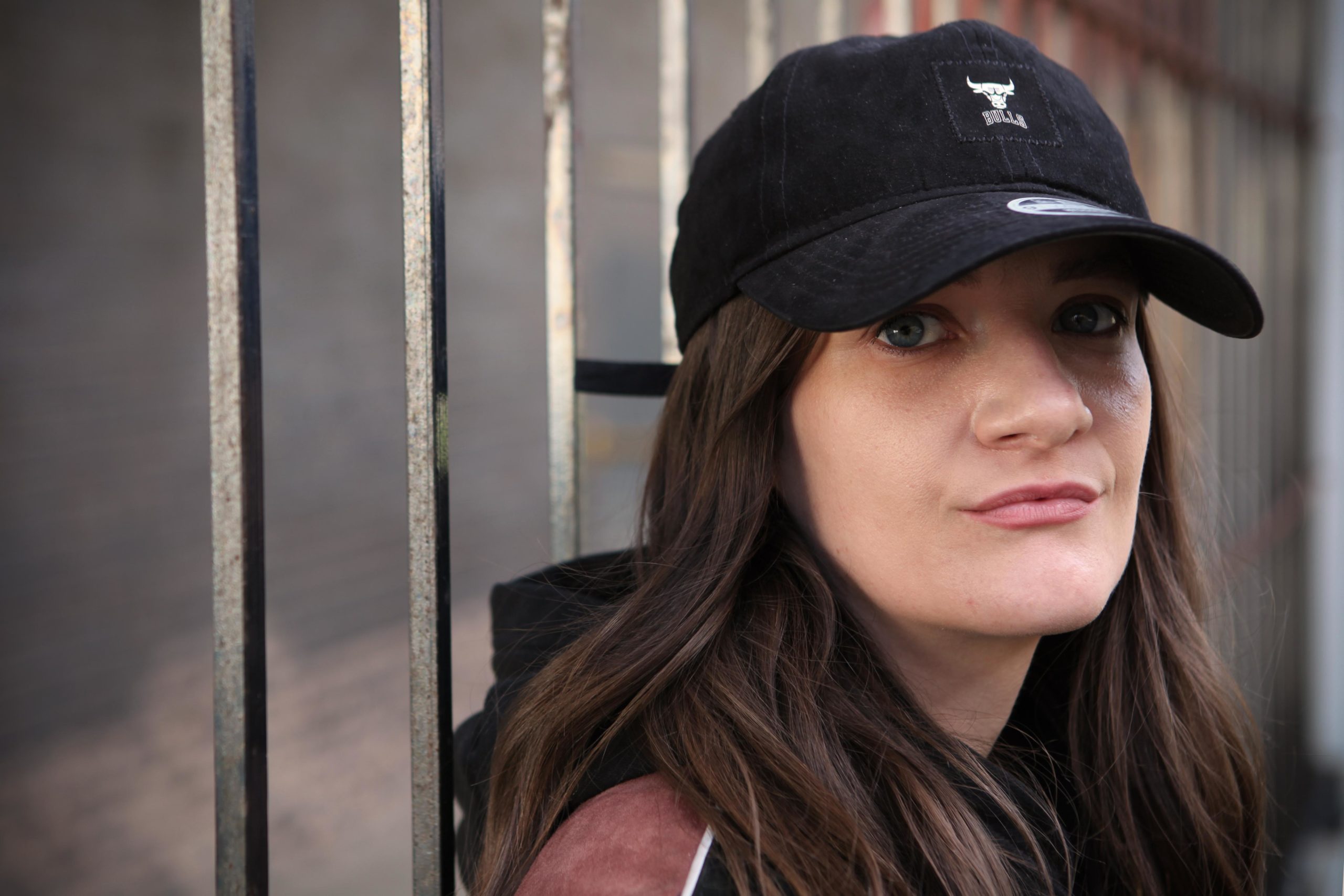 The ‘Killer Couple’ narrative
With the ‘Killer Couple’ title and mugshot of Rachel as the programme’s thumbnail image, the BBC documentary may play too close to the judgements of and fascination with violent women. This is something our research suggests can be a part of what contributes to the criminalisation of women in these cases. If we oversimplify the complexity within and across cases, we risk reproducing the issues we are trying to question.
As I highlighted to the programme maker Layla Wright in our research chats and ask in my on-screen interview, how do we understand justice in these cases, especially when the system has often failed to protect women from harm. The programme starts to open-up these questions and issues.
Our research revealed that the context of women’s lives, which could be control, violence or financial exploitation by a co-defendant, or unmet mental health issues and addiction, is often either dismissed by the prosecution or in other cases used to undermine the woman’s credibility. In some cases, context is silenced prior to the jury entering the courtroom, through a pre-trial hearing setting the ‘agreed facts’. In other cases, defence teams advise women to remain silent about this context, so as not to affect their credibility in front of the jury. They sit in the dock alongside men who have subjected them to fear and manipulation.
Things can be different, though. In a case that concluded just the week before the documentary aired, a young woman, Ronique Belfon from Bedford, was acquitted of murder in what the prosecution had claimed was a ‘planned attack’. Following this case through the updates from Ronique’s family and campaigners attending court, it was clear from the outset Belfon’s legal team invested in a range of strategies, drawing on important case law, to challenge two key issues: the application of secondary liability to determine who was responsible for the violence; and the necessity for the jury to understand the context of trauma and victimisation of the defendant in judging her actions (and inactions).
Had such legal arguments been made in Rachel’s case would the jury have drawn a different conclusion? Of course, we can’t know this. It will now be the long road to an appeal that will decide whether the trial was fair and the outcome appropriate.
Being so close to the detail across these two cases raises important questions again, prompted by our original research – what distinction must be established in the law between inferences drawn with hindsight from circumstantial evidence, and proof (beyond reasonable doubt) of a defendant’s subjective knowledge, intention, or encouragement to commit a crime.
For some women like Ronique Belfon, it is their presence and inaction in the face of violence that is framed by prosecutors as collusion and intent. For others, like Rachel Fulstow, it is the testimony of her violent ex-partner, alongside pictures and text messages, that the prosecution used to infer what she knew or intended.
As Dr Felicity Gerry KC argues in the closing address for the defence: ‘This is a case where hindsight and interpretation of footage by the prosecution distorts reality. A life has been lost, and it is natural to search for accountability. But the law demands discipline. You must acquit when the interpretation of evidence is so unreasonable that you can conclude there is no evidence at all.’
Ronique Belfon, a mother of two young children, spent ten months on remand in our broken prison system, and faced the harrowing experience of a nine-week-long criminal trial for murder. While the acquittal demonstrates what can be achieved with legal pressure, I’m not sure we can call it ‘justice’.
What next?
As well as lives destroyed, our ongoing Manchester Metropolitan University research shows that there is a colossal cost to the taxpayer for wrongful imprisonments due to joint enterprise.
We need change. There is an urgent need for legislative review, and clearer policy guidance and practice scrutiny in how these cases, drawing on legal principles of complicity, should be charged, prosecuted, defended and sentenced.
But this change must also go beyond the courtroom, to our living rooms and online to social media spaces. When it comes to ‘true crime’, as a viewing public we should question our voyeurism and tendencies to ignore questions of ‘justice’. If we broaden our lens to see the bigger picture – just as we were pushed to by the ITV drama Mr Bates vs The Post Office – the harm created by institutional failure is exposed.
We must demand more of our ‘justice’ system, especially in relation to how it currently fails so many victims of violence and criminalised women. Joint enterprise cases like Rachel’s and Ronique’s reveal more about a deeply flawed and powerful system, than they do about the ‘truth’ of events in any single case of harm.
Support the Justice Gap, buy PROOF