

The CPS is currently changing the wording of the crown prosecutors’ code to tackle ‘unconscious bias’ as a result of concerns over the racist application of joint enterprise. The director of public prosecutions was asked about the overrepresentation of Black and Asian defendants in joint enterprise prosecutions as revealed by data published last year that more than a third of defendants were from Black and minority ethnic backgrounds.
Janet Daby MP, Labour MP for Lewisham East, raised the results of the first national monitoring scheme published last September which confirmed the stark racial disproportionality of the controversial common law doctrine. The DPP, Stephen Parkinson reported that he was revising the code for Crown prosecutors ‘requiring prosecutors to be mindful of the potential for bias in decision making,’ he said. ‘I was particularly keen to do this because it is something of an article of faith for prosecutors that we weigh evidence independently and objectively. We are lawyers. That is our job.’
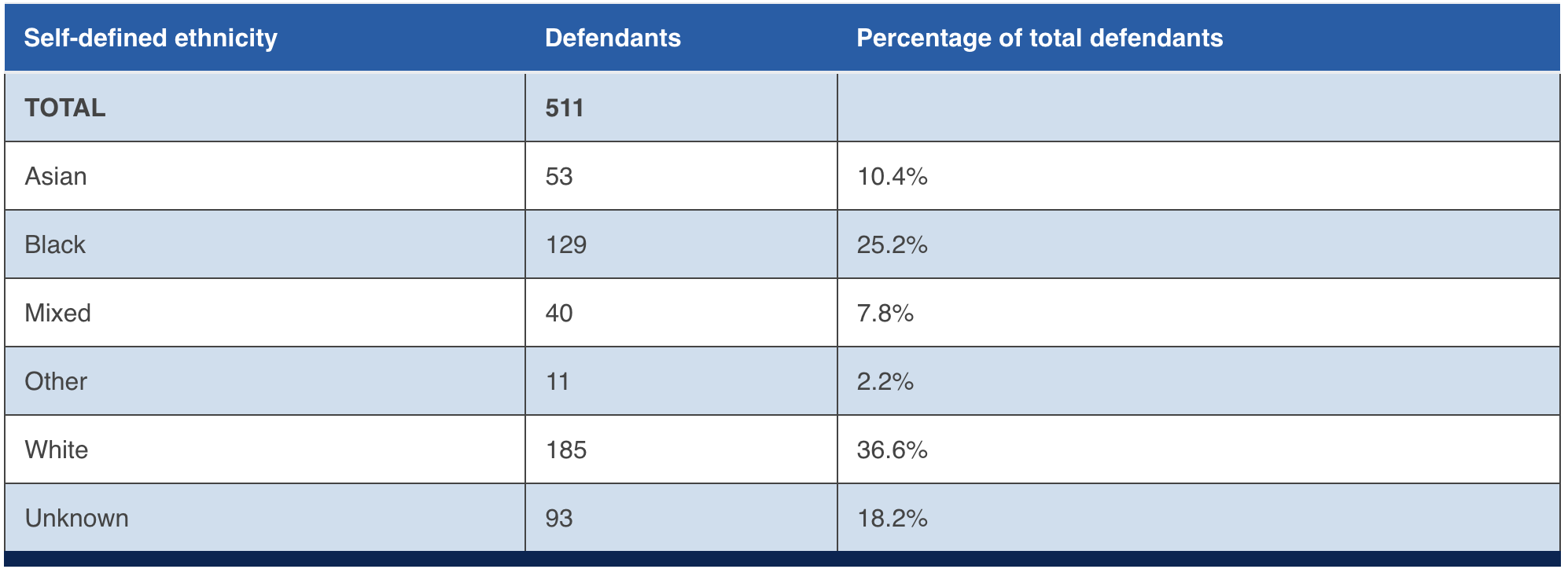
The CPS launched its monitoring scheme after years of criticism as well as legal actions over the absence of data in the context of well founded concerns about its racial disproportionality. Black defendants made up a quarter of the data caseload despite representing 4% of the general population – by contrast, white defendants are 36% of the caseload and 92% of the population. The figures revealed massive geographically disproportionality. The largest category of ethnicity across the dataset for defendants is white (36%) – but in London, less than one in 10 of defendants were white.
Parkinson admitted there was resistance to suggestions that CPS applied the law differently to different communities. ‘When we were doing this research two years ago, many of our people got affronted at the idea that there was any sort of bias in their decision making,’ he told MPs. ‘They said, “We follow the code.” I thought, “Well, the answer to this is that there is bias. I am sure it is unconscious, but bias exists. Let’s amend the code so we keep it in the forefront of people’s minds.’
Janet Daby highlighted concerns that the term ‘gang’ carried ‘racially stereotyping connotations when applied without evidence’. Parkinson said that CPS had been training for our staff with case studies based on real-life examples including one on ‘adultification in relation to Black people’. ‘We found that, in relation to people with an ethnic minority background, different types of language were sometimes used,’ he said. ‘We are exploring the use of technology to see if we can apply that to all our casework.
Buy PROOF, support the Justice Gap