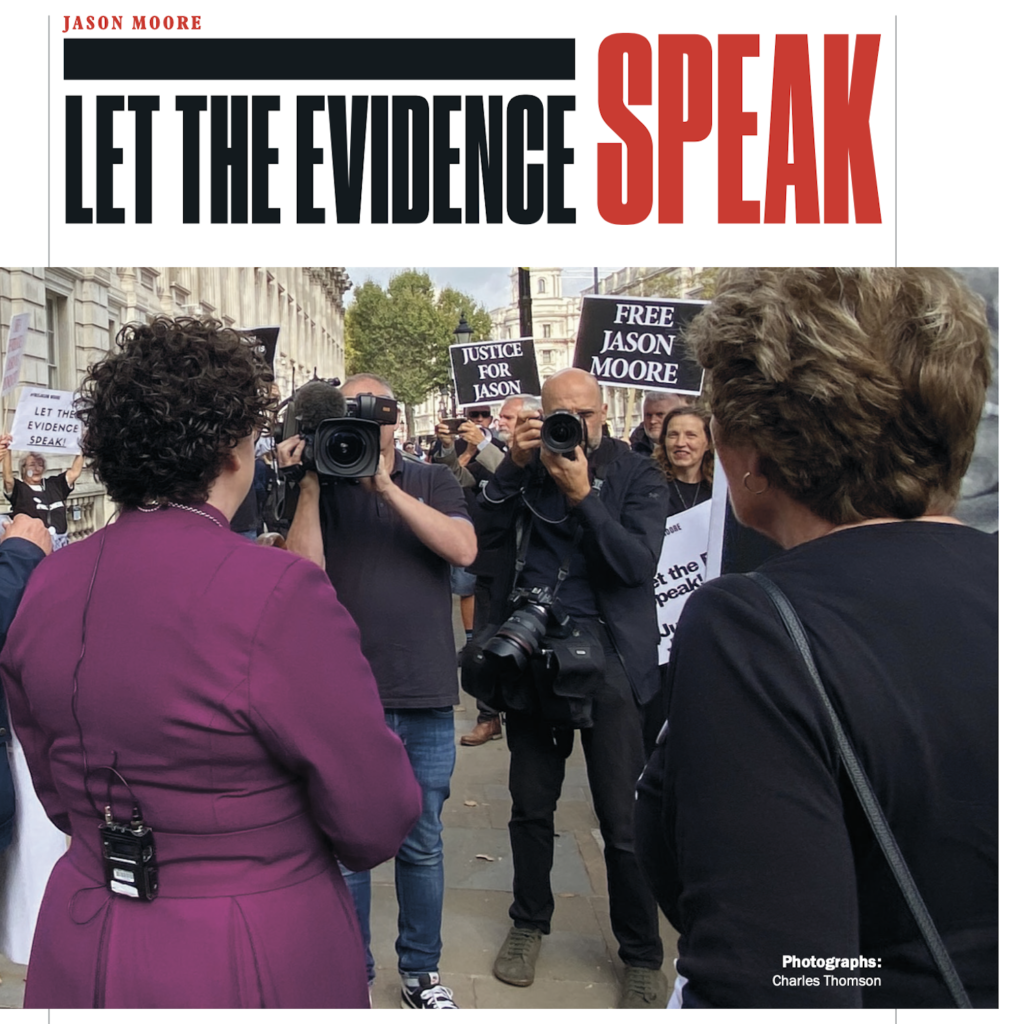

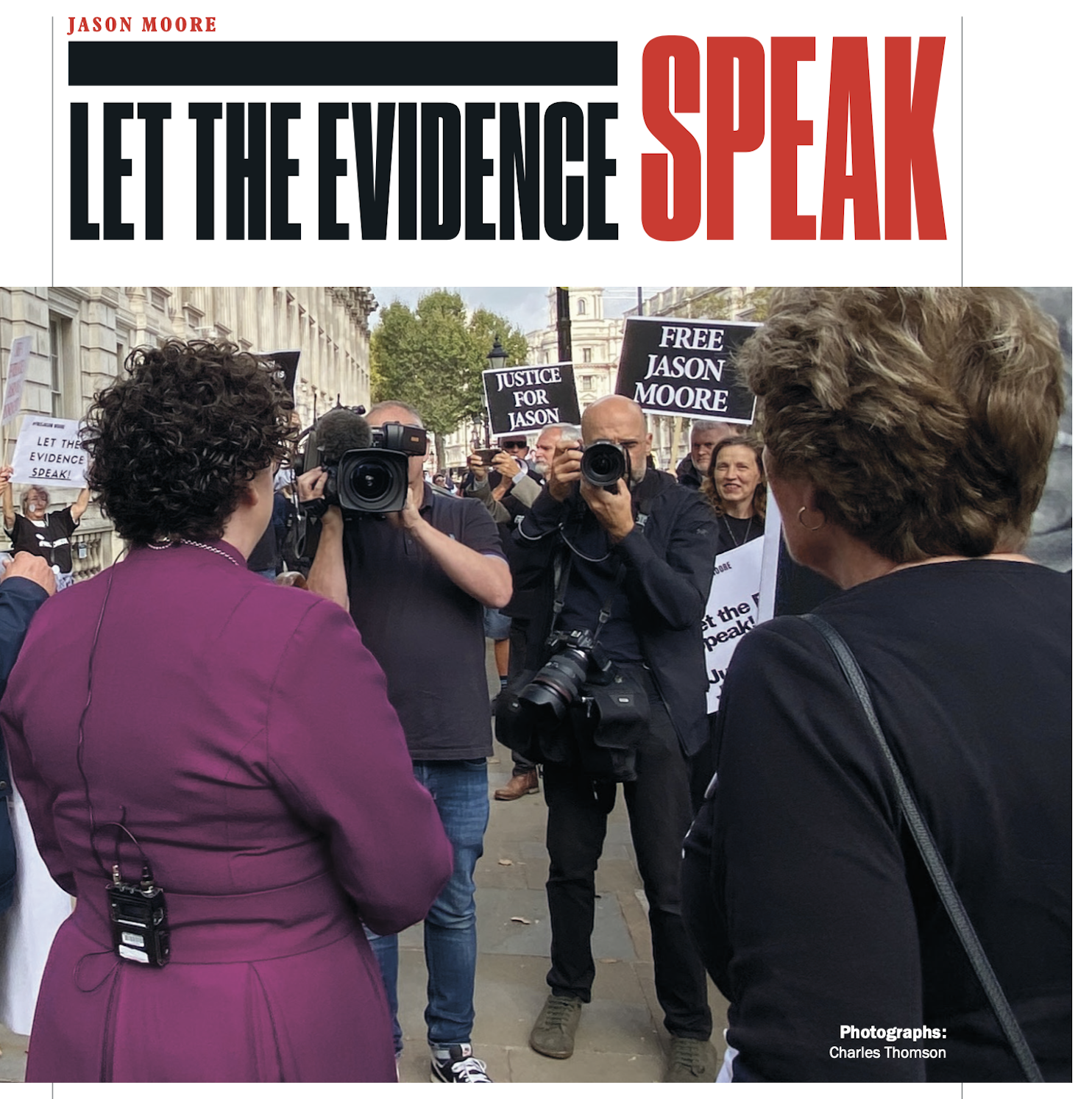
A bishop has pledged to champion the rights of the wrongly convicted in her maiden speech in the House of Lords. The Right Revd Dr Joanne Grenfell highlighted the problems at the miscarriage of justice watchdog and, in particular, the plight of a man convicted of murder who has has been waiting six years for the Criminal Cases Review Commission to make a decision on his application. The bishop, who is the lead bishop for safeguarding in the Church of England, has campaigned on behalf of Jason Moore for a number of years and was elevated to the House of Lords in February after being appointed the Bishop of St Edmundsbury and Ipswich.
 Speaking to her fellow peers this week, Bishop Grenfell warned about the devastation wrought on the lives of wrongly convicted, called on the government to press the Law Commission for the publication of its final report on criminal appeals and to consider any actions that followed from it ‘with urgency’. ‘The United Kingdom has long been seen as a standard-bearer for the rule of law—yet even strong systems are not immune to error,’ she began. ‘When those errors lead to wrongful convictions, the impact is profound, not just for individuals but for confidence in the whole system.’
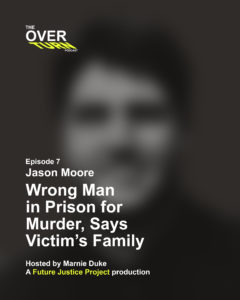
In this context, she said that the role of the CCRC was ‘indispensable’. ‘It exists as a safeguard—a recognition that the justice system must contain within it the means to correct its own errors,’ the Bishop continued. She drew peers’ attention to the case of Jason Moore convicted in 2013 for the murder of Robert Darby – this case which has been investigated by the journalist Charles Thomson and featured on the Justice Gap and Bishop Grenfell (together with Jason’s sister Kirstie) were interviewed in the Overturn podcast – listen here.
‘Both Jason Moore’s and Robert Darby’s families have spent the last 13 years campaigning to have that conviction reviewed,’ she said. ‘Amid fiascos of lost evidence and problems with the management of identity parades and vital witnesses, Jason is still waiting for the CCRC to come to a decision about sending his case to appeal. His case has been under consideration by it for six years now.’
‘Miscarriages of justice are not abstract legal concepts but lived human experiences,’ Bishop Grenfell continued. ‘They concern individuals who maintain their innocence while navigating a system that can be slow, complex and difficult to penetrate. Wrongful conviction is not simply the loss of liberty; it is the loss of years, sometimes decades. When convictions are ultimately overturned, the sense of relief is tempered by a stark reality: lost time cannot be restored.’
She added that fellow peers ‘may be aware of previous criticism of the CCRC’ and the promise of a review of it by the Law Commission. ‘Since justice delayed is justice denied, this review needs to be concluded, with any actions that follow from it considered with urgency,’ she said. ‘I therefore press the Minister for a timescale for the completion of that review. As this House considers the legislative programme set out in His Majesty’s gracious Speech, I hope we will give due weight to those whose voices are hardest to hear: individuals maintaining their innocence over many years from within prison, and the families who stand alongside them. Any system worthy of public confidence must be able to correct and learn from its mistakes.’
Bishop Grenfell is a former English Literature lecturer and completed a doctorate on the poet best known for The Faerie Queene, Edmund Spenser and cultural geography. She closed her speech with a quote from Spenser: ‘Where justice grows, there grows eke greater grace.’ ‘If I can contribute in however a modest way to strengthening fairness, timeliness and accountability within such systems, I shall consider it a privilege to do so.’
Support the Justice Gap, buy PROOF