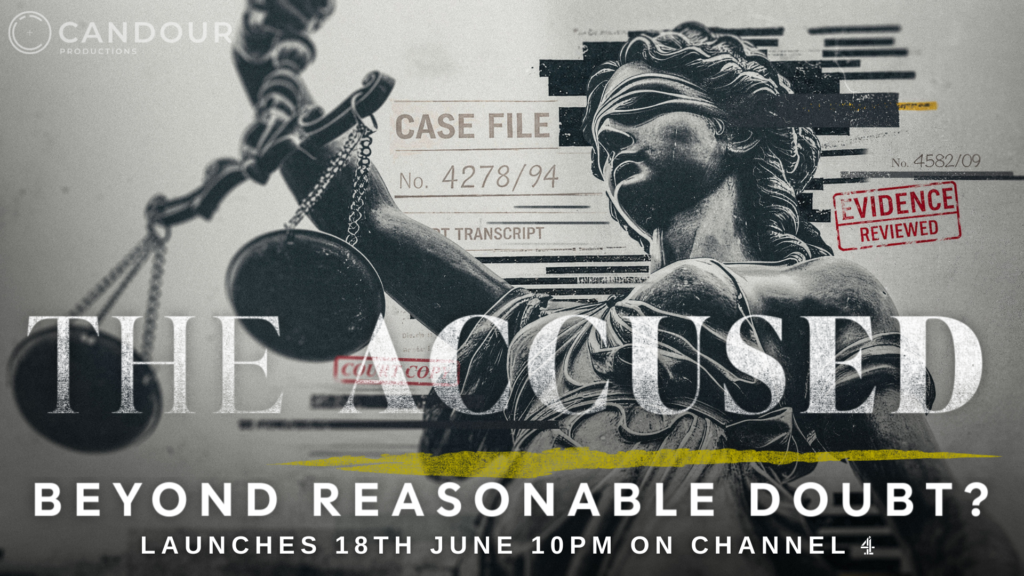

It’s 33 years since Eddie Gilfoyle was convicted for the 1992 murder of his heavily pregnant wife. ‘I want to clear my name. That’s what I’m living for,’ Gilfoyle, says in a new documentary from Channel 4. The Accused: Beyond Reasonable Doubt revisits the case of a man who spent 17 years in prison and who many believe is the victim of a shocking miscarriage of justice – despite having been looked at and rejected twice by the Court of Appeal.
The bizarre prosecution case was Gilfoyle faked his wife, Paula’s suicide by persuading her to put her head in a noose having deceived her into writing suicide notes. The jury was told that Paula was a cheerful expectant mum with everything to live for. Thirteen witnesses attested to her uncomplicated joy at the prospect of becoming a mum – many used the same word to describe Paula, ‘bubbly’.
When the police found her body hanging by her neck in the garage of the couple’s home on the Wirral, near Liverpool, they assumed that she had killed herself – consequently, evidence was binned and the crime scene trashed. A couple of days after her death, work colleagues contacted the police with a theory. Paula, had told them that Eddie had been behaving oddly claiming to be doing a suicide awareness course at work (he was a hospital porter).
- The Eddie Gilfoyle case has featured many times on the Justice Gap – and in Jon Robins’ book Guilty Until Proven Innocent (Biteback Publishing, 2018)
- You can read Jon on the Channel Four documentary in the August issue of Private Eye 1681 (Knot Proven)
- Gilfoyle is represented by the legal charity APPEAL – see here for their resource page
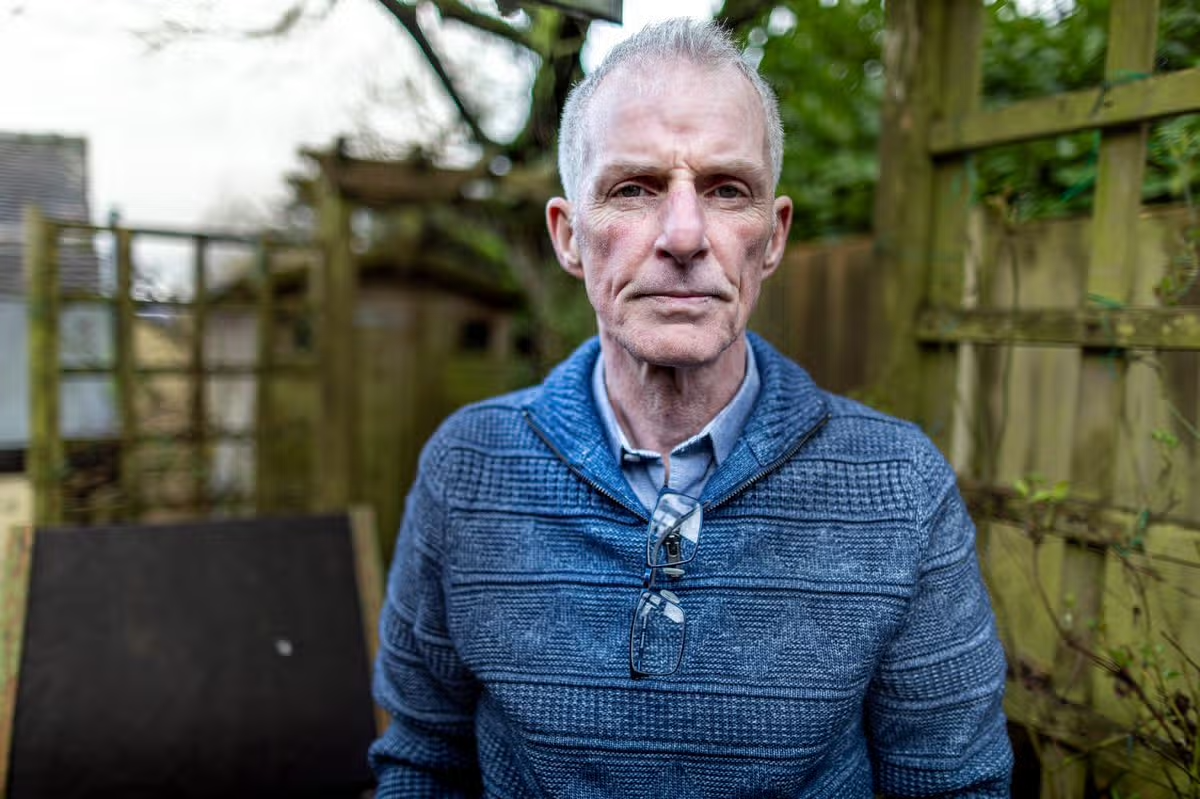 Canteen gossip was bolstered by the view of a high-profile forensic psychiatrist that Paula had not written the suicide note with the intention of taking her life. Professor David Canter, according to the overexcited local press, was ‘a real-life Cracker’ – after Robbie Coltrane’s portrayal of a criminal psychologist and flawed genius in an ITV drama of the same name.
In last month’s documentary, Canter was asked to read an extract from his own report that he submitted to Merseyside Police in which he concluded that it was ‘very unlikely that Paula Gilfoyle wrote the suicide letter with the intention of taking her life, or that she moved the ladders and put the rope around her neck with the intention of committing suicide’. That report was critical in persuading Merseyside police that they had a murderer on their hands, although it was not relied upon in the trial.
‘I can’t, for the life of me, think why I said to them that Eddie may well have dictated these notes,’ he tells the documentary-makers. ‘It’s obviously a dramatic statement, and exactly what the police would do is to take that statement and to say, look, this supports our case, but I would say right away now that statement is nonsense.’ The Channel 4 documentary draws on the much greater understanding of pre-natal depression and the very real risk of suicide amongst pregnant women.
But the new film is also interesting for what it misses out (disappearing witnesses, possibly planted evidence etc) – as well as something very, very surprising that it includes. It does not mention a credible witness by the name of Maureen Piper who claims to have seen Paula in the Post Office at a time when Eddie was alibied at work (and after the time which the prosecution argued he must have killed Paula). Her evidence never made it to the original trial. The documentary also passes over the police’s discovery of a piece of rope tied into a slipknot in a chest of drawers the garage. This was paraded before the court as Gilfoyle’s ‘practice noose’.
Shortly after Eddie Gilfoyle was convicted, the case against him unravelled following an investigation by detective superintendent Graham Gooch from Lancashire Police. Gooch submitted a 6,000-page report to the CPS urging them to consider prosecuting four of 16 officers.
Gooch revealed that the ‘practice noose’ was found by chance by an officer three weeks after a first search of the garage by the police. Officers who had previously searched the garage told Gooch of their own incredulity at its late and convenient appearance. Gooch has subsequently gone on the record saying that his belief is that Eddie is not a murderer and to talk about his anger at the way his report had been ignored by the courts (see here).
So why the omissions? Channel 4 has good reason for nervousness about criticism of Merseyside police. Thirty ago this summer it broadcast a blistering documentary in its Trial & Error series on the case. Presenter David Jessel went in all guns blazing on ‘a Keystone Cops comedy of errors: shoddy, idle and just plain wrong’.
Channel Four was sued for libel. The broadcaster dug in and, in the end, settled out of court with an apology to one of the officers for any implication that he had planted evidence. That officer, who as well as making the late discovery of the practice noose, was charged with following up on the Maureen Piper statement.
Afterwards, two heavy-hitting barristers who acted for Channel 4, Desmond Browne QC and Matthew Nicklin, wrote to the Criminal Cases Review Commission expressing their clear view that ‘Eddie Gilfoyle has been the victim of a miscarriage of justice’. Sir Matthew is now the senior media judge in the country and Browne became chair of the Criminal Bar Association. The pair highlighted 10 concerns about the investigation and prosecution of Gilfoyle including ‘the conclusion-driven investigation by the police’, ‘the late discovery of the practice noose’ and the failure to allow Piper to give evidence which, they argued, alone ‘renders the verdict unsafe’. They helpfully included a copy of the video of the program.
All these revelations came out ahead of Gilfoyle’s first trip to the Court of Appeal in 1995. The appeal judges said they could not deal with the Gooch investigation because disciplinary matters were ongoing revelations and dismissed Piper’s evidence. The court also refused to hear from leading Home Office pathologist, Professor Bernard Knight who argued that murder by hanging was ‘extremely rare to the point of being almost unknown’. ‘We were properly shafted,’ recalled Gilfoyle’s first appeal solicitor Campbell Malone in this year’s documentary.
There was a second unsuccessful appeal in 2000 following a referral by the then relatively new Criminal Cases Review Commission – the year journalist David Jessel joined the CCRC.
Whilst Gilfoyle was having no joy in the courts, support for his case grew – supporters included local MP and former conservative minister Lord David Hunt and even former assistant chief constable of Merseyside Police, Alison Halford. Momentum seemed unstoppable – and so it might have been was it not for an increasingly timid CCRC.
The watchdog has only ever sent a case back to the Court of Appeal a second time on two occasions and rejected Gilfoyle’s case in 2016 after having sat on an application for seven years. His new lawyer Matt Foot described the CCRC then as ‘moribund’ and judicially reviewed their decision to reject it. The High Court came to the view that the appeal judges had it right. Ultimately, it ruled, the case rested on the argument that Paula Gilfoyle could not possibly have tied the knot in the rope with which she hung herself. QED she was murdered.
It was a bizarre recitation of the evidence. No-one knows how Paula tied the knot. The tie of the knot came from the (supposed) recollection of the coroner’s officer who believed Paula had killed herself.
This year’s documentary appears to cast a doubt on even that. The 1996 Trial and Error documentary had footage from Merseyside Police where officers perform a desperate and shambolic reconstruction with a pregnant officer standing in for Paula.
The new documentary begins with a longer version. This time viewers can hear the audio. We hear a police officer narrating the reconstruction asking the coroner’s officer to confirm that he cannot recollect what kind of knot was tied – he replies as clear as a bell…. ‘No.’