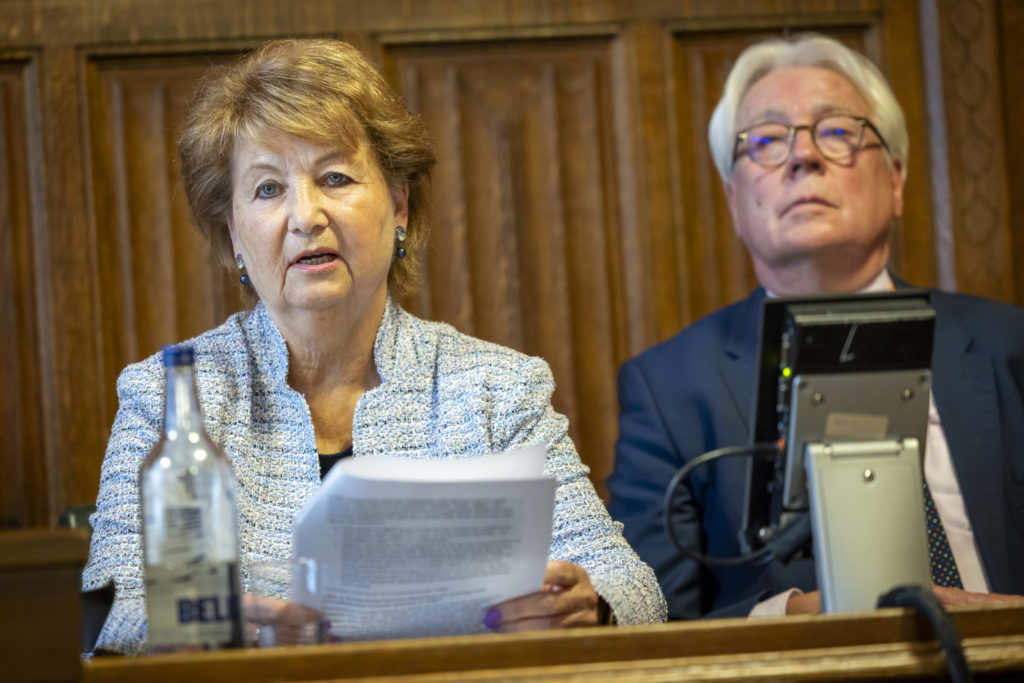


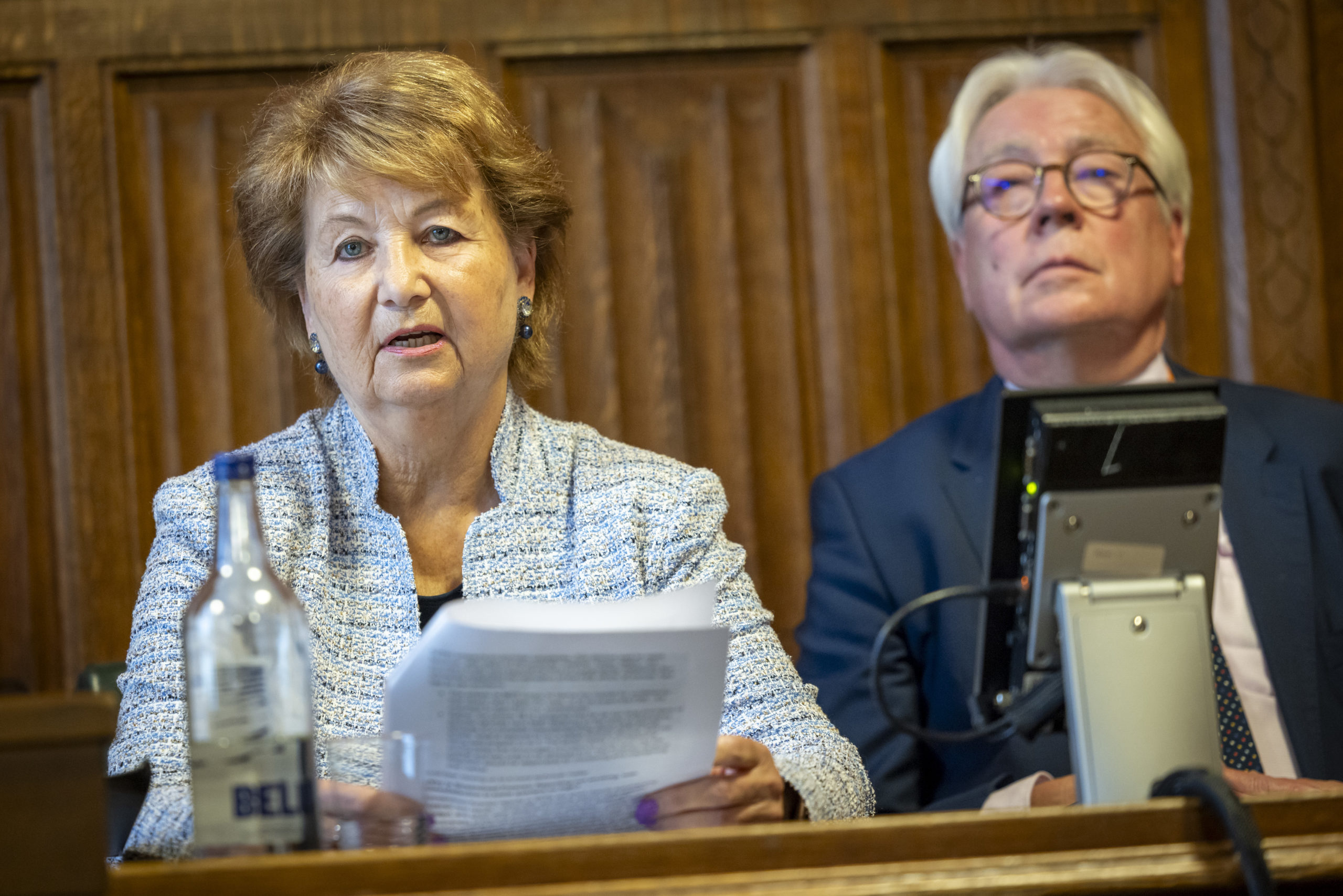
A Home Office minister admitted to the House of Lords’ science and technology committee that the government did not know how much money was being spent on the provision of forensic science services. Sarah Jones was being questioned by peers about plans to act upon recommendations of the Westminster Commission on Forensic Science’s recent report which argued that the sector was in a ‘graveyard spiral’ leading to poor police investigations, increasing unsolved crimes and more wrongful convictions. Jones called the report ‘helpful’ and said that ministers ‘completely agree’ with ‘a lot of the problems and recommendations’ identified by the inquiry.
The Westminster Commission has called for a national strategy for forensics in an attempt to stabilise an ‘unprofitable and dysfunctional’ market in which the largest player has more than 85% of market share. Sarah Jones acknowledged that there was no effective government oversight of the sector. ‘The thing I found most shocking, as a new minister in the space, is the lack of real understanding of what is actually going on across the country on forensics. We don’t know how much money is spent, how many delays there are or the balance between the private sector and inhouse.’ Later the minister said: ‘I don’t want you to think it is some kind of Wild West system because it is not. But the way in which the system is set up is that we have money to the local forces and they prioritise.’
- You can read our report on Forensic Science in England and Wales: Pulling Out of the Graveyard Spiral is published by the Westminster Commission on Forensic Science set up by the APPG on Miscarriages of Justice
- You could also read Hannah Devlin’s article in the Guardian and listen to Baroness Black and Professor Angela Gallop talking to the Double Jeopardy podcast
- Commissioners: Prof Angela Gallop CBE; Prof Lady Sue, Baroness Black of Strome, Dr Philip Avenell, Katy Thorne KC, Professor Carole McCartney, Glyn Maddocks KC (Hon), and Dr Jon Robins
- For background, read here: Threat to forensics ‘close to existential’.
In an earlier session, the chair of the Westminster Commission Professor Angela Gallop argued that the sector was heading towards collapse, pointing out that the Home Office had been forced to intervene in ‘at least six major market and quality failures’ since 2017. According to the group, there had also been a collpase in the quality of forensics and a lack of ‘equality of arms’ between prosecution and defence. ‘We believe that more miscarriages of justice are absolutely inevitable,’ Prof Gallop told peers. ‘We spent a lot of time looking at near misses. These are cases that were rescued on the brink of going through our court process by a forensic scientist employed by the defence. That is happening less and less frequently so, as you can just imagine, the number of these near misses will go down but the number of miscarriages will go up.’
One of the worrying trends in the forensics sector since the dismantling of the Forensic Science Service (FSS) in 2012 has been increasingly police forces handle their own forensic work. Lord Borwick, an hereditary peer asked ‘if the police do it and do it properly with scientific training, it is not necessarily bad, is it?’ ‘That is the way it used to be done in the very old days; it was done by policemen, was it not?’ the peer continued.
Prof Carole McCartney, a member of the Westminster Commission, replied: ‘And there is a very good reason they stopped doing it… . Police are not scientists. There should be real independence and there has to be impartiality, and the science should be done by scientists. Everyone else around the world has recognised that you cannot turn police officers—nor should you—into forensic scientists. They are two different professions, and it is too risky in terms of impartiality and independence.’ The Westminster Commission has called for an immediate halt in the expansion of police in-house forensic provision.
Prof McCartney said that a challenge for the Westminster Commission and for the House of Lords’ committee, who produced their own report in 2019, was finding a government minister prepared to take responsibility for the problems sector. ‘This is the big problem here with your report, but also our report,’ she told peers. ‘Whose desk is it landing on and whose responsibility is it? It is nobody’s. We do not have a Minister that has forensic science in their remit, so there is nowhere for the buck to stop.’
Sarah Jones said that the establishment of police and crime commissioners under the Coalition government and the shutting down of the FSS meant that the Home Office ‘just washed its hands, almost, of responsibility for a lot of policing decisions’. ‘It is probably fair to say there was one man and his dog in the Home Office looking at forensics for quite a period of time,’ she added. Jones went onto to say that the amount each force spent was ‘about £550 million, if you add it up together – but we do not have exact figures’. She later said about £90 million was ‘private sector provision’ describing the dominance of the market by one company (Eurofins) as ‘very challenging’. The minister was asked how much was spent on Eurofins – she did not know (money was spent through individual forces – not the Home Office).
Viscount Stansgate, an hereditary peer and Labour member of the House of Lords, raised concerns about the quality of evidence storage. ‘We are given to believe that thousands of cases collapse due to missing or damaged evidence.’ He asked whether the government would accept the recommendation of the Westminster Commission for a national archive. ‘My answer is yes, quite possibly,’ said Jones.
In a separate session, Sarah Sackman, the minister for the courts and legal services spoke about the shared responsibility of the Ministry of Justice for forensics with the Home Office. Introducing the session, Baroness Young of Old Scone, a Labour peer, reflected that it was ‘hard to find a minister who has got the word “forensic” in their portfolio. There isn’t one. There should be.’ Sackman responded by pointing out that as minister with responsibility for the courts, she had charge of legal aid policy and ‘first and foremost, I see my responsibility in relation to forensic services being one of justice and fairness – about supporting just outcomes within the criminal justice system’. Prof McCartney had previously told the Westminster Commission that the Legal Aid Agency (LAA)’s requirement for defence solicitors to have three quotes before agreeing to an expert (and then the LAA typically go with the lowest) was making it ‘almost impossible’ to work with the LAA. Sackman said that controversial requirement had now been dropped.
Lord Burnett of Maldon, a former Lord Chief Justice, said that there was a ‘unanimity of view’ that the arrangements for defendants were ‘inadequate and led to an inequality of arms’. He reflected, drawing on a recent experience of having his own (‘very modest’) car serviced, that the hourly rate paid to forensic scientist by legal aid was ‘a good deal less than the hourly rate charge by a perfectly normal garage to service a normal car’. Sackman revealed the rates in London were significantly lower in London, £83, than outside of London, £104. The minister later explained the absence of London weighting was because of the ‘relative paucity of experts and additional travelling time’ outside the capital.
The minister argued that the market was, according to the LAA, not on the verge of collapse.’I spoke to officials at the LAA and they told me that they considered the rates were capable of sustaining the existing market, and that demand for forensic experts from defence was capable of being met.’ She pointed out the scale of the problems in the legal aid that her government inherited including the fact that civil solicitors ‘haven’t received a pay rise since 1996’ and that the defence profession were to receive an additional £92 million as of last month. ‘Within a tough fiscal environment, we’re investing more broadly in the legal aid system and I’ve got to pick my priorities,’ she said.