


The number of prison visits has dropped by more than 25% since the COVID-19 pandemic, according to a new report from the prisons inspector on the ‘untapped potential’ of family contact. In April 2019, there were 65,983 visits but by April 2024 the number dropped to 49,719 visits.
The chief inspector of prisons, Charlie Taylor pointed to ‘a common assumption’ among prison staff that the fall could be accounted for as families increasingly preferred video calls however the number of video calls was also down. Prisoners and visitors identified other explanations such as distance from home, cost, lack of flexibility in visits times and the stresses they experienced when attending. According to the inspectors, it can take as long as one hour 23 minutes to get through to the call centre to book a visits. Most prisons do not keep data on prisoners’s distance from their homes – an issue that was described as ‘especially problematic’ for women because there were fewer prisons. One prisoner reported a prison visit costing his family £150 a visit.
According to the report, of the nearly 87,000 prisoners currently held in England and Wales, more than three quarters (78%) have children under the age of 18 and in 2021/22 some 192,912 children had a parent in prison. It quoted a 2008 Ministry of Justice study which found that prisoners who received visits from a family member were 39% less likely to reoffend. Charlie Taylor said that the study was ‘a powerful illustration’ of the critical role that families and friends play in the lives of prisoners. ‘Despite this, the prison service has not developed a comprehensive strategic approach to family contact, and there is little understanding of the contribution that families make to safer and more purposeful prisons,’ he said.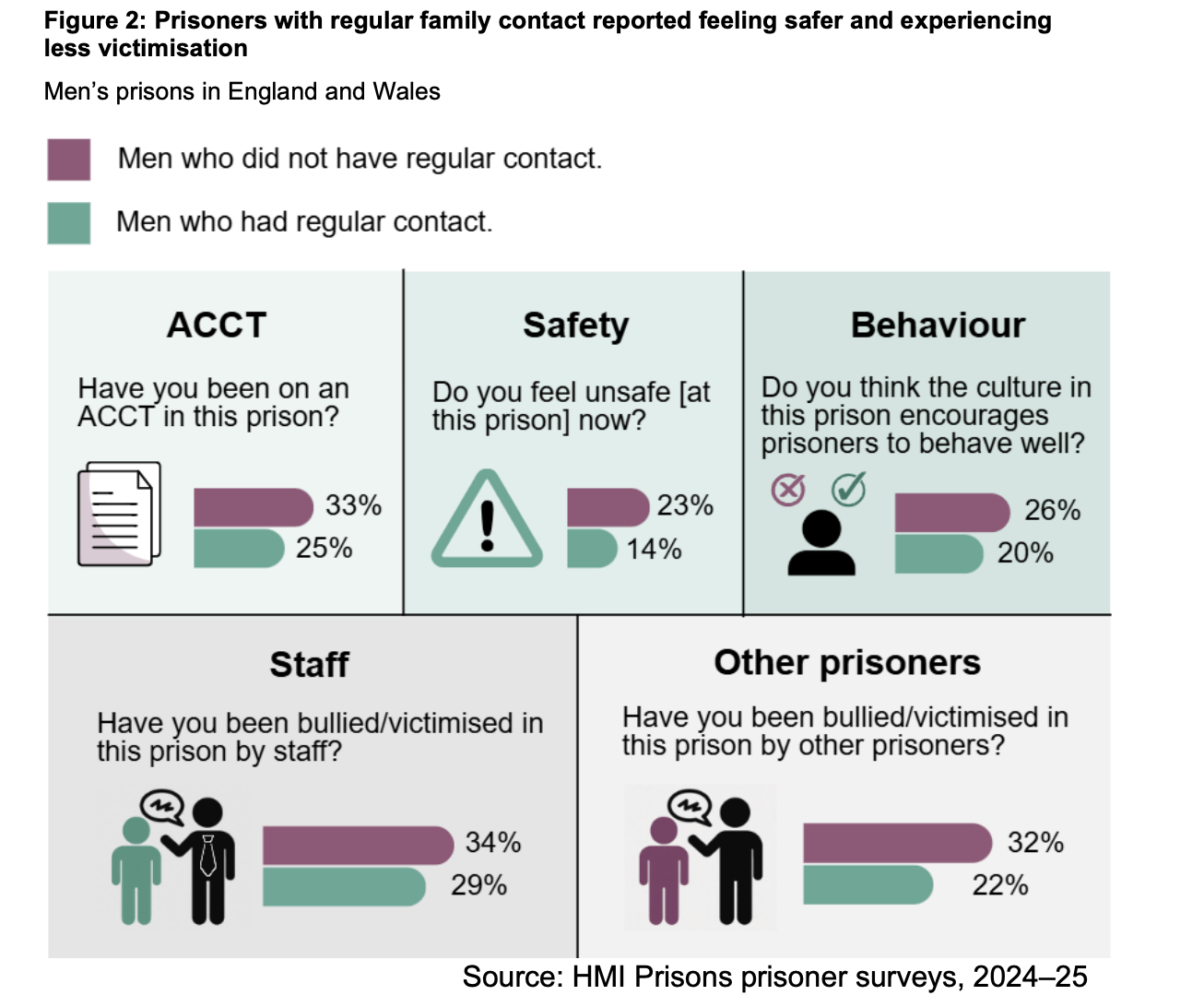
About a third of women at the four sites the inspectors visited for the review were not receiving visits ‘and the prisons were not doing enough to make visiting easier’. ‘About a third of women in most prisons were over 50 miles from home, making it difficult and expensive for their families to visit,’ it said. According to a survey carried out with the women, 94% said that seeing and speaking to family and friends was an important factor in helping them to cope.
‘I need to maintain my family ties otherwise everything falls apart,’ one prisoner told inspectors. ‘Not only do you lose your freedom, but you lose everything that’s important in life to you, that just takes every bit of hope, normality and life away.’
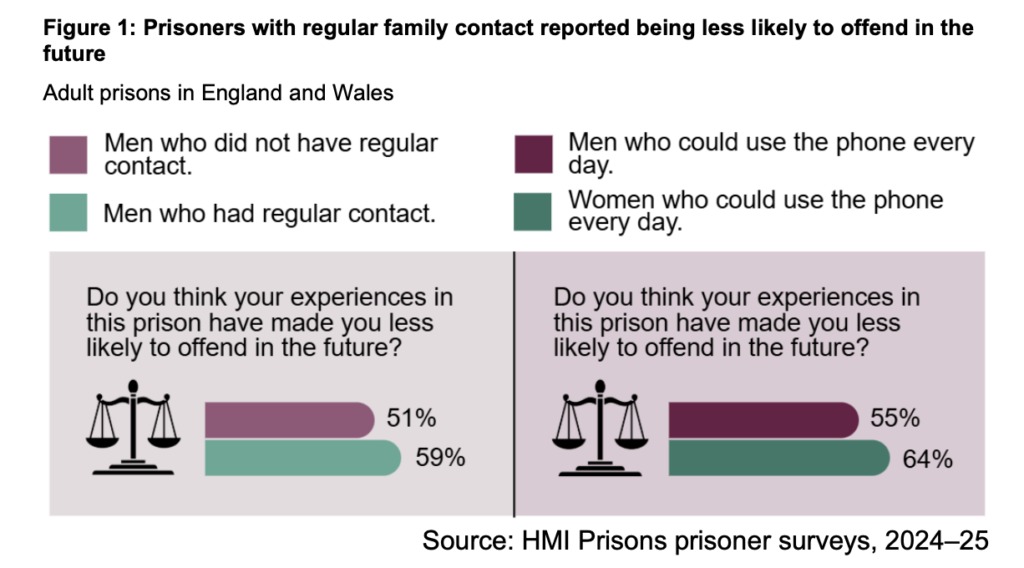
Men who received more than one visit or video call a month were much more optimistic about their prospects of avoiding future offending. Likewise, men and women who could use the phone every day thought their experiences in prison had made them less likely to offend in the future.