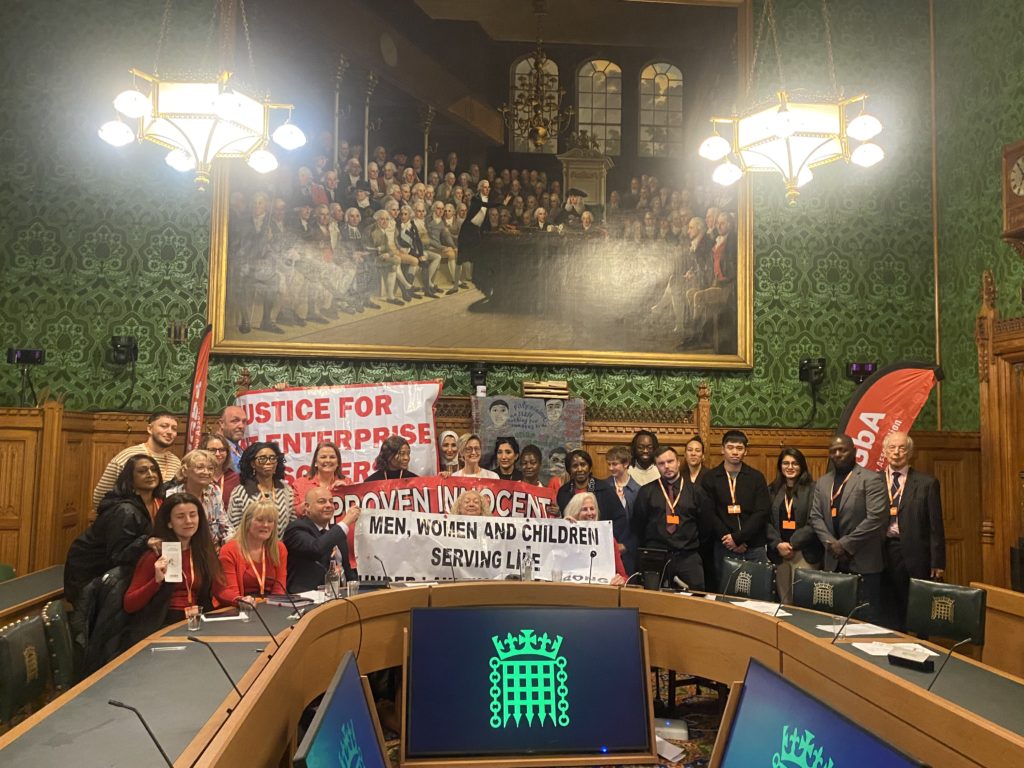

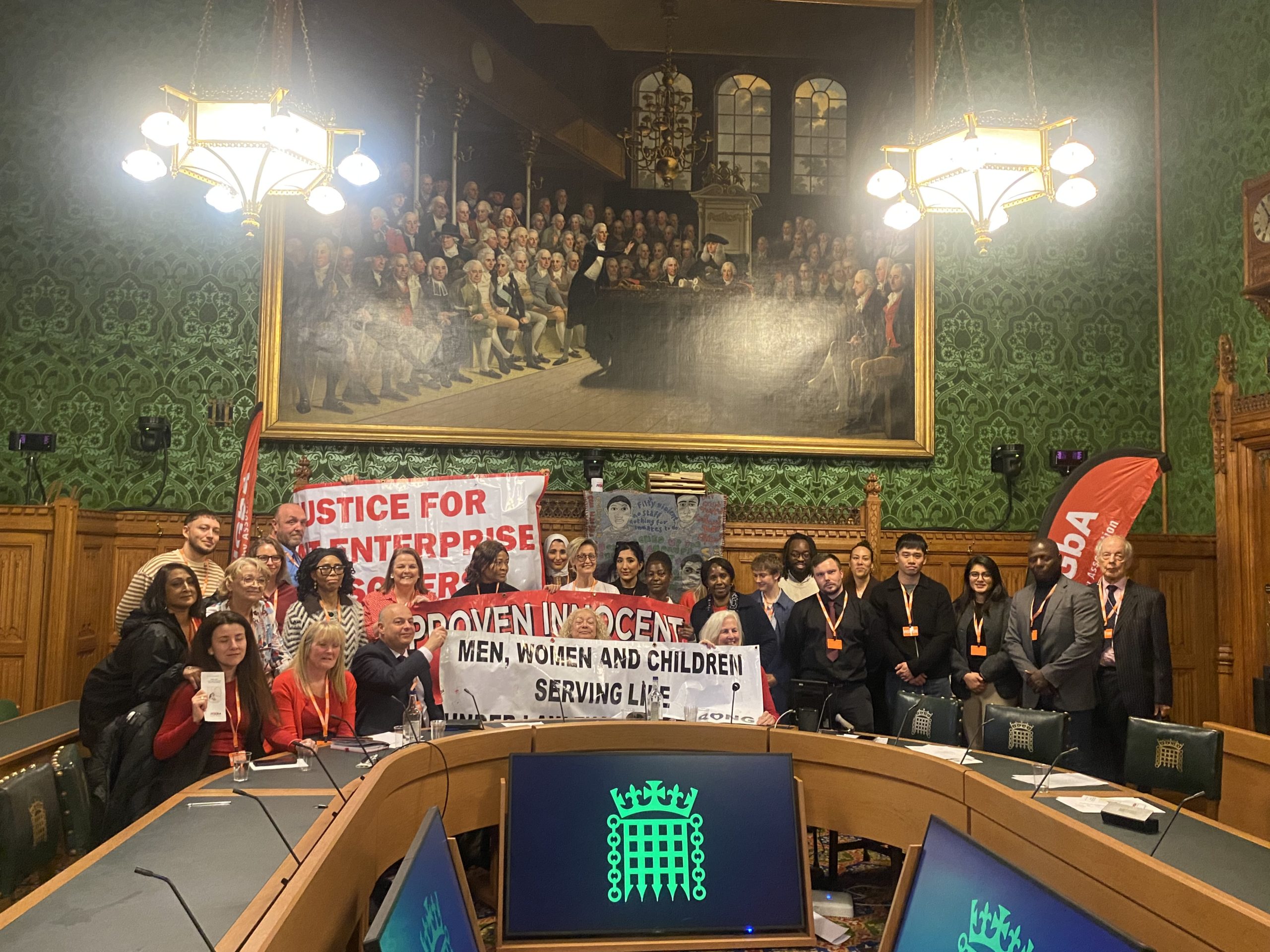
There are at least 90 children in prisons across the UK serving life sentences, it was revealed at a new initiative by JENGbA (Joint Enterprise Not Guilty by Association) to stamp out the practice. According to campaigners, the UK is currently the only country in Europe which readily hands out life sentences, which can be over a decade and followed a lifetime license on parole, to children under 18 years of age.
At the event in parliament JENGbA highlighted that even in countries like Russia and Türkiye, life sentences for children have been specifically outlawed because of their cruelty. Kim Johnson MP, chair of the All-Party Parliamentary Group on Miscarriages of Justice, warned that the figure of 90 children serving life could be higher because of issues with the collection of data. It was only after a long fought JENGbA campaign that the Criminal Prosecution Service (CPS) released data relating to Joint Enterprise, starkly revealing the racialised nature of the doctrine which was already well-known among families, campaigners and academics.
‘Unjust and unjustified’
On average between ten and 31 children are given life sentences each year in the UK. According to statistics presented by researcher, Susie Hulley, this has risen overall since 2002, alongside a general inflation in sentence length.
Last night was exactly 16 years since JENGbA’s first meeting in parliament. If the group were a young person, they could now stand in the docks of an adult court and be sentenced to life. Under a joint enterprise conviction this could mean going to prison for a murder that they played no part in, and are in fact, innocent of.
As well as calling for the government to urgently review sentencing guidelines for children, they want all people who were convicted as the secondary party in a joint enterprise conviction when they were a child to have their sentenced reduced. In the UK, even children who did not deliver the final ‘fatal blow’, did not plan a murder, and in some cases were not even present at the scene of the crime, can receive life sentences. Once convicted, those labelled as ‘accessories’ in these crimes face the same lifelong consequences as the principal offender – including a life sentence.
The legal basis for handing down life sentences to children is found in the Children Act of 1908, one of the key objectives was to repeal the death penalty for children. Instead it said children convicted of murder should be detained ‘at his majesty’s pleasure’, this a tenet of an even earlier law, the 1800 Criminal Lunatics Act. Those at the event questioned how such outdated legislation could be allowed to cause such ‘blatant injustice’ in the present day. Kim Johnson MP said the law in its current form is ‘unjust and unjustified’, and urged everyone present to write to their MPs and help her to ‘hold David Lammy’s feet to the fire’.
‘The worst kind of grief’
Many of those present at the meeting themselves had been convicted as children, or were the parents or other family members of people who were convicted of joint enterprise murder as children and are now serving life. They described the ‘worst kind of grief’ at seeing their sons and their friends convicted of a crime they had nothing to do with. Joint Enterprise legislation is notoriously broad, operating as a ‘legal dragnet’ in which particularly young black men and boys are swept up in convictions driven by narratives of ‘gang culture’ that bear little relation to the reality. One young man described the experience of seeing friends go to jail as teenagers, saying ‘you’re not punishing them, you’re destroying the chance of them ever becoming anything different.’
One mother described the ‘living nightmare’ of seeing her son, then aged 15, and his friends convicted of murder in what was described as a ‘scattergun trial’. Out of six defendants, three were convicted of murder, two for manslaughter, and one got off without a conviction. They were aged between 13 years and 15. She described the experience of one of the younger boys, two years into his sentence finding out his mum had died through a note that was pushed under the door of his cell. He was only allowed to attend part of her funeral. She said of her son ‘he is still a boy’ because of the gap in his development caused by his sentence. She also lamented that the families of the deceased where the defendants are prosecuted under joint enterprise are also sold lies about the killing – ‘they aren’t given the truth of what has happened during these trials.’
Hulley also described seeing through her research the huge ’emotional rupture’ for children entering prison, and the ‘deep distress’ of being separated in particular from their mothers and younger siblings. She described how for children ‘adaptation to prison is maladaptive to release’ – children who haven’t had a chance to develop normally into adults then adapt as best they can to live inside, which then sabotages any chance of them being able to continue life as normal once they’re out. This in turn makes them more liable to being recalled to prison.
An audience member spoke about his experience of being convicted as a child and now being on a life license. He talks to law students at universities across the country about his experience of Joint Enterprise but still has to tell his probation officer that he needs to travel wherever he is invited to speak.
JENGbA insist a mandatory life sentence for any child is not only ‘morally indefensible’, it is a form of ‘state-inflicted harm’ that now breaches internationally recognised rights and norms. They are urging the government not to remain an outlier in Europe on this issue.
Jan Cunliffe, a veteran campaigner on behalf of those suffering the fall-out of Joint Enterprise convictions, said her opinion hasn’t changed in 16 years: ‘joint enterprise is a lazy law for lazy prosecutors’. She said as a prosecutor ‘if you want to win, you go for joint enterprise, and you go for children’.