
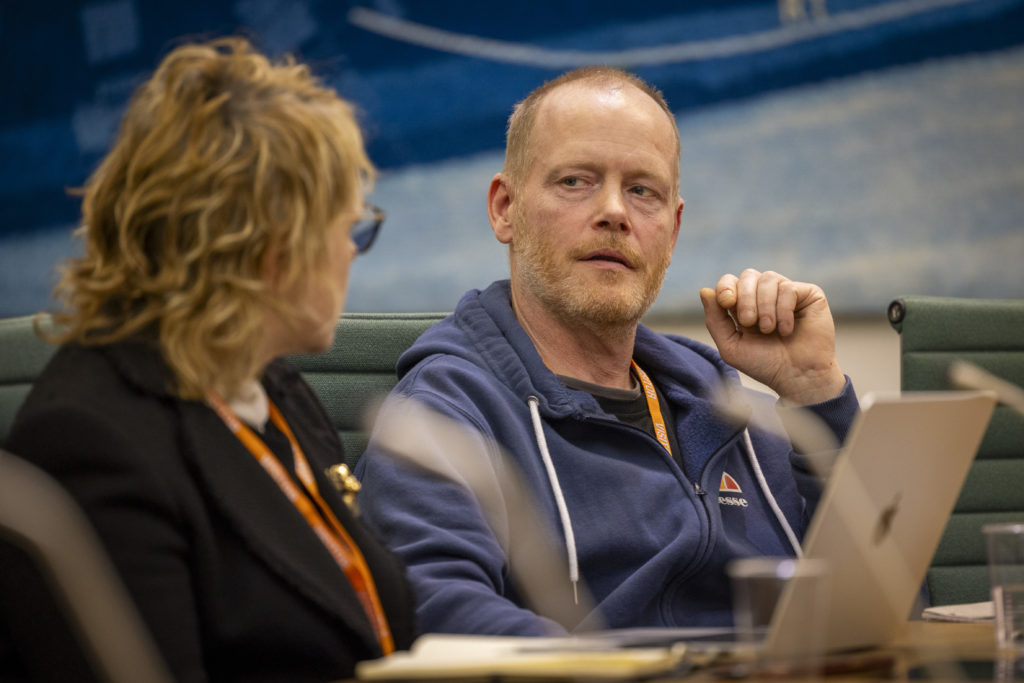


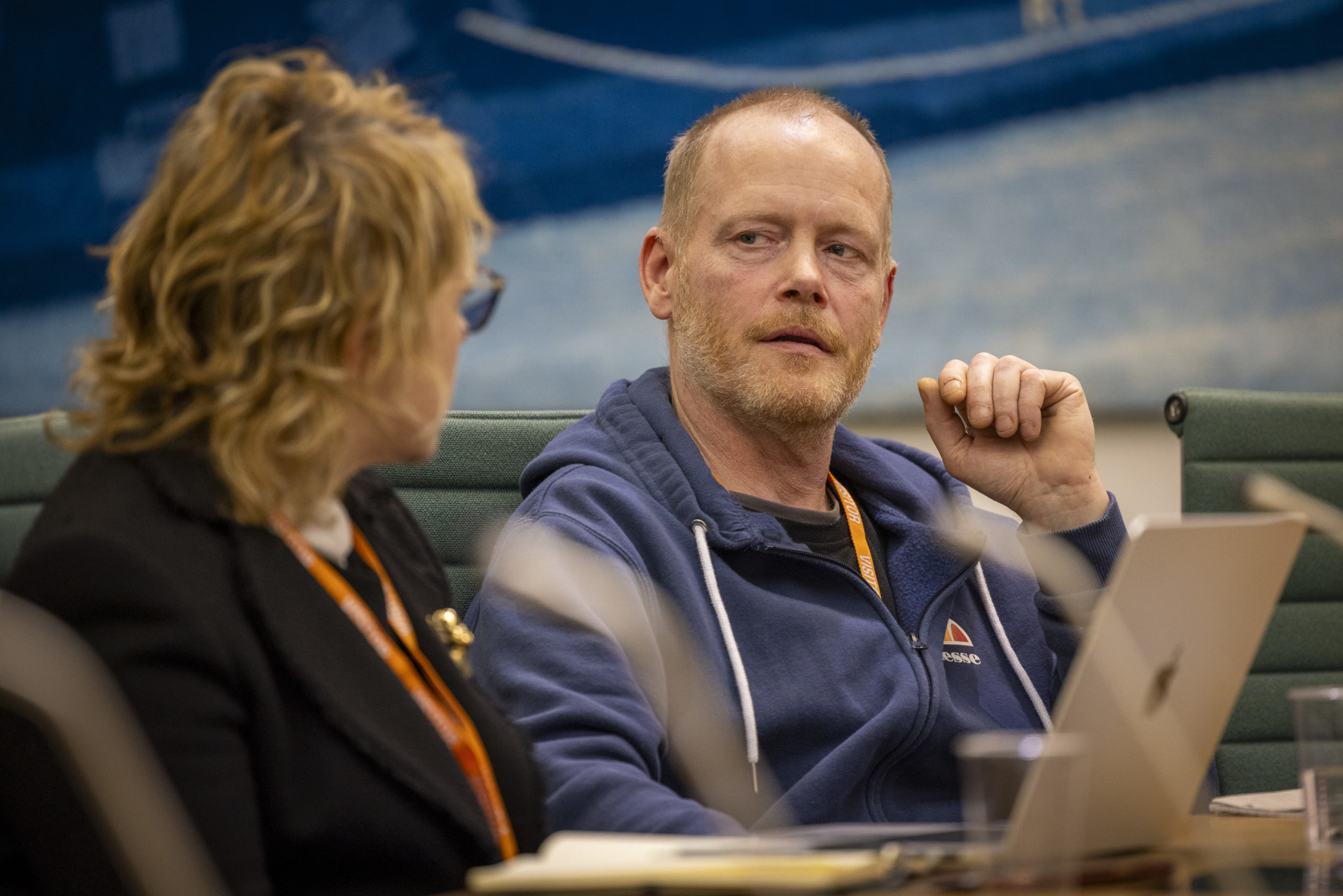
The Court of Appeal was accused of serially ‘failing to learn the lessons of the past’ in a Westminster session that featured evidence from three men who were wrongly imprisoned for a total of almost eight decades. They each argue that the court ignored the serious systemic failings that led to their wrongful convictions. Peter Sullivan, Justin Plummer and Oliver Campbell served 77 years in prisons before having their convictions overturned in the last two years. Not a single penny has been paid in compensation to any of the men.
‘We don’t have a culture within the criminal justice system of learning lessons from past mistakes,’ commented Oliver Campbell’s solicitor Glyn Maddocks KC. ‘In other areas of life, a train crash or plane crash, there are teams that go in trying to work out where things went wrong, asking: “Why did this happen? Let’s make sure it doesn’t happen again”. That doesn’t seem to exist in our criminal justice system where we have serial miscarriages of justice, one after another.’
Maddocks added: ‘In 20 years time, there might be people sitting in this room going through another lot of cases where the same sort of errors that are avoidable will be talked about. That is appalling. We should be avoiding them. We could do so much better.’
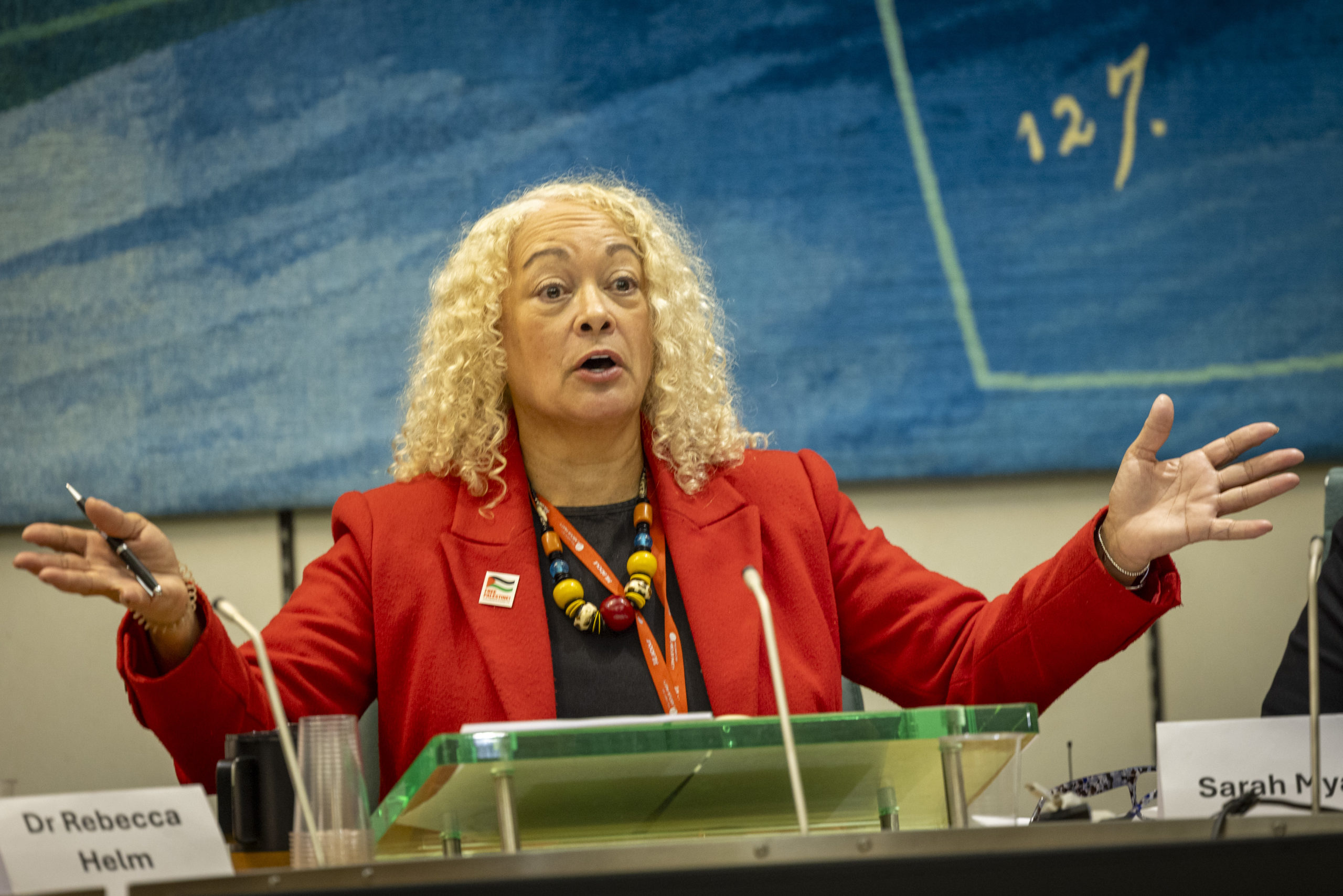
Kim Johnson MP
The event was organised by the All-Party Parliamentary Group on Miscarriages of Justice supported by the Future Justice Project. The APPG’s chair, Kim Johnson MP took the opportunity to call for urgent reform to address the ‘unconscionable cruelty’ of the current arrangements for miscarriage of justice compensation and the almost total lack of ongoing support for the wrongly imprisoned on release.
- You can read about Justin Plummer, Oliver Campbell and Peter Sullivan on the Justice Gap
- Photos: Andy Aitchison
It was the first time Justin Plummer, who spent 28 years in prison, had spoken in public. He told parliamentarians and the press how he responded to having his conviction overturned at the beginning of this summer in a hearing at the Royal Courts of Justice which he joined via a video link from HMP Belmarsh. He received just 15 minutes’ notice that he was about to be a free man. ‘I just jumped for joy. It was amazing,’ he said.
Plummer had previously had his conviction overturned in July 2021 after his lawyers successfully challenged highly controversial and ultimately discredited forensic evidence that convicted him – the jury was told that his trainers were an exact match found with a footprint on the dead woman’s body. The Court of Appeal held that the forensic technique, described as ‘pioneering’ at the time, was ‘neither validated nor suitable… either in the late 1990s or today’.
Whilst the Court of Appeal quashed the conviction, Lord Justice Fulford insisted on a retrial – and so Plummer was not released – despite more than a quarter of a century passing since his first conviction and, his lawyers arguing, the loss of key evidence by Bedford Police including the victim’s clothing.
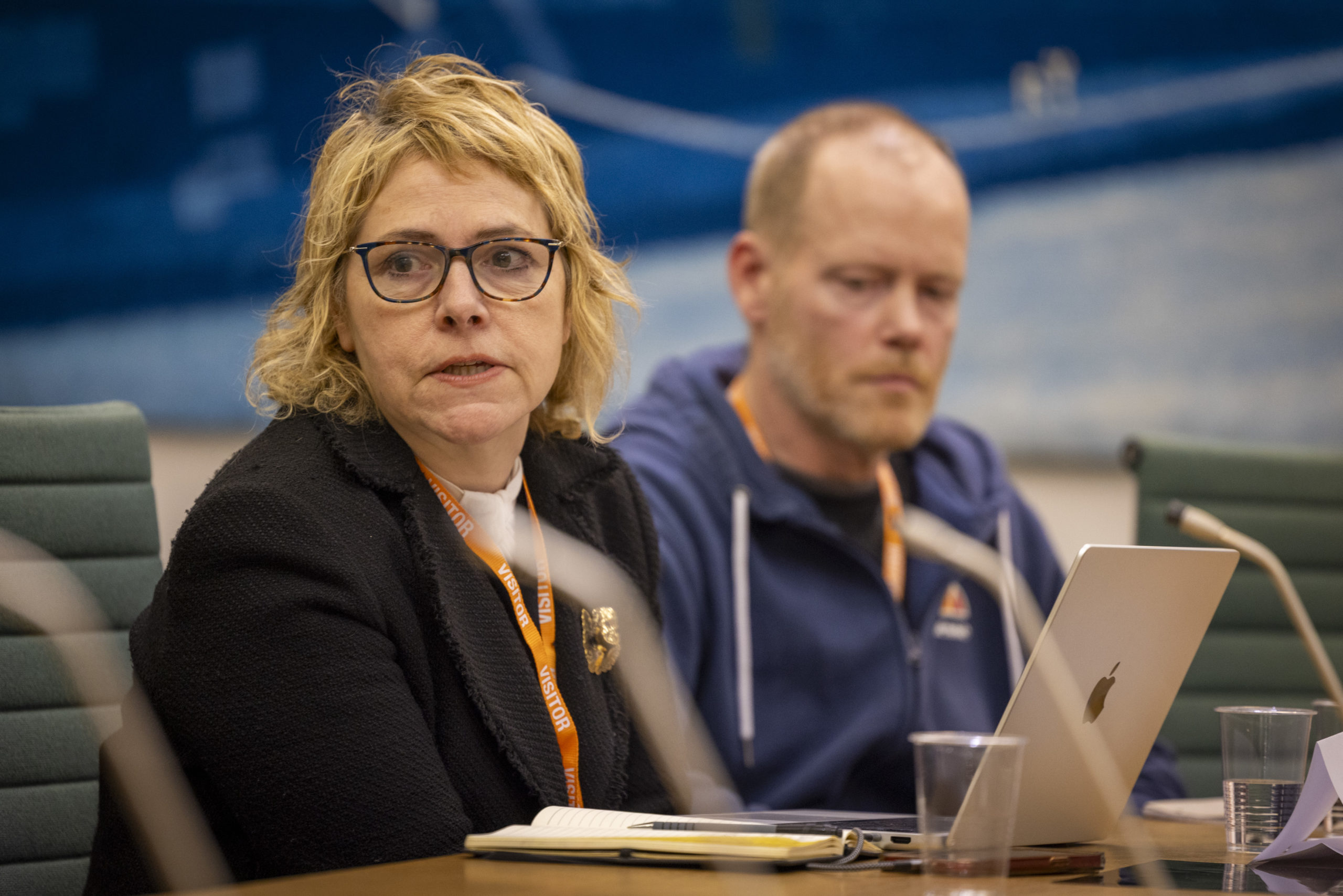
Katy Thorne KC – and Justin Plummer
His barrister, Katy Thorne KC, revealed how the ‘completely bogus’ forensic evidence came about in the first place. Justin Plummer was a prolific burglar, active in the area and in police custody at the time. The CPS was about to drop the case against him after Forensic Science Service scientists determined that there wasn’t enough evidence to establish a match between his trainers and the footprint left on the woman’s body. According to Thorne, Bedford police then approached a family dentist to be an expert witness who claimed to have devised a new methodology using the then newly-developed Adobe imaging software. The expert told the jury, in the words of the trial judge, it was ‘one of the clearest marks he had ever seen. No other shoe could have caused it.’ The CPS accepted that evidence had been fundamentally undermined when his conviction was overturned in 2021.
However Plummer was convicted a second time in 2023 after a 33-day trial – significantly longer than his two-week original trial. An entirely new prosecution case was argued a quarter of a century later drawing on another very controversial form of evidence, a cell confession. It was argued that Plummer admitted to the murder to his cellmate.
The well known dangers of such evidence has recently been highlighted in the cases of Robert and Lee Firkins who after almost 20 years, and two trips to the Court of Appeal, had their convictions for a 2003 double murder finally quashed in December 2024. His lawyers then said the case ‘illustrated the inherent dangers of this kind of evidence’ and that the ‘time is now ripe for legal reform’.
Robert Firkins’ solicitor Rhona Friedman was in the audience. ‘More scrutiny needs to be used against the Court of Appeal,’ she said. ‘These mistakes, as we’ve heard, occur again and again. There’s a lack of intellectual curiosity by the Court of Appeal.’ She described the informant in that case as ‘an extreme psychopath’. In the case of Justin Plummer, the cell mate happened to be a police informant, diagnosed with schizophrenia and dead (he died in 1999).
Justin Plummer’s (re)conviction was finally overturned earlier this year. It is expected that he will not receive compensation from the Ministry of Justice as a result of the 2014 law change which requires applicants to be able to prove their innocence beyond reasonable doubt.
‘I’d been through the minefield once already – and then a second time,’ Plummer told the meeting. ‘Now I’m released. I was thinking it would be plain-sailing but the battle has only just begun.’ He described the rule change as ‘ridiculous – you can’t do that. You’ve now to got prove your innocence beyond reasonable doubt? How can you do that if there was never any evidence against you in the first place.’
Talking to the Justice Gap, Justin Plummer said: ‘There was never a case against me.’ He admits to his past criminal activities. ‘I was doing that many burglaries, I reckon somewhere along the line I did a high-ranking copper’s house or a KC’s or just somebody who’s right up there and said to Bedfordshire Police get this sorted out because “he’s taking the piss”. I know that sounds paranoid.’
The final hearing which he joined from prison by video-link was dealt with in less than eight minutes. The presiding judge, Lord Justice Edis explained that none of the support for prisoners re-entering society had been put in place because, as he puts it, circumstances were such that his release ‘could not be planned for’. ‘The judgment didn’t even get read out. It was almost like they were embarrassed,’ Plummer told the Justice Gap.
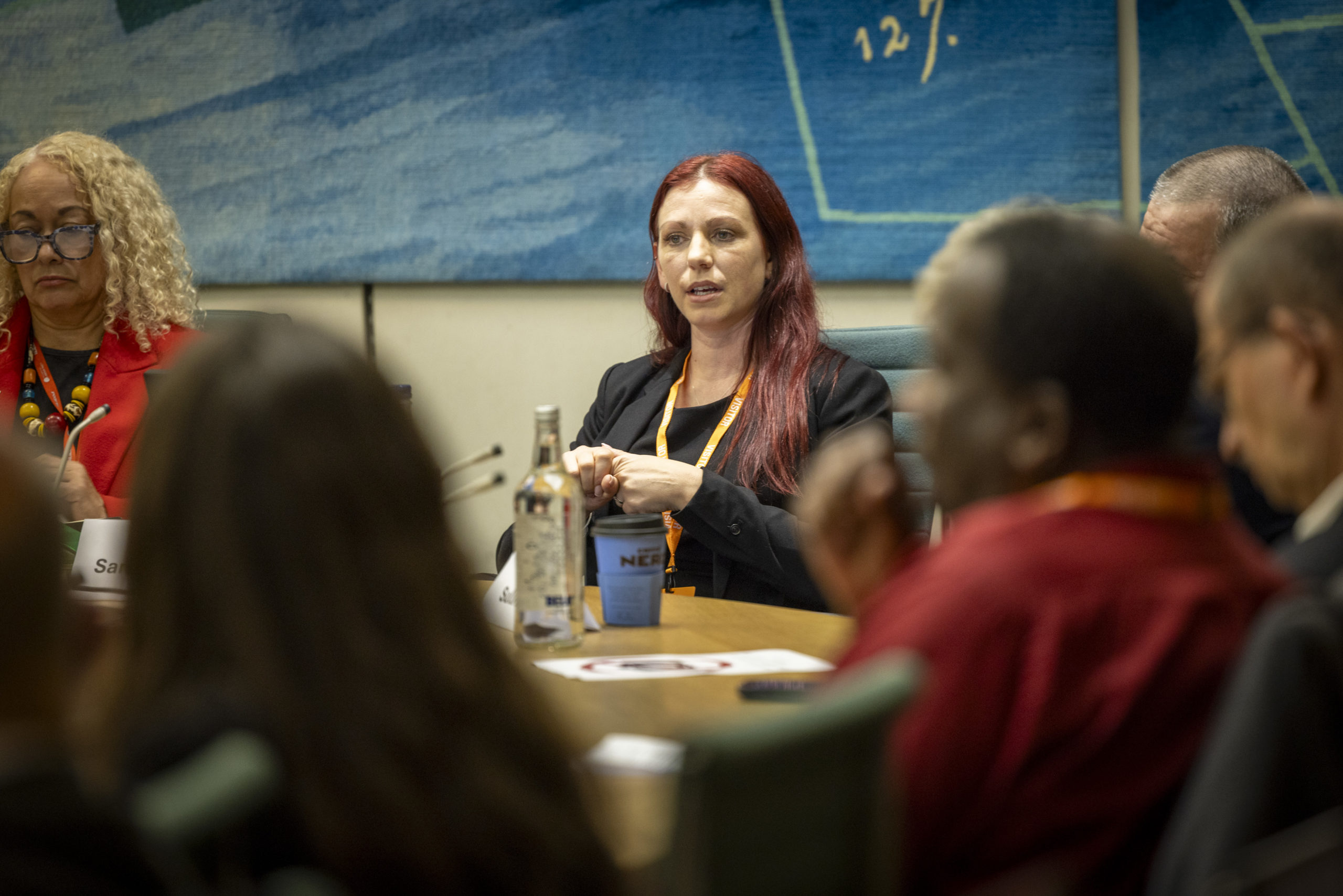 Justin Plummer shared a platform with Peter Sullivan who was the victim of one of the longest miscarriages of justice in British history – his conviction for a 1987 rape and murder was overturned last year after the discovery of new DNA evidence. He spent 38 years in prison. It took the Criminal Cases Review Commission 16 years from his first application to uncover this evidence which puts another unknown perpetrator in the frame. He still has not received compensation.
There are striking parallels between the two cases. In Peter Sullivan’s case, the jury was told that the defendant ‘caused bite marks’ found on the woman’s body and that they were an exact match with his teeth. Sullivan’s lawyers pointed out that the British Association of Forensic Odontology and it’s American equivalent no longer endorsed the positive identification of suspects by reference to bite marks.
Peter Sullivan claims that he was bullied into confessing to a crime that he did not do. A weak prosecution case was bolstered by another jailhouse confession. His solicitor Sarah Myatt spoke of her client’s ‘frustration’ with a Court of Appeal judgment which overturned the judgement narrowly on the basis of the DNA evidence. The court refused to engage with grounds of the appeal relating both to the false confessions he made as a result of oppressive police interviews and the supposedly conclusive bite mark evidence.
Sarah Myatt pointed out the court rejected both grounds on the basis that they did not qualify as ‘fresh evidence’ as required in appeals. ‘To me, it is absolute nonsense. The DNA shows that the confessions were wrong and the bite marks were wrong. Why can’t the Court of Appeal take a more sensible, common sense approach to say that must be right?’ She pointed out the DNA samples the ultimately led to his conviction being overturned dated back to 1986. ‘Peter would still be in prison if those samples hadn’t been available to get the DNA testing,’ she added.
Peter Sullivan has only done one media interview in which he told the BBC that he had been ‘leathered’ by the police in interviews conducted without a lawyer. ‘He was subject to 27 interviews, some of which took place when he was technically on bail for the murder, but they speciously arrested him for for something else,’ Myatt said. ‘Those interviews shouldn’t have taken place and the transcripts read like some kind of drama script from the 1980s. Every time I read them, it reminds me just how shocking they are.’
The Ministry of Justice has confirmed that Peter Sullivan will receive compensation. Sarah Myatt spoke about how difficult life has been for her client since his release. ‘We’re nearly a year on and he’s had nothing… . Why does it have to be like that? Why is it taking so long?’
She continued: ‘In the meantime, Peter is struggling and having to live on benefits. You leave prison with no identification, no bank account, all those little things we take for granted that somebody leaving prison after 38 years doesn’t have. You can’t claim benefits if you don’t have a bank account. You can’t get a bank account if you haven’t got ID. Difficulties that you shouldn’t need to face when you’ve gone through 38 years in a category A prison for a crime that you didn’t commit.’
Citizens Advice has a small miscarriage of justice support service run from the Royal Courts of Justice. Peter Sullivan took the opportunity to thank its two case workers for their ongoing support, Leon and Matilda. The same two caseworkers arranged for Justin Plummer’s accommodation on his release and are still supporting him.
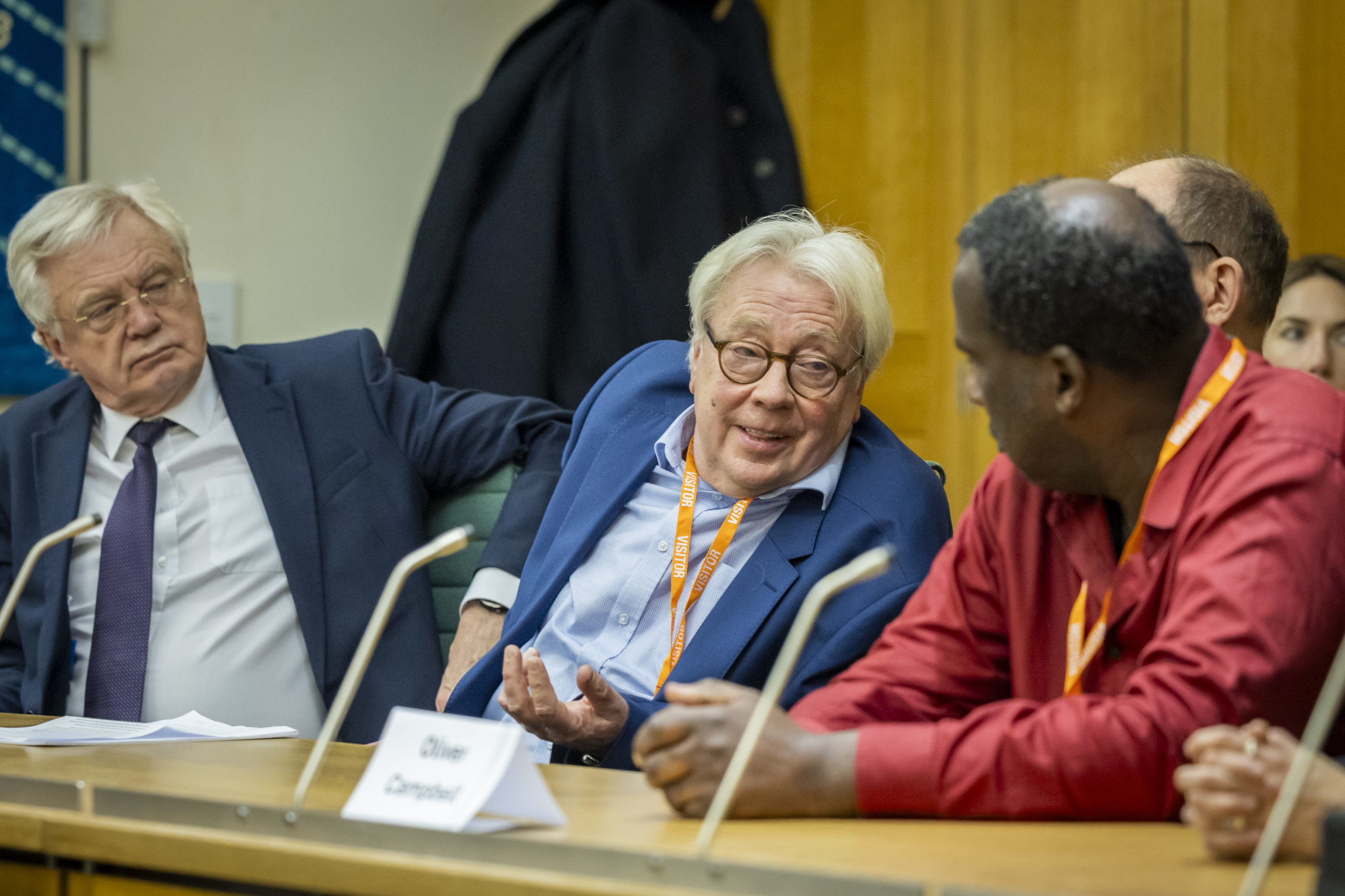
David Davis MP, Glyn Maddocks KC and Oliver Campbell
The third panellist was Oliver Campbell. He also claimed to have been bullied into making a false confession in the absence of his lawyer. His conviction for the 1991 murder of a newsagent was overturned in September 2024 – he spent 10 years in prison. The Justice Gap has featured Campbell’s case extensively, including criticism of the Court of Appeal’s treatment of his case when it overturned his conviction where they took the ‘finally balanced’ position not to insist on a retrial.
There had been concern about the safety of the conviction from the start – mainly as a result of the extreme unlikeliness of Oliver Campbell as a killer. He has severe learning difficulties after having suffered brain damage as a baby and, it has been argued, self-evidently had neither the physical dexterity nor cognitive ability to commit the murder as described by the prosecution. Over the years, that prosecution case collapsed. For example, a 2002 BBC Rough Justice investigation featured an interview with his co-defendant (Eric Samuels) on a covert recording exonerating Campbell as well as identifying the real culprit. More recently. BBC’s Newsnight in 2021 interviewed the duty solicitor, Arthur Mullinger, who spoke out about how he had been ‘misled’ by the police who, he claimed, deliberately extracted an interview from Campbell in his lawyer’s absence.
His lawyer Glyn Maddocks KC described the Court of Appeal’s judgment as ‘so begrudging’ – and criticised it for failing to engage with any of evidence that has caused such alarm: the oppressive police interviews, the breaches of PACE, as well as as the statements by Eric Samuels. Addressing his client, Maddocks explained the Court of Appeal’s stance made a compensation claim ‘absolutely impossible – and that’s wrong. I think we should be ashamed of the way in which our criminal justice system operates.’
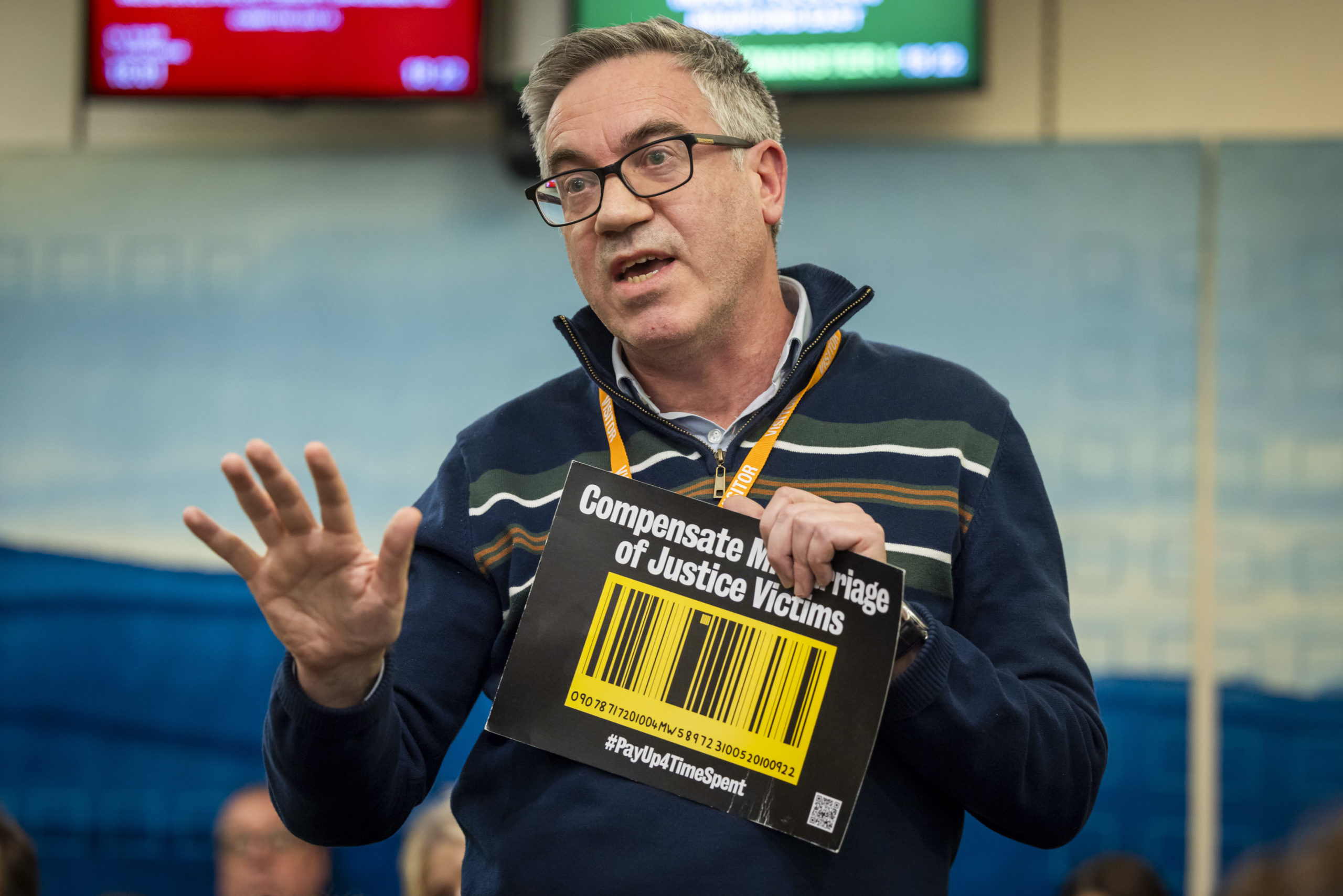
APPEAL’s Matt Foot
Kim Johnson MP called the 2014 law change restricting compensation payouts ‘legally illiterate and cruel’ and highlighted APPEAL’s #PayUp4TimeSpent campaign. ‘Every wrongly convicted person will tell you that their fight for justice is not about money. Yet, as one individual who was convicted at just 15 told us at one of our recent events: “They – the government – have made it about the money, not us.” This unconscionable cruelty must end. We cannot allow innocent people, harmed by the state, to be released out of prison without the support they need. They deserve proper compensation and the resources to rebuild their lives and make the most of what’s left of their lives.’
The Coalition government introduced the Anti-Social Behaviour, Crime and Policing Act 2014 restricting the statutory compensation scheme for victims of miscarriages of justice so compensation payments are only made to those few people who could demonstrate their innocence ‘beyond reasonable doubt’. That has proved an almost impossible threshold short of DNA or CCTV evidence proving someone else committed the offence. This was the second attack on compensation payments in recent years. Previously, the New Labour government abolished the far more generous ex gratia discretionary compensation scheme. The combined effect has had a calamitous impact upon miscarriage of justice payouts both in terms of the amount and the frequency.
As Johnson explained: ‘The MoJ paid out less than £1.3m in compensation to victims of miscarriages of justice between 2020 and 2023 following a two-year period when not a single penny of compensation was paid out. To put that in context, between 2007 and 2009, a total of £20.8 million was paid out.’