
MPs were told that Cheshire police ‘ignored or broke’ rules governing the conduct of investigations in its treatment of Lucy Letby failing to pursue alternative lines of inquiry, ‘cherry picking’ evidence and not disclosing critical material to the defence. The Conservative MP and former cabinet minister, David Davis was scathing about the force’s treatment of the former nurse as a suspect and its reliance upon a single expert, Dr Dewi Evans, as both police adviser and prosecution expert witness at trial. ‘Terrifying when a single opinion will condemn a young woman to life in prison,’ he said.
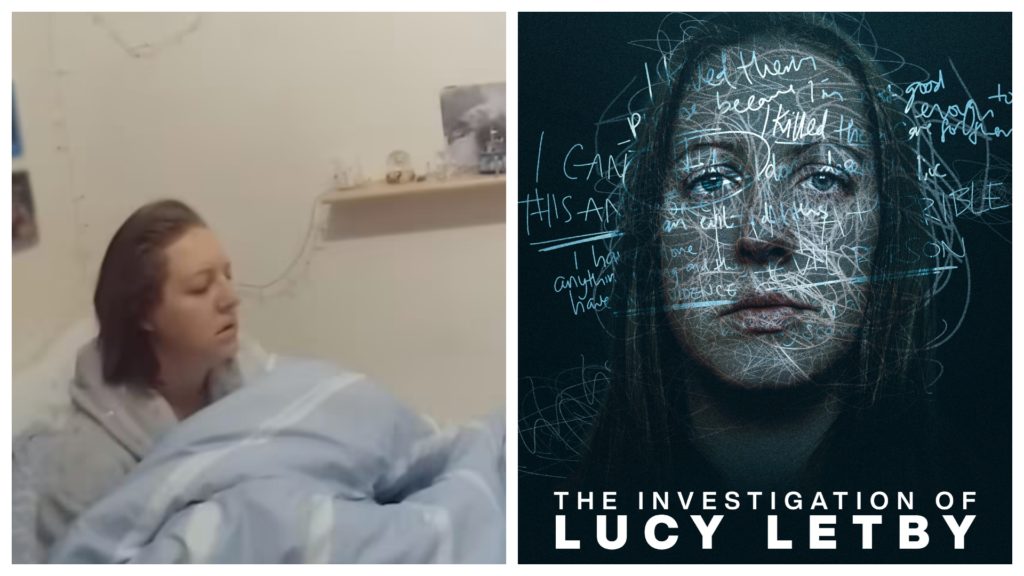
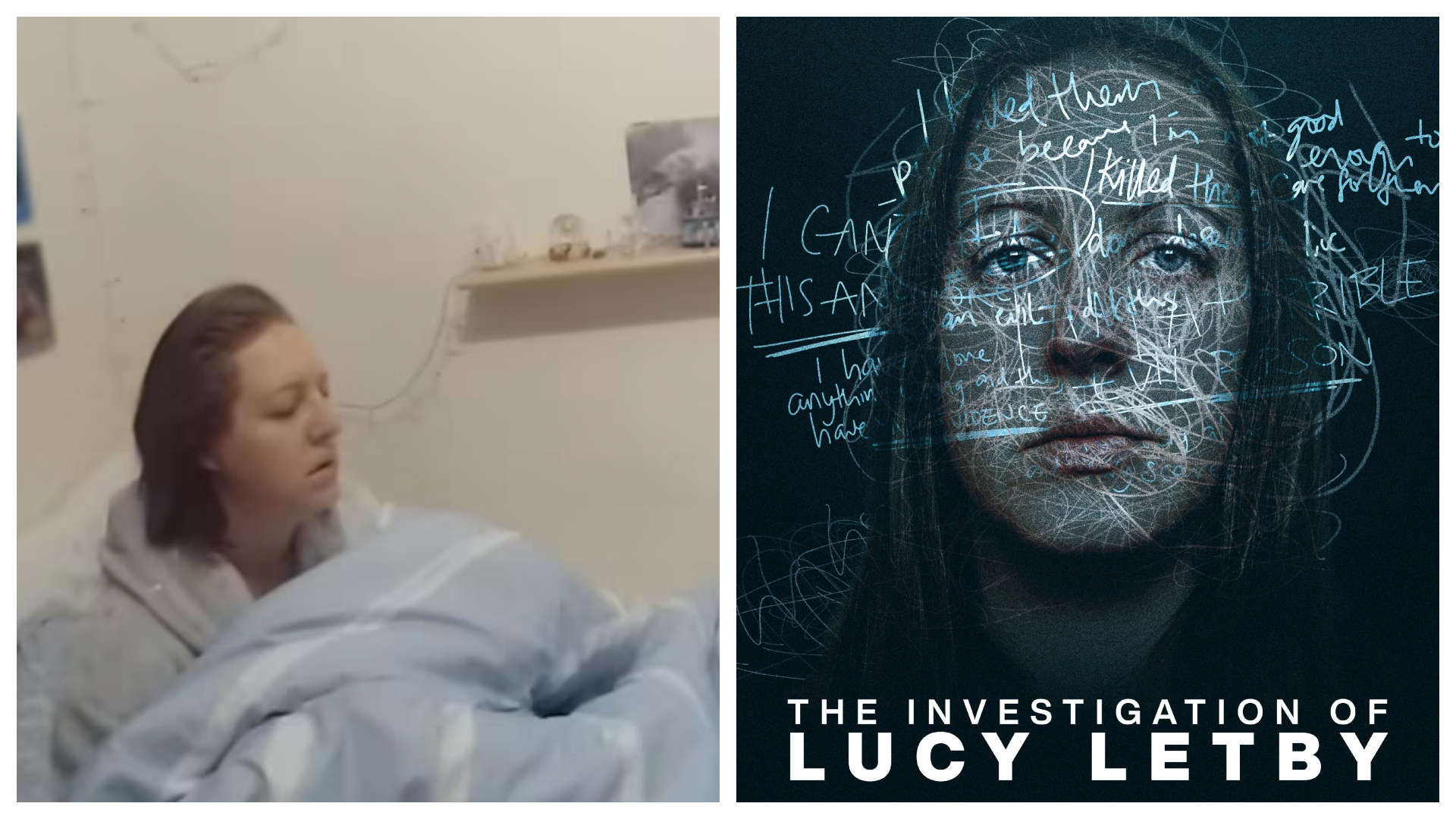
David Davis, who has been outspoken in his support for Letby, highlighting the force’s treatment of her as a suspect. He said: ‘It is extraordinary that this unthreatening young girl was marched in in handcuffs, mirroring the way American authorities try to influence public opinion against suspects when they are perp walked to court.’ It was coverage that was featured in a recent Netflix documentary The Investigation Of Lucy Letby showing Letby arrested while she is sitting in bed.
Her parents have complained of an invasion of privacy. They described previous programmes including BBC Panorama, which featured their daughter handcuffed in a blue tracksuit, as ‘heartbreaking’ for us. However, they said the Netflix film was ‘on another level’. ‘We will not watch it – it would likely kill us if we did,’ they said
Cheshire Police arrested Lucy Letby three times claiming it was necessary for questioning despite, according to Davis, her ‘freely volunteering to come in for questioning’. Letby was accused in court of lying about being arrested in her pyjamas. ‘It is astonishing that the police officers in court, who knew how she was dressed when she was arrested, did not intervene with the prosecutors to tell them that they had got it wrong, and instead left the jury to believe that Lucy was lying about something when she was plainly telling the truth,’ the MP said. He went to say that it was ‘astounding’ the lengths that Cheshire police was ‘willing to go to in order to manage its own public relations—sometimes, I think, at the cost of achieving justice’.
In his adjournment debate last week, David Davis drew on reviews by two senior police officers: Dr Steve Watts, an ex-assistant chief constable who authored the National Police Guidelines on the investigation of deaths in healthcare settings, and retired Detective Superintendent Stuart Clifton, who investigated the murders of Beverley Allitt. According to Davis, DS Clifton had been ‘commissioned by The Sun newspaper to confirm Letby’s guilt’. ‘Indeed, both policemen believed that Letby was guilty—that is, until they examined the hard facts, and both now believe that the Letby case is a serious miscarriage of justice,’ he said.
Dr Watts, as quoted by David Davis, described Cheshire Police’s arrests of Letby as ‘completely wrong’. According to CPS guidelines and police guidance, ‘sensitive’ and ‘complex’ cases should be referred to the CPS Serious Crime and Counter Terrorism Division – not handled by a regional unit. It was argued that an initial failure to make such a referral meant that safeguards and scrutiny by independent lawyers did not happen. According to Davis, Cheshire police then failed to heed explicit guidance from the National Crime Agency calling for the appointment of a panel of relevant experts. ‘Operation Hummingbird…built its entire medical case around one expert,’ Dr Watts said.
That expert was Dr Dewi Evans who volunteered his services and decided after ten minutes of reviewing paperwork that there was ‘foul play’. ‘Cheshire police were clutching at straws to find an expert, then very quickly and uncritically took a lifeline offered by Evans,’ Dr Watts said.
David Davis described the neonatal unit at the Countess of Chester hospital as ‘at best, inadequate’ and ‘at worst, appalling’. There were outbreaks of multiple antibiotic resistant infections and ‘sewage was dripping from the ceilings’, he said; adding that there had been numerous reviews including one by the Royal College of Paediatrics and Child Health which found no criminality but instead identified shortcomings in medical care at the hospital. ‘There was a 20% staffing shortfall,’ the MP said. ‘Doctors did ward rounds twice a week rather than twice a day.’ The MP went on to say that the four consultants who ‘pointed the finger’ at Letby all demonstrated poor care which, he said, sometimes led to babies dying. ‘Where was the decision not to treat the doctors as suspects, or the other nurses, or the cleaners?’ Dr Watts was said to have asked.
The MP quoted a boast by Evans that he had ‘never lost’ a case. ‘That is not the mindset of a neutral expert; it is the language of someone who tailors his evidence to suit the prosecution’s case.’ Davis flagged a warning by Lord Justice Jackson who ‘took the extraordinary step’ to write to the presiding judge, Mr Justice Goss, alerting him to Evans’s failings in a previous case, describing his evidence as ‘worthless’ and stating that he ‘makes no effort to provide a balanced opinion’ and his ‘approach amounts to a breach of proper professional conduct’.
Of the now infamous shift rota seemingly highlighting Letby’s presence when a baby died, Davis said: ‘Evans cherrypicked the cases to match Letby’s shifts and police used this in their chart to reflect her presence at those events highlighted by Evans.’ DS Clifton was quoted as explaining that missing from the chart used were deaths ‘which occurred whilst Letby was not on duty or those where adverse events took place whilst off duty.
David Davis argued that any statistician could have pointed such issues out to Cheshire police. ‘In fact, one did,’ he continued. In April 2018, the force approached one of the country’s leading statisticians, Professor Jane Hutton who gave evidence on the misuse of statistics in the Ben Geen case (see here). Prof Hutton warned Cheshire Police that its approach was wrong. ‘The police then told her: “The prosecutor…has instructed us not to pursue this avenue any further.”’ According to the MP, the CPS was in breach of its own code. Dr Watts described that outcome as ‘particularly egregious’. ’It is. not appropriate for the CPS to deter the police from acquiring evidence that may be relevant and available,’ he was reported to say.
The MP said Prof Hutton’s explicit warnings to the police ‘obliterated the prosecution’s statistical argument – the foundation of their entire case’. ‘Prof Hutton believes the statistical errors are “similar to those in the Sally Clark case but worse.”’
David invoked the wrongful conviction of Sally Clark for the murder of her two baby sons to open the debate. It took three years to overturn Sally Clarke’s conviction in 2003. She died from alcohol poisoning four years later. ‘The destruction of an innocent person’s life was caused by the police, the prosecution and the court swallowing bogus statistical assertions by an alleged expert in her trial. That expert eventually resigned in disgrace, although that did not save Sally Clark,’ he said. ‘One would think that after that case, Cheshire police and the CPS would have been very careful to avoid this happening again.
In response, the policing minister Sarah Jones defended the ‘meticulous and lengthy investigation’ leading to her arrest. ‘I am sure we all think of the parents of those children,’ she said. ‘As I have had children in neonatal units and born into special care baby units, I can only imagine their suffering in what they have been through.’
Cheshire Police issued a statement in response to the debate, saying: ‘Cheshire Constabulary strongly refutes all the points made during the adjournment debate. It implied impropriety on the part of Cheshire Constabulary where none whatsoever has been established. We remain confident in the integrity of the investigation, the conduct of the prosecution, and the decisions reached by the courts.’
It continued: ‘Over the past two years the force has come under constant criticism and has been intensely scrutinised and subject to unpleasant opinion from a core group of individuals who appear to pride themselves on spreading misinformation, making baseless claims and attempting to destroy reputations… . The constant noise surrounding this case, inaccurate or partial information being presented as fact and attempts to hi-jack the perceived narrative risk undermining public confidence not only in this case – but in the wider criminal justice system. Public confidence is best served by evidence-based discussion and responsible commentary – not ill-informed personal opinions and inaccurate details. We are committed to victim-focused justice, public confidence, and the rule of law. Our thoughts remain with the families of the babies – who have always been at the heart of this case.’