
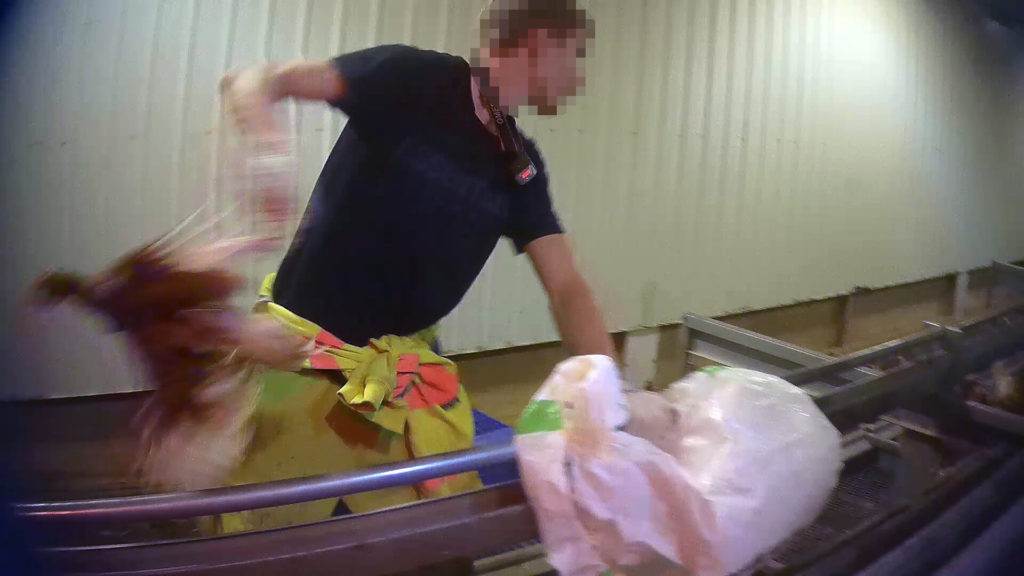


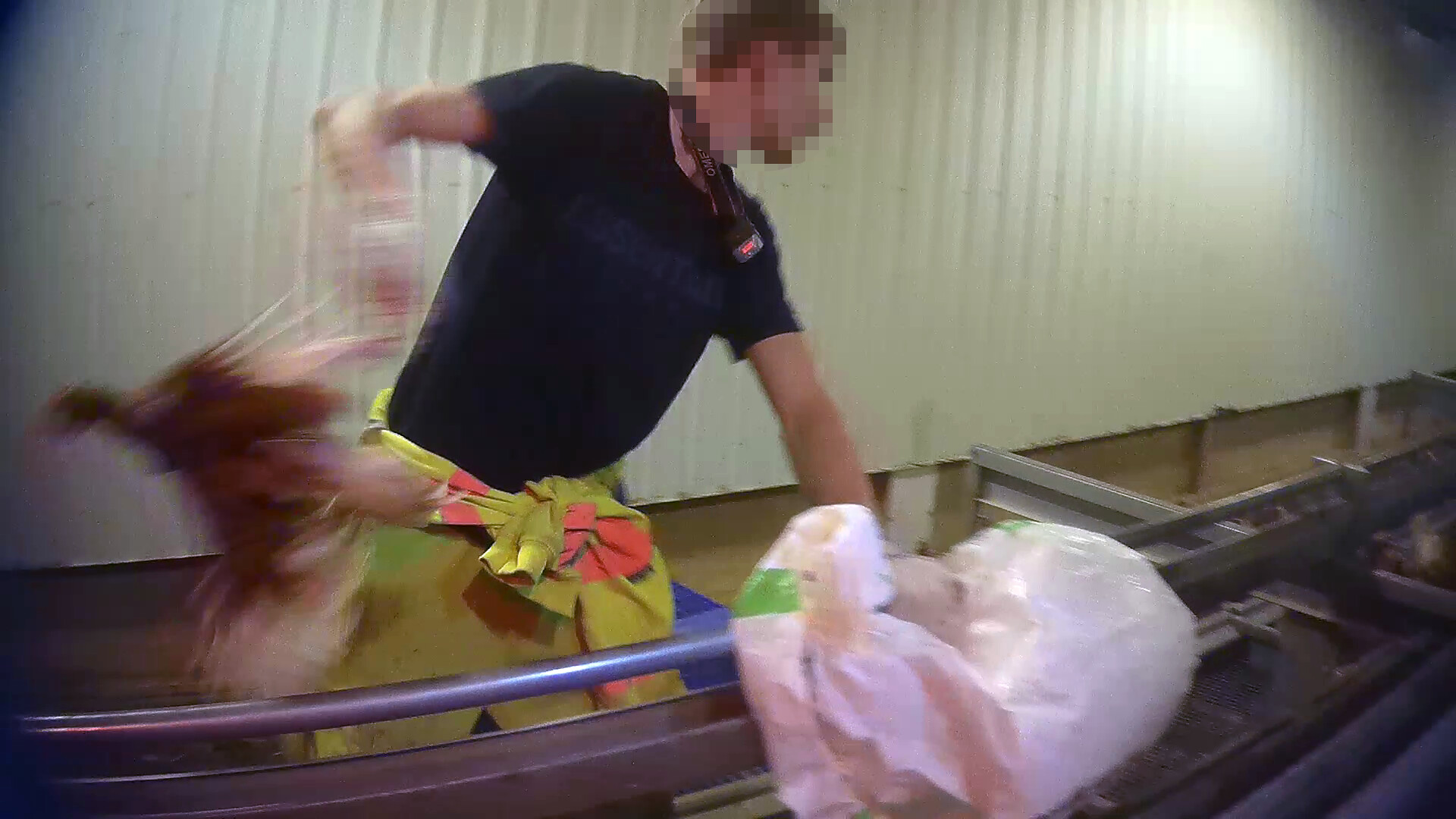
The law recognises chickens as sentient beings. And yet, when faced with clear evidence of suffering, the government chose to silence that recognition. Photo credit: Animal Justice Project
The recent dilution of UK transport law, explicitly permitting chickens to be carried by the legs, marks a quiet but profound failure of animal welfare legislation. It is not merely a technical amendment or regulatory tidying-up. It is a moment where the government, confronted with its own protective obligations, stepped back rather than stood firm. This is what it looks like when sentience exists on paper, but not in practice.
Sentience without consequence
Sentience has been the moral foundation of UK animal law. Chickens are ‘protected animals’. Causing them unnecessary suffering is a criminal offence. Those responsible for them owe positive duties of care. In addition, they are formally recognised as sentient under Animal Welfare (Sentience) Act 2022.
But sentience, in UK law, is not a guarantee of protection. It has no force unless the law is willing to reflect and act on it, especially when doing so is inconvenient. That weakness was exposed when it became clear that existing transport regulations prohibited lifting chickens by the legs. This practice, long routine in commercial farming, causes pain, fear, broken bones and dislocations. Scientifically, ethically and legally, the position was straightforward: the law did not permit it. Instead of enforcing that prohibition, the government amended the law.
When the law was changed, not the practice
Through a statutory instrument amending assimilated EU transport rules, chickens and turkeys were carved out of the general protection against being carried by their legs. A rule that once applied to all animals now explicitly excludes the very species most affected by the practice.
This is a revealing move. Animal welfare law is usually weakened through inaction or under-enforcement. Here, it was weakened deliberately and transparently. The law itself did not fail to protect chickens; it was re-written so it no longer had to. The justification was commercial feasibility. Upright handling, it was said, would be disruptive, costly, or impractical at scale. In other words, the welfare interests of billions of sentient animals were outweighed by the efficiency of catching systems.
Welfare became optional
Transport and handling is one of the most physically dangerous moments in a chicken’s life. Birds are removed from sheds at speed, handled by teams under time pressure, and packed into crates for transport to slaughter. If the law is going to intervene anywhere, this is a place where it matters. Instead, this is where protection was withdrawn. The amendment sends a clear signal: where suffering is widespread, routine, and economically embedded, the law will adapt to accommodate it.
What this moment tells us
If sentience were truly central to animal welfare law, the response would have been enforcement, transition, and reform of practice. Instead, the law absorbed the harm and recalibrated itself around it.
Animal protection law is often understood as balancing competing interests. But even if in that case balance implies that animal interests are genuinely placed on the scales. In this case, they were not. Until that changes, until the law is willing to say that some forms of suffering are unacceptable regardless of scale or convenience, sentience will remain symbolic, not substantive.
The Animal Law Foundation is a legal research and action charity that looks into neglected areas and where appropriate will instruct lawyers to bring legal challenges to ensure any systems in place to protect animals function as they should