
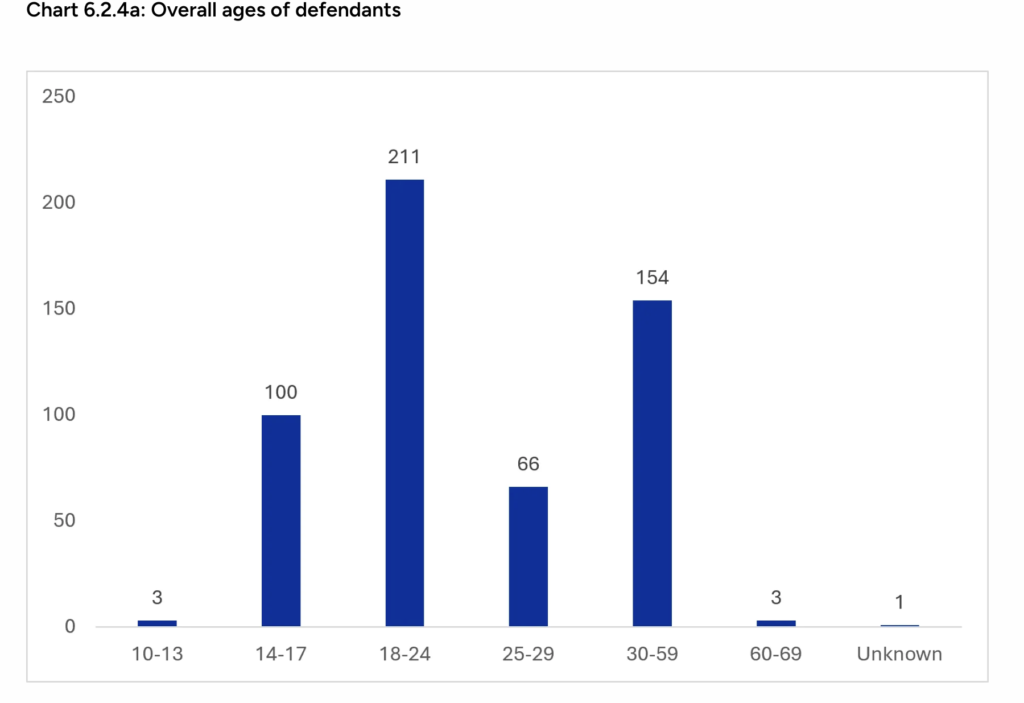


The second annual monitoring scheme for joint enterprise has revealed that almost one in five defendants last year was a child including three under the age of thirteen. According to data released today by the Crown Prosecution Service (CPS) more than 100 children under the age of eighteen years were defendants out of a total of 188 homicide cases last year. Almost one in three defendants were either categorised as ‘Black’ or ‘Asian’, according to statistics released by the Crown Prosecution Service (CPS) today – however campaigners challenged the accuracy of the data on ethnicity.
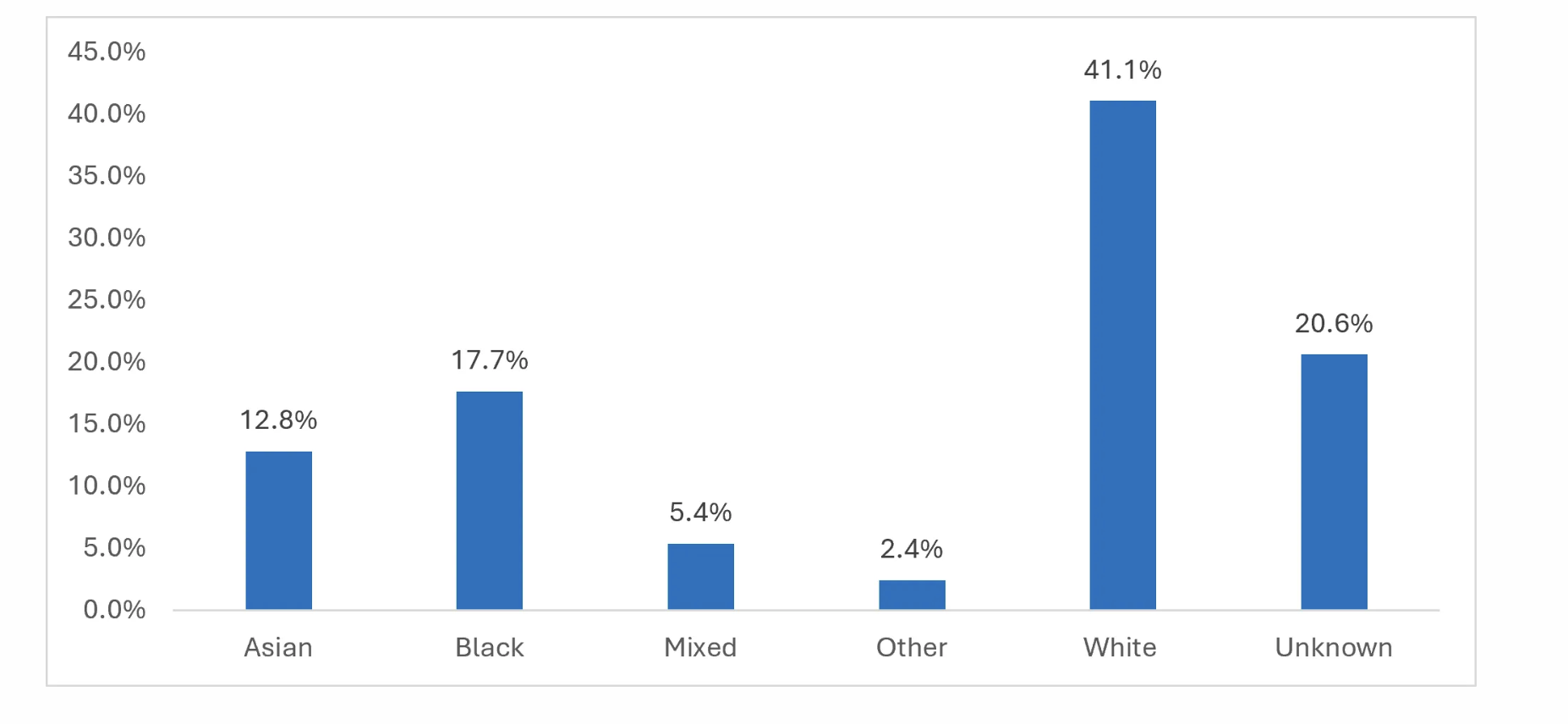
The CPS launched its monitoring scheme 12 months ago after years of criticism as well as legal actions over the absence of data in the context of longstanding concerns about its racial disproportionality. The campaign group JENGbA (Joint Enterprise Not Guilty by Association) drew attention to a ‘staggering’ gap in data on ethnicity – recorded as ‘unknown’ in 21% of cases.
‘For JENGbA, the figures continue to raise important questions about the scale of children’s involvement in joint enterprise prosecutions — particularly the number prosecuted as secondary parties, rather than those alleged to have carried out the fatal act,’ JENGbA cofounder Jan Cunliffe commented. She described the data on ethnicity as ‘striking’: 41% of defendants were recorded as White, compared with 38% of non-White defendants: Asian 13%, Black 18% mixed 5.5%, other 2%. According to the latest census between 74% and 76% of the population is White.
Almost three-quarters (73%) of defendants were under 25 years and 103 of 538 defendants were children under 18 years, which JENGbA argued, raised ‘significant questions about who is being caught up in Joint Enterprise prosecutions and the potential disproportionate impact it has on children and ethnic minority communities’.
Cunliffe pointed out that JENGbA has spent over 16 years supporting prisoners and families affected by the controversial common law doctrine. ‘We have campaigned for greater transparency around the use of the law, particularly its impact on children and young people,’ she said. ‘This data once again highlights continued data gaps and the same major issues we have been debating for decades. It reaffirms the need for Parliament to step in with a programme of urgent reforms.’
The CPS say in the report published today: ‘Given the complexity and seriousness of these cases, and the severity of the consequences for defendants who are convicted of homicide or attempted homicide on the basis of joint responsibility for the actions of others, it is important that the CPS monitors the nature of its caseload and transparently reports on these prosecutions.’ In reality, the CPS only disclose the data after a long battle.
As has been reported on the Justice Gap, the House of Commons’ Justice Committee twice called upon the courts to monitor joint enterprise and as far back as far back as 2012. MPs had been shocked to discover the number of people charged as secondary participants was unknown meaning it was, in their words, ‘difficult to judge whether any, or all, of the criticisms on the use of joint enterprise that we heard from several witnesses are well-founded’. ‘We look forward to studying the data as soon as it is available,’ the committee added. A similar call was made by the Justice Committee in 2015.
‘The CPS had to collate this data because JENGbA, a campaign made up of families with loved ones in prison, forced them legally to do so,’ Cunliffe said today. ‘It means that they have to record the age, gender, ethnicity, disability and whether the ‘gang’ nominal was used in joint enterprise charges and convictions.’
In 2023 a pilot study revealed that Black people were 16 times more likely to be charged under the doctrine than white, see here. That pilot only came after the threat of legal action by JENGbA and Liberty.
FINDINGS FOR 2025/26
 The new scheme captures cases in two ways: a ‘flag’ on the CPS Case Management System for all homicide and attempted homicide cases brought on a joint enterprise basis; and manual data collection to ‘capture, monitor and report on features of these cases that cannot be extracted from CMS data alone’.
- 460 prosecutions for (flagged) joint enterprise homicide and attempted homicide
- 340 convictions – conviction rate of 74% (77% for all Crown Court cases)
- 176 defendants were convicted after trial, and 164 entered guilty plea
- 80% of cases involved 3 or less defendants – most commonly two (93 cases). Highest number is 8 (2 cases)
- 39% of defendants (211) were 18-24 years (52% and 41% in West Midlands and London respectively)
- 19% of defendants were children (10 to 17 years)
- 18% of defendants were in the ‘Black’ category; 13% ‘Asian’; and 41% White – BUT ethnicity unknown for 21%
- 29% of defendants in London were in ‘Black’ category
- 188 cases in the manual dataset with a total of 538 defendants – 9% prosecution sought to adduce ‘gang’ evidence