
What can a political scandal that seized late-nineteenth century France tell us about the long afterlives of miscarriages of justice?
Captain Alfred Dreyfus, the only Jewish Captain in the French army, was arrested then wrongfully convicted of treason in 1894. A new exhibition in London marks 120 years since Dreyfus was finally exonerated in 1906. This was only after he was found guilty a second time at a second trial – held after the real culprit had confessed and some within the French military establishment had even admitted the cover-up.
Dreyfus was convicted in the paranoid decades after the Franco-Prussian war when tensions remained heightened between France and Germany. He was accused of being a spy and selling military secrets to Germany. A note that was apparently written in Dreyfus’ hand was uncovered in the residence of the German Ambassador in France by a French intelligence agent and the blame immediately landed with Dreyfus. It was a time of antisemitic fervour in France. As a Jew, Dreyfus’ loyalties were assumed not to lie with France, and his conviction catalysed latent, outlandish antisemitic conspiracy theories.
The significance of this recent anniversary is found in how long some of myths around the case have endured, and how relevant it still appears.
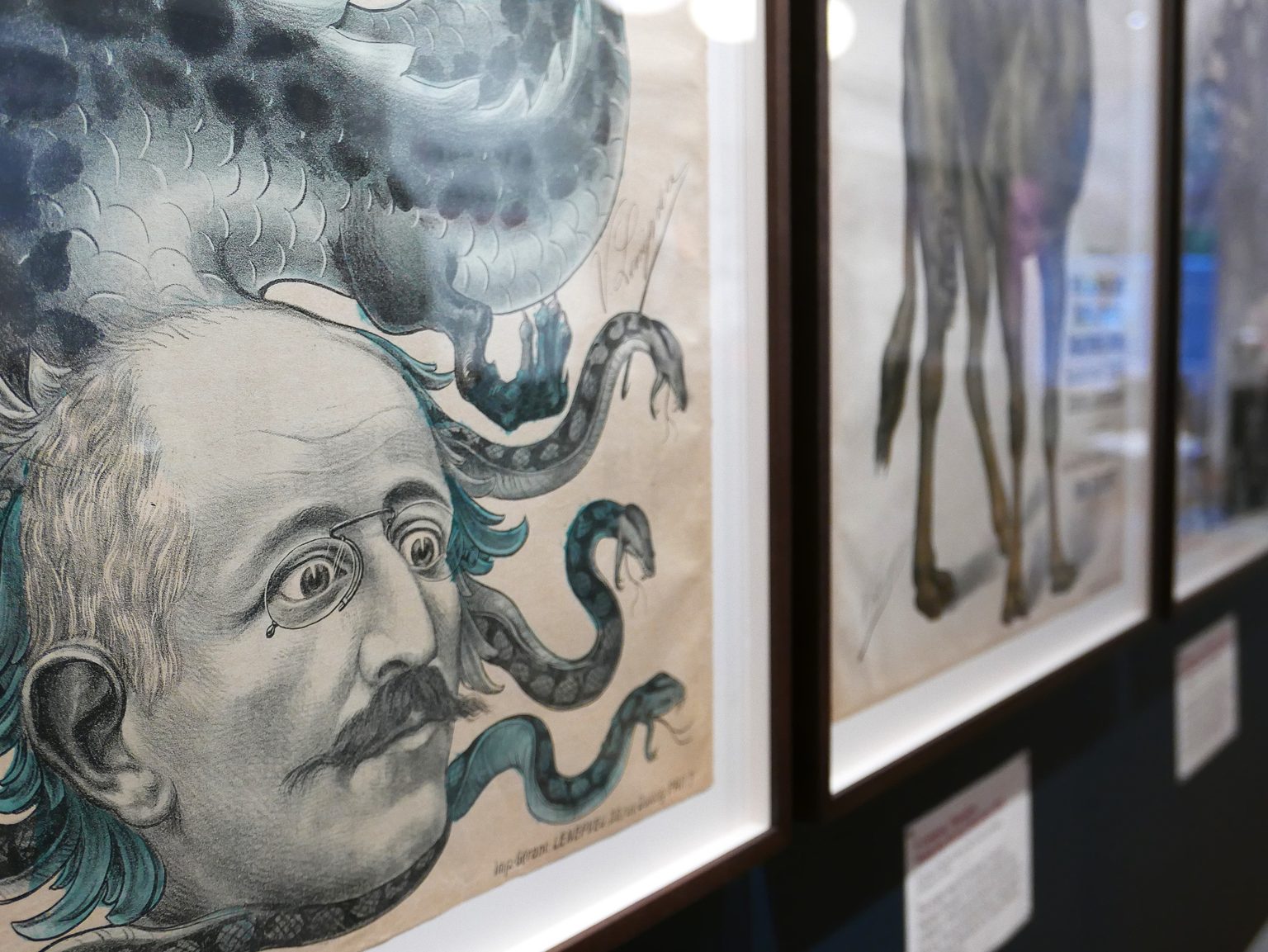
A poster published in late nineteenth-century France featuring an antisemitic carton, Alfred Dreyfus is presented as the head of a Hydra. Wiener Holocaust Library, Courtsey of Birkbeck, University of London.
In 1945 a French far-right figure who had relished in denouncing Dreyfus in the 1890s was on trial for his role as a collaborator with Nazi Germany in the Vichy Regime. As the guilty verdict was read out, he exclaimed that he was a victim of ‘Dreyfus’s revenge’.
Speaking at the launch of the exhibition at The Wiener Holocaust Library, eminent historian Professor Sir Richard Evans described a scene from his youth in Oxford in the late 1960s. Watching an art-house film at the cinema, one of the characters described an event as ‘just like the Dreyfus Affair’, which prompted a French member of the audience to jump out of their seat and begin shouting that Dreyfus was guilty and always had been. It seemed he felt personally wronged that anyone should believe it was a true miscarriage of justice.
In 1995, over a century after the wrongful conviction, the French army formally announced that they believed Dreyfus was innocent of all charges and had been persecuted by the military because he was Jewish. The military official who said this at a meeting convened by a French-Jewish community group said remarks were nothing new and that the army had recognised Dreyfus’ innocence since the charges were dropped. However, the year before, the same official’s predecessor was ousted after he had suggested that Dreyfus was, in fact, guilty.
Several institutions over the intervening decades have refused to have a statue of Dreyfus installed outside their buildings, with the sculpture bouncing around Paris until it was finally given a permanent spot earlier this year.
All of the modern hallmarks of a miscarriage of justice are present in this fascinating case: A conviction based on dodgy hearsay evidence, a convenient scapegoat, overt prejudice and outlandish accusations with no basis in evidence. A polemical debate raged in the press, and favourable coverage in the media was a key part of securing a retrial. More important still was perhaps the redoubtable campaigning of Dreyfus’s wife, brother, and other allies, against an instransigant military and judicial system.
But it would seem it doesn’t matter how high-profile a case, or how effectively exposed the cover-up may be, decades on many people will believe the establishment version of events, that there’s no smoke without fire, or indeed fall for the conspiracy theories that emerged at the outset of the case. Despite plenty of evidence that grave miscarriages of justice do happen, accompanied so often by the kind of cover-up as in Dreyfus’s case, many people simply cannot entertain that the next one may come along sooner than they think.
While people like Jeremy Bamber, Lucy Letby and others maintain their innocence while languishing in prison (whatever the outcome of any future appeals they may eventually be granted), it is worth remembering that the justice system can right a wrong after years or decades of dogged campaigning, but the cover-up and the conspiracy can last a century more.