
A new government legal advice service for rape victims has prompted wider concers about ‘poorly paid legal aid work’, according to a report in the Times.
The government aims to invest £6 million to provide specialist support to rape victims by explaining their rights, clarifying options and not make them feel judged as though they are the perpetrators. The scheme will also advise victims when police and defence lawyers are asking for sensitive personal data.
The first ever national independent legal advice service for rape survivors will be launched in early 2027 and is to be delivered by Centre for Women’s Justice (CWJ), with the support of Rape Crisis England & Wales and Victim Support. According to the CWJ, the move fulfils a manifesto pledge by the Labour Party.
‘Defendants in rape cases are entitled to legal advice from the date they are arrested right though to representation at trial,’ CWJ says. ‘In contrast, victims of rape are treated as mere witnesses in the case, which is brought by the prosecution in the public interest. The Crown Prosecution Service does not represent victims and there are limited opportunities for victims to raise their own perspectives and input into the legal process.’
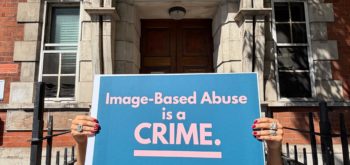
The centre argues all other European countries have some form of legal support for victims within their criminal justice systems and ‘represents a historic step in re-balancing the dynamic within the legal process whilst, of course, maintaining the right of the accused to a fair trial’. ‘If successful we hope this model can be extended to tackle all sexual offences as well as offences committed against children so that all survivors of sexual violence can have a stronger voice and greater opportunity to secure justice,’ commented Harriet Wistrich, CEO of CWJ (pictured above).
The Law Society’s Gazette reported that Andrea Simon, London’s Victim Commissioner, said that the pilot scheme ‘filled a long-standing gap in support for victims in London navigating a lengthy and often overwhelming criminal justice process’. The Gazette in July reported that a pilot of the service led by Mayor of London Sadiq Khan described clients ‘feeling heard, validated and better able to understand what was happening in their case’.
Kirsty Brimelow KC, chair of the Bar Council, is reported as arguing that ‘the government need to act on the crisis in the criminal justice system’ and urges that legal aid be increased as announced ‘nearly a year ago’. Concerns are also reported in the Times that change is needed to address ‘the lack of barristers to defend or prosecute the case’ acknowledging that ‘investment in complainants is welcomed’ but urging that wider change is needed.
An evaluation of the pilot by Dr Olivia Smith, a reader in criminology and policy from University of Loughborough, was open to London residents aged over 16 and found that most common legal advice sought was about ‘criminal justice matters’ representing more than a third of support needed (37%). It was reported that some 247 complainants were supported on 297 matters. The service ‘sometimes had to close to most referrals because demand exceeded capacity’, according to Smith
David Lammy in his speech argued the victims of rape face the trauma not only from the crime but from the trauma of justice process as the process can sometime be intimidating and victims treated as though they are the suspects hence implementing this will support and encourage victims.
The president of the Law Society, Brett Dixon, has raised concerns that the process, whilst it is important that complainants be supported, needs to ensure that it ‘doesn’t make the trial unfair for defendants’.