

The seed of Lucy Letby’s nightmare was planted in June 2015 when three premature babies died in quick succession at the Countess of Chester hospital. The neonatal unit was understaffed, under-resourced, harboured a potentially deadly toxin and was leaking sewage from crumbling plumbing infrastructure. Yet Steven Brearey, the paediatric consultant in charge, decided that none of those things, nor the fact that he and his fellow consultants were only doing two ward rounds in a week, while the unit was principally staffed with junior doctors, could explain the fact that three deaths in a month was equivalent to the normal total for a year. There had to be another explanation, and he found one. He had a killer nurse on the ward – Lucy Letby.
Though still young, Letby was one of the most qualified nurses on the unit, highly regarded and well-liked. To this day, more than a decade on, no direct evidence has emerged of Lucy Letby doing anything to harm those three babies. Nor indeed the other twelve she was eventually charged with attacking, murdering seven of them. So where did he get the idea that his unit was harbouring a serial killer? What could possibly have triggered such an apparently outlandish idea in his mind?
Rewind a month or so, to 18th May 2015, when a high-profile trial in Manchester, just over an hour’s drive from Chester, reached its dramatic conclusion.
- You an read about the Lucy Letby case in the latest PROOF magazine including Stephen Phelps on the media, Prof Richard Gill and Dr Svilena Dimitrova on How to become a serial killer (without killing anyone) and an interview with the barrister Mark McDonald representing the former nurse
 Killer on the loose?
Victorino Chua, a Filipino nurse working at Stepping Hill Hospital in Stockport was convicted of two counts of murder, over 20 counts of attempting to cause grievous bodily harm, and eight counts of poisoning. This was a case that had sent shockwaves through the medical community in the north-west of England for four years. In 2011 it became apparent that saline bags in the hospital had been injected with insulin and lidocaine. At first no-one knew if this was limited to Stepping Hill or maybe originated with a wholesaler and therefore could be a much wider problem. Nevertheless, within the hospital drastic precautionary measures were taken, including making sure that nursing staff were never left to act alone.
Then, in July 2011, a 27-year-old nurse, Rebecca Leighton, was arrested on suspicion of murder after having working on the affected wards at the relevant time. Panic over. And nurse Leighton found her photo splashed across tabloid front pages under the headline ‘Angel of Death’ – sound familiar?
Except that the panic wasn’t over. Because in September 2011, after spending five weeks in custody, Rebecca Leighton was released without charge. There simply wasn’t any substantive evidence against her. And now, with no explanation as to who or how these deaths had been caused the uncertainty returned. Fortunately the deaths did not, but with no-one to blame a corrosive atmosphere of suspicion coloured life in the hospital. There seemed no end in sight, until in January 2012, after some prescriptions were found to have been altered on the wards where he worked, nurse Victorino Chua was arrested. Retrospective enquiries showed that he had been on duty when the deaths and collapses had taken place the previous June. And this time the panic was over. The tampering with saline bags had already stopped and did not recur. But the wheels were set in motion and over the next three years they rolled right over a foreign nurse with few resources and no-one capable of fighting his corner. So, on May 19th 2015 he was sentenced to life imprisonment with a minimum term of 35 years. A sense of relief must have been felt in hospitals all over the north-west. Especially down the road in the Countess of Chester.
Let’s give Steven Brearey the benefit of the doubt. Let’s suppose he was so confident of his own skills, and those of his consultant colleagues, that he simply couldn’t believe that the three babies who died in his unit in the month that followed died because of inadequate care or failing facilities. What explanation could there possibly be? Well there it was, on a plate. Splashed cross the papers just a couple of weeks earlier. A rogue nurse. A medical serial killer. Could that explain the three unexpected deaths? All three babies in a neonatal intensive care unit. All three terribly vulnerable. Especially to a nurse prepared to kill for no discernable motive whatsoever.
By his own account Brearey had begun to ‘think the unthinkable’ – pointing out to hospital administrators on 2nd July that Lucy Letby was on duty for all three deaths. Within six weeks of Victorino Chua being convicted Steven Brearey had an explanation for the unexpected deaths which would continue to plague his unit for the next 12 months. It was nothing to do with him, or his team, or the sewage leaks in the crumbling building in which they worked, or the presence on that unit of pseudomonas aeruginosa an antibiotic-resistant bacterium that is highly dangerous for newborns. No, it was much more simple. And once again, the wheels of justice were on the move and, once again, they would roll right over Lucy Letby.
It’s a theory. No more than that. Only Steven Brearey knows whether he was aware of the conviction of Victorino Chua, although as a doctor working in a nearby hospital it’s hard to imagine he wasn’t. And if he was, only he knows the extent to which it coloured his thinking and whether that dramatic story wasn’t a trigger for the events he set in motion and which led to Letby’s fifteen life sentences. But it’s worth looking at other nurse convictions over the years and asking whether such triggers exist in other cases, many of which (though not all) are contested. You see the difficulty for nurses is that (unlike the rest of us) they are in regular contact with death, and if a sudden collapse is hard to explain medically, a nurse, perhaps with an awkward manner that doesn’t endear him or her to colleagues, can represent an easy answer – so much more convenient than having to accept that death was caused by an (undiagnosed) clinical failure. It all depends what you’re looking for and if there’s something in your mind that can act as a trigger pointing to that explanation it can be mightily difficult for the targetted nurse to extract themselves. After all they were there when it happened, they have the knowledge and the relevant deaths are never straightforward.
The original ‘Angel of Death’
So let’s have a look at some of the ‘killer nurses’ of recent years and think whether there isn’t something of a trend here. Let’s see whether these accusations come totally out of the blue as we’re led to believe, or whether there might be just such a trigger event. We’ll start with the UK’s original ‘Angel of Death’ (the tabloids are nothing if not consistent), Beverley Allitt. In 1993 she was convicted of four counts of murder, three counts of attempted murder, and six counts of causing grievous bodily harm, after she was charged with attacking children in the paediatric ward of Grantham and Kesteven hospital back in 1991 using insulin and air injections. Stuart Clifton, the retired Detective Superintendent who led the Lincolnshire Police investigation into Allitt is on record as saying the case was unique, that there had never been a killer nurse operating in the UK. True (so far as I know) but the issue of killer nurses was already out there.
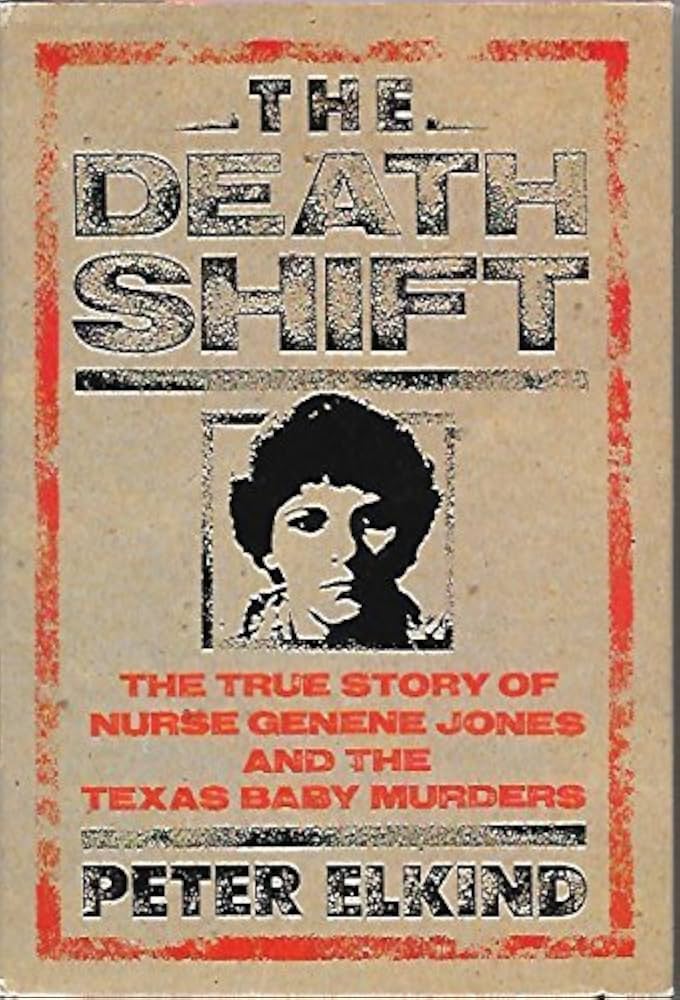
In 1990 many in the medical profession would have read a recently published book which thrust the possibility into the public eye. The Death Shift: The True Story of Nurse Genene Jones and the Texas Baby Murders by Peter Elkind examined the case of Genene Jones, a paediatric nurse in Texas convicted of murdering infants under her care. Was this story fresh in the minds of those who looked for an explanation for those unexpected deaths in Grantham and Kesteven?

HMP Bronzefield where Lucy Letby is serving her whole life sentence. Pic: Andy Aitchison
The connection between Chua’s conviction and Steven Brearey’s nascent suspicion of Lucy Letby was merely a matter of weeks, but such cases will linger long in the mind of those working at the coal-face of the healthcare system. Chua and Letby are two points on a sad timeline of nurses charged with murder and attempted murder.
-
- Amanda Jenkinson. A nurse in an intensive care unit at Bassetlaw Hospital in Nottinghamshire is charged with attempted murder and causing grievous bodily harm (GBH) with intent after being accused of tampering with the oxygen/ventilator settings of an elderly patient. Convicted on charges of GBH she was sentenced to 5 years in prison (a conviction overturned in 2005).
- GP Harold Shipman is convicted of murdering fifteen patients of his sole practice in Hyde, near Manchester. A subsequent police inquiry concluded he had killed at least 218 patients.
- Colin Norris is arrested on suspicion of murder after a patient in his care died at the hospital where he worked in Leeds. Police launch Operation Bevel, an inquiry into other possible deaths on his watch. It is run by the same officer in charge of the Shipman inquiry.
- Dutch nurse Lucia de Berk was sentenced to life imprisonment, for four murders and three attempted murders of patients under her care.
- Benjamin Geen is convicted of killing two of his own patients and committing grievous bodily harm against 15 others while working at Horton General Hospital in Banbury, Oxfordshire in 2003 and 2004.
- Following Operation Bevel, Colin Norris is convicted of the murder of four elderly patients and the attempted murders of two others in two hospitals in Leeds some six years earlier.
- The deaths that led to the conviction of Victorino Chua in 2015 take place in Stepping Hill Hospital, Stockport.
- Nurse Rebecca Leighton is arrested in connection with the Stepping Hill murders, but subsequently released.
- Daniela Poggiali is an Italian nurse who was accused of killing 38 of her patients. She was exonerated in 2021, after confounding factors were found in a statistical reanalysis of the hospital’s mortality data.
- Victorino Chua is charged with murder following the Stepping Hill deaths.
- Three deaths in the neonatal intensive care unit at the Countess of Chester hospital prompt Brearey’s suspicion of Lucy Letby. Her trial did not start until October 2022.
- Argentine nurse Brenda Aguero is charged with deliberately injecting healthy babies with overdoses of potassium or insulin (or both), killing five and causing collapses in eight others.
Maybe it’s just a fact of life. Maybe the nursing profession attracts serial killers. But it’s just possible that something of a fashion has developed in recent decades of blaming nurses when deaths appear to be unexpected and unexplained. And maybe such highly-publicised convictions living long in the memory will cause puzzled doctors, hospital officials and police to reach for the simple answer – ‘we have a(nother) serial killer on the ward’.
My wife takes a pretty simple approach to the Letby case. She says ‘pilots don’t crash planes and nurses don’t kill’. A bit of an over-simplification you might think, but it’s worth considering. Each year there are in excess of 35 million commercial flights worldwide. At a conservative estimate of 150 passengers per flight, that’s well over 5 billion individual journeys. Planes occasionally crash it’s true, but I can only think of one occasion (just one) where a pilot was known to have deliberately crashed a commercial airliner. So my chance of being killed by a pilot (flying my plane) are at most 1 in 5 billion.
One important factor here is that most people who get on a plane are in reasonable good health. Whereas nurses spend much of their time dealing with patients who are sick and/or highly vulnerable. Sadly, a significant number of their patients will die. It is a statistical inevitability. Nurses working in a neonatal intensive care ward, or on a geriatric ward are even more likely to encounter death on their watch. Occasionally that will be unexpected, and if someone decides the answer could be foul play then it is the nurse who will likely get the blame, because a nurse will have far more ongoing contact with the patient than doctors, or any other hospital staff. Nurses, then, are easy prey for the amateur detective. Or the amateur police force for that matter. When a plane does crash the investigation looks for causes not blame. It is high time such a system was adopted in health care settings.
Support the Justice Gap, buy PROOF