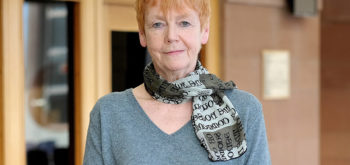

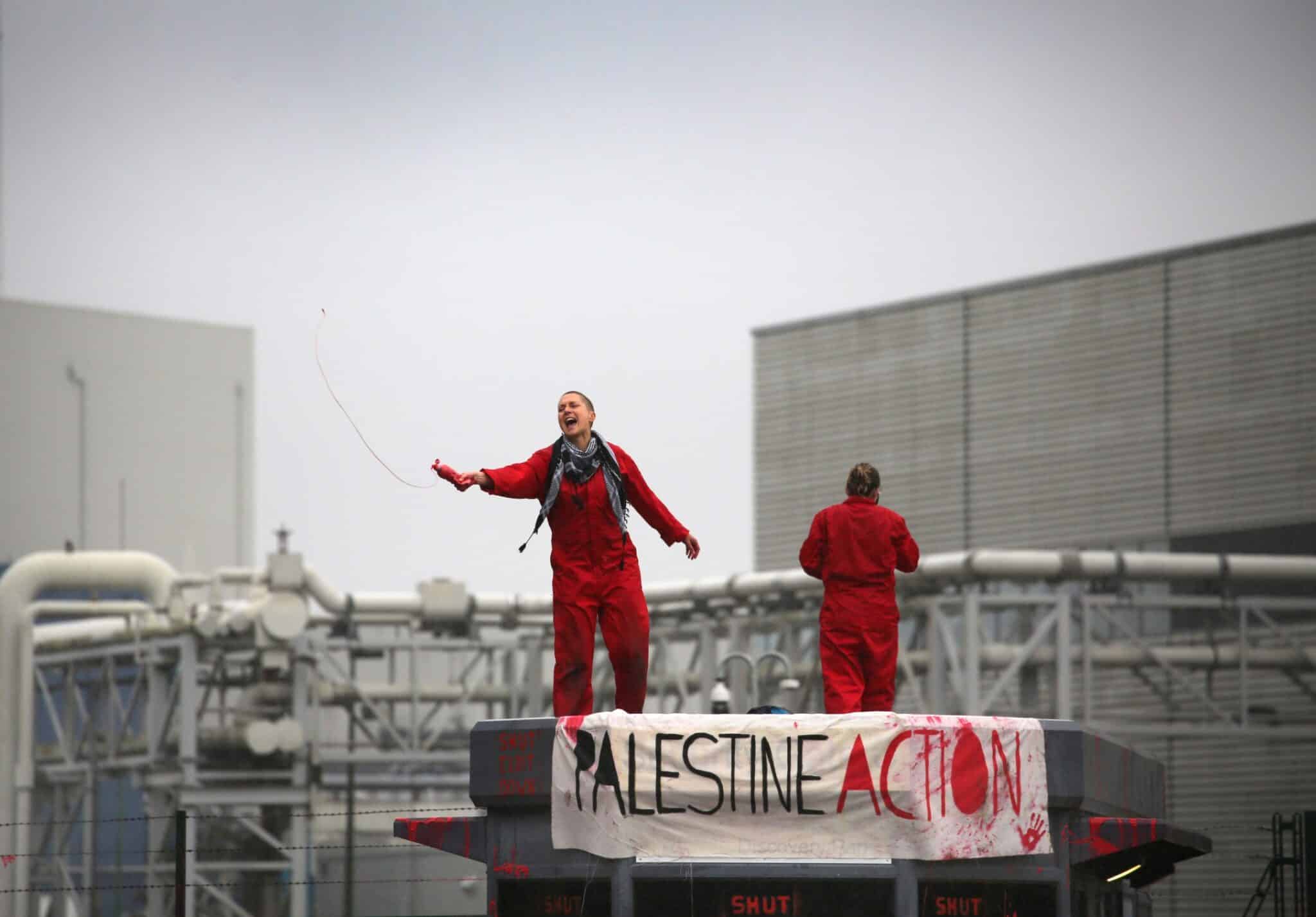
At the Labour Party conference in Liverpool on 27 September, police arrested 82 people protesting against the proscription of Palestine Action. Among them was Margaret Owen, a 94-year-old human rights barrister. A video of another arrest shows six officers surrounding a man, citing section 13 of the Terrorism Act 2000. He was detained on the grounds of ‘being with people displaying articles that show support for Palestine Action’. After his release, another officer explained that his colleagues had ‘suspected that he had a sign earlier’.
Section 13 criminalises displaying an article in circumstances that arouse reasonable suspicion that someone is a member or supporter of a proscribed organisation. Since Palestine Action was proscribed in July 2025, displaying signs supporting the group can expose protesters to arrest. Detaining people merely on suspicion of having displayed a sign or associating with those who do raises troubling questions about the expansion of counterterrorism powers into political dissent.
We should oppose this regardless of our position on Palestine Action. Once exceptional security powers become normalised, they can outlive the circumstances that produced them. Their consequences can eventually reach the very people who supported their expansion. Turkey offers a warning of how counterterrorism measures can narrow the boundaries of legitimate political activity, before their consequences extend to those who helped sustain them.
Turkey: When counterterrorism becomes a tool against dissent
Turkey’s decades-long counterinsurgency against the Kurdistan Workers’ Party (PKK) has enjoyed broad political support, including from the Republican People’s Party (CHP), the main opposition party. The CHP supported military operations against the PKK, including cross-border incursions requiring parliamentary authorisation, while advocating a civilian resolution of the Kurdish question.
When the peace process collapsed in 2015, state violence in Kurdish towns intensified and the distinction between the armed PKK and the broader Kurdish political movement became increasingly contested. The Peoples’ Democratic Party (HDP), Kurdish mayors, activists and civil society organisations were increasingly treated as extensions of the armed organisation.
In January 2016, more than 2,000 academics signed the Academics for Peace petition, calling for an end to state violence in Kurdish regions. Many faced prosecutions for alleged terrorist propaganda. Kurdish mayors, meanwhile, were accused of supporting terrorism through routine municipal services. Former Diyarbakır mayor Gültan Kışanak was held responsible for coffins displaying PKK symbols in municipal funeral vehicles, which prosecutors treated as evidence of terrorist affiliation.
Against this backdrop, President Recep Tayyip Erdoğan’s government proposed a constitutional amendment temporarily lifting the immunity of deputies whose cases had already been submitted to parliament. The measure disproportionately affected Kurdish representatives facing terrorism-related accusations. CHP supported the amendment as its leader, Kemal Kılıçdaroğlu, famously declared: ‘A measure which is against the constitution has been put forward. We know that, but we will say ‘Yes’ to it.’ The measure was expected to affect Kurdish deputies, whose defence carried a political cost.
The boomerang effect
The consequences were not confined to Kurdish politicians. CHP deputy Enis Berberoğlu was convicted in 2017 over footage showing intelligence trucks transporting weapons into Syria. He was the first one who was directly affected by the same amendment that CHP supported. Meanwhile, elected Kurdish mayors were replaced by government-appointed trustees, a practice that attracted limited opposition when its principal targets were Kurdish politicians.
In 2025, the boomerang reached CHP on a larger scale. Thirty-one opposition mayors had been removed from office since the 2024 local elections, right after the opposition achieved its biggest local electoral victory in decades. The most prominent case was Istanbul mayor Ekrem İmamoğlu, who is widely regarded as Erdoğan’s strongest potential challenger, arrested in March on corruption charges.
These cases were not all terrorism prosecutions. Yet this is precisely the slippery slope of counterterrorism politics. By supporting the lifting of parliamentary immunity in the name of fighting terrorism, CHP helped weaken safeguards that later left its own mayors vulnerable to prosecution, including in alleged corruption cases that are instrumentalised to suppress the opposition.
The warning for Britain
Britain is not Turkey, and this comparison is not a prediction that the UK will follow the same trajectory. Nevertheless, both cases raise questions about how counterterrorism legislation blurs the distinction between an organisation accused of terrorism and the wider political activity associated with its cause.
Turkey’s Anti-Terror Law, particularly Article 7, criminalises symbols and slogans affiliated with proscribed organisations. Its application has enabled the prosecution of people for political expression associated with the Kurdish movement regardless of the PKK connections, as symbols like the Kurdish flag were treated as evidence for being a member of or supporting terrorist organisations. Section 13 of the UK Terrorism Act raises a comparable concern about political expression becoming grounds for suspicion.
Britain retains stronger democratic safeguards, and a crackdown on opposition politicians on Turkey’s scale may seem unimaginable. But the boomerang need not take the same form to corrode democracy. Normalising suspicion as a basis for coercive intervention can deter protest and political expression, while establishing precedents that future governments can exploit. With Reform UK and the far right gaining ground, Labour should consider how its counterterrorism policies might be used by less sympathetic successors. Furthermore, in Turkey, imprisonment of deputies and mayors from a party founded by the republic’s very founder which has consistently a minimum of 25% voting potential once seemed unthinkable as well.
There is also a difference in the political costs of defending those targeted. Decades of conflict, fears of secession and entrenched anti-Kurdish sentiment have made defending Kurdish political rights electorally costly for the CHP. Palestine and in particular the broad instrumentalization of Section 13 is more divisive in British politics leaving more room to oppose the proscription of Palestine Action without the same immediate electoral consequences. Therefore, Labour in particular should consider the long-term consequences of normalising security language and the exceptional powers it enables, before the boomerang hits back.