
Colin Norris’s legal team have hit out at a ‘Kafkaesque’ Court of Appeal for ignoring new evidence and ‘blocking’ access to the Supreme Court. A new BBC podcast series presented by journalist Louise Shorter re-examines the case of the former nurse from Glasgow dubbed the ‘Angel of Death’ and argues that the death of the patient that kickstarted the investigation could have been the result of an innocent medical mix-up. Jon Robins reports
Colin Norris, now known as ‘Colin Campbell’ , was jailed for a minimum of 30 years for the murder of four women and attempting to kill a fifth by injecting them with insulin – all inpatients on orthopaedic wards in Leeds: Doris Ludlam, 80, Bridget Bourke, 88, Irene Crookes, 79, and 86-year-old Ethel Hall.
The prosecution case was that likelihood of four fatal incidents of hypoglycaemia occurring randomly was ‘vanishingly small’ and must therefore mean murder. It was argued that Norris had been ‘on shift’ immediately before the critical time in each case. In June last year, the Court of Appeal dismissed Norris’s latest appeal following a 2021 referral by the Criminal Cases Review Commission. An application to CCRC had previously been made in 2011 following an initial unsuccessful appeal in 2009.
Norris’s solicitor Rory Hearty said that the legal team comprising veteran human rights lawyer Michael Mansfield KC and barrister Nick Brown, had been ‘devastated’ by last year’s ruling. ‘We just feel so strongly in Colin’s innocence,’ Hearty said. ‘Going into the hearing at the Court of Appeal and you think that you’re going to overturn a miscarriage of justice but they have they have made this miscarriage of justice that much worse, if that’s possible.’
The lawyers argued that the court failed to considered compelling new arguments over naturally occurring hypoglycaemia . ‘It appeared to us that their judgment was rushed out. A lot of our submissions, our written submissions or oral submissions, haven’t been included in the judgment,’ the solicitor added.
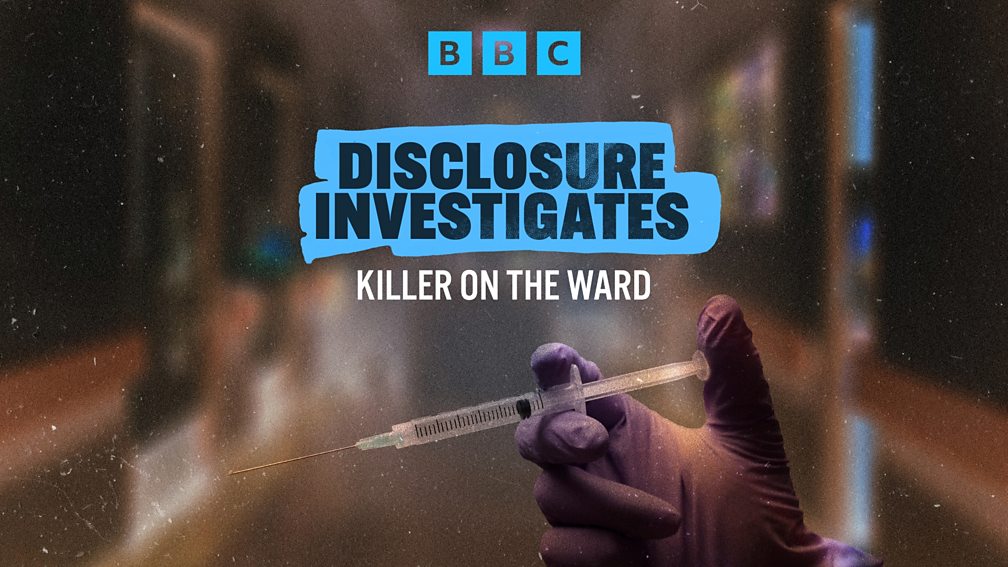
- Listen to the BBC Scotland’s Disclosure Investigates: Killer on the Ward
- You can read about the the Colin Norris case on the Justice Gap
In the new series, the journalist Louise Shorter speaks to experts about how how prescribed medication such as tramadol and anti-antibiotics are now known to cause hypoglycaemia in the elderly causing coma and death. She also traces a paper-trail suggesting that there could have been a mixup in the treatment of Ethel Hall – that case triggered the investigation into Norris.
Shorter, formerly of the BBC’s Rough Justice landmark investigative programme, produced a 2011 Panorama investigation into the case: The Innocent serial killer. She had been introduced to Colin Norris’s mother by the late investigative journalist Bob Woffinden two years earlier. In the Panorama, a leading expert on insulin poisoning, Professor Vincent Marks, challenged the prosecution case that a cluster of hypoglycaemic episodes among elderly people who were not diabetic had to be sinister. ‘Looking at all the evidence, all I can say is I think Colin Norris’s conviction is unsafe,’ Prof Marks told the BBC.
‘That seemed really significant. It took 14 years for that same evidence to get to the Court of Appeal,’ Shorter told the Justice Gap this week. It took the best part of a decade for the CCRC to refer the case. Experts for the Crown in last year’s appeal argued that the four deaths were ‘medically distinct’ and that the blood sugar readings were ‘refractory’ – in other words, they kept coming back despite being given glucose unlike naturally-occurring hypoglycaemia. In the new podcast, Shorter explores the possibility that Ethel Hall had accidentally been given insulin meant for another patient.
‘I think the media still has a very strong role to play,’ Shorter said. ‘The difficulty is getting the media to invest in actually turning new information up rather than just reporting something that’s already happened. That is what the BBC has done here. It has invested time and resource into properly investigating something as well as well as reporting on an appeal process that’s been playing out. The media itself plays a very lightweight role if all it’s doing is reporting what’s just been.’
*
A wealth of circumstantial evidence?
Describing the appeal process as ‘Kafka-esque’, Norris’s legal team are critical of the three Court of Appeal judges arguing that there is now credible and admissible new expert evidence which the trial jury did not hear.
 ‘It feels to us that they’ve put themselves in the role of the jury, they’ve chosen one side over the other, and they believe the CPS experts over our experts,’ says Rory Hearty, a solicitor at Birnberg Peirce. ‘And that’s not what they’re supposed to do. The test is supposed to be that if the appellant is able to demonstrate that he has fresh, credible new evidence, he has passed the threshold, and he’s either sent back for a retrial or his conviction is quashed.’
When the appeal was rejected, Norris’s lawyers immediately tried to take the case to the Supreme Court to rule on the principle of whether the new evidence should go before a new jury – but they were blocked by the same three judges: Lady Justice Macur DBE, Sir Stephen Irwin and Mr Justice Picken.
To get to the Supreme Court, the Court of Appeal has to certify a point of law of general public importance. ‘When they finally turned down our application to go to the Supreme Court, they said that the point of law that we wanted certified wasn’t in the judgment,’ Hearty explained. ‘So you’re asking the same three judges to mark their own homework. I can’t see when any judge is going to go: “Oh yes, I got this wrong.”’
There was also criticism of the Court of Appeal judgement from the family of one of Norris’s alleged victims, Ethel Hall. It was her death that triggered a five-year investigation by West Yorkshire Police.
Louise Shorter interviewed Hall’s son Stuart Hall and daughter-in-law Helen who said that when they read the Court of Appeal judgment they were ‘undecided’. ‘To be quite honest, I think it should have gone to a jury,’ Helen said. ‘I want him to be guilty because of what happened to Ethel, but I don’t want him to spend 33 years for something he’s not done.’
In their judgment, the appeal judges claimed that there was ‘a wealth of circumstantial evidence which would entitle the jury to be sure that the appellant was the perpetrator’. Shorter read directly from the judgement listing the evidence that the appeal judges found so compelling including Norris’s access to Hall and to insulin; his alleged hostility towards the elderly; as well as a telephone call to the ward asking after Hall’s condition.
The journalist argued that other colleagues had had access to both the patient and the medication and record-keeping on the ward was chaotic. She interviewed colleagues of Norris’s, including those who had trained him, who attested to him being caring and attentive to elderly patients.
Stuart Hall described the evidence as ‘very circumstantial’. As for Norris’s call checking on his patient’s condition, Helen Hall asked: ‘Why would that be against him? Any nurse that’s been fighting to keep somebody alive would want to know whether they’d succeeded or not.’
Helen said that that evidence was ‘just not sitting right. If he’s guilty, then fine, then that’s that. But if he’s not guilty and he hasn’t done it, the evidence that they’re trying to keep him inside is not enough.’
Building the evidence around the suspect
The podcast does not mention Lucy Letby or other ‘Angel of death’ cases such as Ben Geen but there are striking similarities over the role of statistics to understand the significance of ‘clusters’ of deaths and a police investigation that focused on a single suspect. West Yorkshire Police’s Operation Bevel, headed by officers who had reviewed the then recent case of serial killer Harold Shipman, conducted a trawl of hypoglycaemic incidents identifying cases where ‘the suspect Norris had attended at the time of death’.
Shorter spoke to cognitive neuroscientist Dr Itiel Dror, a world-leading expert in unconscious bias, about the dangers of building a case around a single person. He likened it to a ‘self-fulfilling prophecy’. ‘You shoot the arrow and then once it hits the tree, you draw the target around the arrow. This is called backwards and circular reasoning rather than letting the evidence drive your decision-making. You building the evidence around the suspect to reach the suspect.’
The medical experts appointed to Operation Bevel were senior clinical nurses and medical directors who worked for the NHS Trust. Dr Dror said the fact that the review was conducted by senior staff from the same hospital was ‘putting lipstick on the pig’. ‘Why would you have someone from the same hospital review the files when they’re part of the hospital, part of the culture? That contaminates the review.’
Professor Peter Green, Emeritus Professor of Statistics at Bristol University and a former president of the Royal Statistical Society, pointed that there are ‘established procedures’ for investigating clusters which were seemingly ignored. Some 81 hypoglycemic cases were initially investigated, ‘boiled down’ to 18 and then finally to four on the basis of Norris’s presence. ‘In other words, he was there in the cluster because that’s how the cluster was created,’ Prof Green explained. ‘That can be perfectly correct police investigative procedure. We expect detectives to follow leads and to try and find evidence to hold up their initial suppositions. But there’s always a risk that you’re looking for things and therefore you find them.’
Support the Justice Gap, buy PROOF